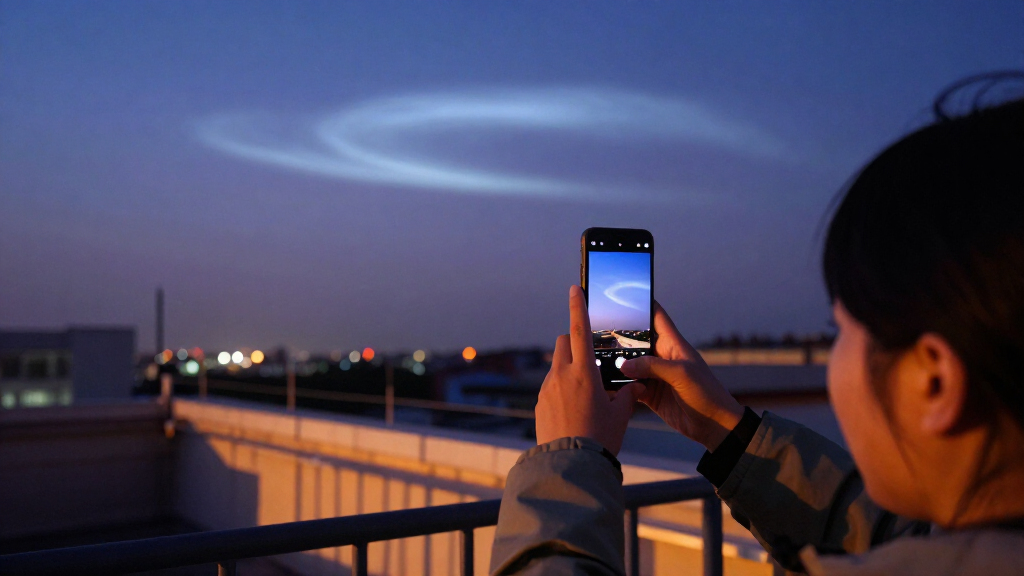

🔍 Read the full analysis: How To Think About AI Noctilucent Cloud Watches And Twilight on ThorstenMeyerAI.com

Get business pricing on office and shipping supplies
- Business-only prices and quantity discounts
- Tax-exempt purchasing
- Multiple users, one account, clear invoices
TL;DR
“Noctilucent — NLC Watch at 83 km” is an AI-built exhibition about real high-altitude clouds, presented as a fictional field journal rather than a live observing service. Its central feature links a solar-depression dial to changing sky visuals, illustrating how noctilucent clouds can remain lit after the ground is dark.
“Noctilucent — NLC Watch at 83 km” is an AI-built interactive exhibit about real noctilucent clouds, but its fictional field journal does not represent a real company or live scientific service. The project’s main feature is a solar-depression dial that changes the simulated twilight, showing how high-altitude clouds can still catch sunlight when observers on the ground are in darkness, as explored in the original analysis.
The exhibit is framed as a record from a made-up observing project. Its subject is real: noctilucent clouds are high-altitude ice clouds that can remain illuminated after the Sun has dropped below the horizon for people at ground level. The supplied description places the display’s cloud layer at 83 kilometres; the site uses that figure as part of its title and visual explanation.
Visitors can adjust a dial spanning six to sixteen degrees of solar depression, meaning the Sun’s angular distance below the horizon. The exhibit links that setting to several visual features, including sky brightness, shadow, cloud glow, colour, grain and the appearance of the horizon. Its most expressive point is described as near eleven degrees, though that is an art direction choice for this experience, not a forecast or observation report.
The project’s graphics are generated in the browser. Canvas produces the sky, stars and wave-like cloud forms, while inline SVG supplies diagrams and an altitude illustration. The cloud shapes are given different motion patterns, and a later interaction asks visitors to hold a control as ground haze fades and a cloud band sharpens. According to the project description, the interaction supports pointer, keyboard and touch-like input; releasing early lets the simulated sighting fade.
Field Notes · Science Communication · Interactive Exhibit
How To Think About AI Noctilucent Cloud Watches And Twilight
“Noctilucent — NLC Watch at 83 km” is an AI-built exhibition about real high-altitude clouds, presented as a fictional field journal. Its solar-depression dial demonstrates how clouds can remain sunlit after the ground has entered darkness.
01 / The science idea
Dark ground. Sunlit clouds.
Noctilucent clouds are high-altitude ice clouds. Because they sit far above the observer, they can still receive sunlight after the Sun has dropped below the horizon at ground level. The exhibit turns this atmospheric geometry into a changing scene.
High-altitude ice
The cloud subject is real. The 83 km figure appears in the exhibit’s title and visual explanation.
One angle, many changes
Adjusting solar depression changes simulated sky brightness, shadow, glow, colour, grain and horizon.
Illustration, not observation
The project describes generated scenes and fictional logs. It does not report a live sighting or current conditions.
Solar depression dial
Illustrative range shown in the exhibitThe ~11° point is an art direction choice for this experience, not a forecast, observation report, or guarantee of cloud visibility.
02 / From dial to field journal
How the experience is described
The page’s narrative moves from a luminous horizon through cloud forms and tiny ice crystals, then into seasonal observing themes and a fictional field log.
Set the twilight
A user-controlled angle represents the Sun’s position below the horizon.
Change the scene
Sky, stars and wave-like cloud forms are generated in the browser with Canvas; diagrams use inline SVG.
Hold for a sighting
A described interaction fades ground haze and sharpens a cloud band while the control is held.
Read the journal
Made-up station notes and logs add atmosphere; they are narrative elements, not verified records.
03 / Read the claims carefully
What the exhibit can—and cannot—tell you
The showcase explains an idea through art direction and interaction. The supplied description does not establish an operational monitoring service or independently validated simulation.
| Question | Supported by the description | Not established |
|---|---|---|
| Is NLC Watch a monitoring service? | No; it is identified as a fictional exhibit. | A real company or live service |
| Are displayed clouds real-time sightings? | Generated visual scenes and fictional logs | A live feed or verified sighting |
| Is the lighting scientifically validated? | An illumination model is discussed | Independent review or a named atmospheric model check |
| Were accessibility and performance tested? | Reduced motion and pause behavior are stated goals | Test results or confirmed implementation |
Not provided
No live data feed, observing team, verified records, publication date, or independent scientific validation is identified in the supplied material.
Use with care
Do not use fictional logs or simulated skies to decide whether clouds are visible at a particular place or time. Consult real observers or scientific sources.
04 / Key questions
Quick answers
Is NLC Watch real?
No. The project description calls it a fictional field journal for an AI-built exhibition, not a live scientific service.
What does 6°–16° mean?
It is the Sun’s angular distance below the horizon. The exhibit uses the setting to alter simulated sky and cloud lighting.
Why can clouds still glow?
Clouds high above the ground may remain in sunlight after the observer’s surroundings have become dark.
“Patience becomes part of the interface rather than just a subject in the text.”
The useful way to explore the showcase is as an interactive explanation of twilight: adjust the dial, watch the simulated illumination change, and keep illustration distinct from observation. Claims about accuracy, testing, or live availability need evidence beyond the supplied description.
A Science Idea Made Interactive
The exhibit makes a specific piece of atmospheric geometry easier to grasp: the ground can be dark while ice clouds higher up still receive sunlight. Rather than relying only on a written explanation, it ties the changing angle of the Sun to the appearance of the whole scene. That makes the central control an explanatory device as well as a visual one.
For readers, the key distinction is between science communication and scientific monitoring. The project can illustrate how twilight affects visibility, but the source describes no live measurements, observing network, or operational service. Its fictional station logs and simulated cloud views should not be read as evidence that a sighting occurred or that conditions are favorable in a particular place.
The interaction also shows one way AI-assisted web design can present a concept: a single user-controlled variable shapes graphics, diagrams and supporting text. That is a design choice, not proof of scientific accuracy. The supplied material describes the implementation and intent but does not report independent scientific review or user testing.
As an affiliate, we earn on qualifying purchases.
From Twilight Dial to Field Journal
The page’s narrative moves from the luminous horizon through cloud forms and tiny ice crystals to seasonal observing and a field-log section. Its palette contrasts electric cyan, used for illuminated ice, with violet and near-black for the night sky; cream marks the journal-like closing section. The site uses Manrope for reading text and Major Mono Display for coordinates and measurements, according to the design notes.
The accompanying account describes a three-pass production process: first building the room, then critiquing it for clarity and interaction, and finally reviewing it as an art-directed experience. The build notes discuss procedural graphics, an illumination model and animation behavior. The brief also calls for reduced-motion support and for animations to pause when the browser tab is hidden; these are stated design requirements, not independently verified performance findings.
Some scientific details appear in the design brief as prompts for content, including a possible observing calendar around the solstice, latitudes of 55–65 degrees, and invented station logs. They are part of the proposed exhibit content. The source does not provide current cloud sightings, observational records, or evidence that those fictional stations exist.
““a fictional field journal for a fictional observing project, not a real company or live scientific service.””
— ThorstenMeyerAI.com project description
As an affiliate, we earn on qualifying purchases.
What the Exhibit Cannot Confirm
The supplied material does not identify a live data feed, observing team, publication date, or independent scientific validation for the site’s presentation. It also does not provide actual cloud observations or explain whether the exhibit’s simulated lighting has been checked against a particular atmospheric model. The fictional stations and field notes are presented as narrative elements, not verified records.
It is also unclear from the description whether the finished site is currently accessible or whether every item in the construction brief was implemented as specified. Claims about responsive layouts, animation performance and accessibility are design goals in the brief; no test results are supplied. The exhibit should not be used to determine whether noctilucent clouds are visible at a given location or time.
As an affiliate, we earn on qualifying purchases.
How to Use the Showcase
The project description points readers to the live room and a separate design guide for the implementation details. Those materials may show the finished interaction and explain how the graphics are assembled, but the source does not announce a scientific observing schedule, data release, or service launch. Readers interested in actual sightings will need information from real observers or scientific sources rather than the exhibit’s fictional logs.
For now, the useful next step is to treat the room as an interactive explanation of twilight: adjust the dial, watch how the simulated illumination changes, and keep the distinction between illustration and observation in view. Any further claims about accuracy, testing or live availability would require confirmation beyond the supplied description.
As an affiliate, we earn on qualifying purchases.
Key Questions
Is NLC Watch a real noctilucent-cloud monitoring service?
No. The project description identifies it as a fictional field journal for an AI-built exhibition, not a real company or live scientific service.
What does the solar-depression dial represent?
It represents the Sun’s angle below the horizon, with a range of six to sixteen degrees in the exhibit. Changing the setting alters the simulated sky and cloud lighting.
Are the clouds shown on the page real-time sightings?
The supplied material describes generated visual scenes and fictional observing logs. It provides no evidence of a live feed or a specific verified sighting, so the displays should be treated as illustrations, not observations.
Why can noctilucent clouds appear after sunset?
They form high above the ground and can remain in sunlight after the observer’s surroundings have entered darkness. The exhibit uses its dial to illustrate that difference in illumination; it does not report current viewing conditions.
Source: ThorstenMeyerAI.com
Halloween Picks
halloween
As an affiliate, we earn on qualifying purchases.