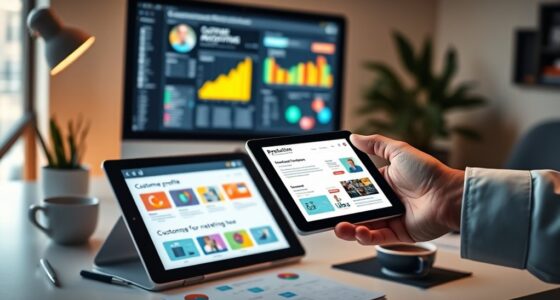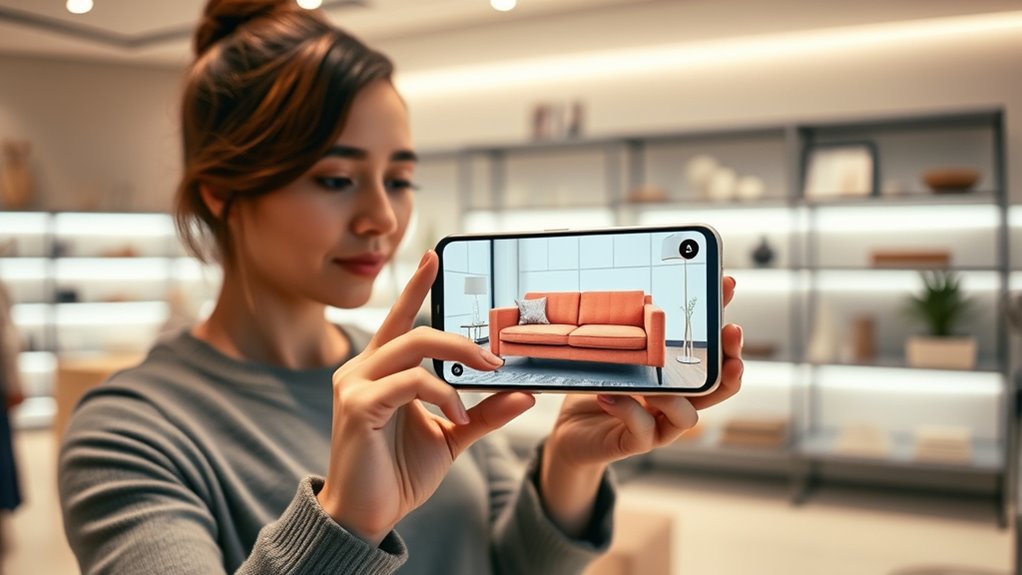

Augmented reality revolutionizes your shopping experience by letting you virtually try on clothes, accessories, or even see furniture in your space. This interactive technology boosts your confidence by visualizing products in real-time, helping you make smarter choices and reduce returns. It also makes browsing more fun and engaging, whether online or in-store. Stay with us, and you’ll discover how AR is transforming retail into a more personalized and satisfying journey for you.
Key Takeaways
- AR enables virtual try-ons, allowing customers to preview products realistically before purchasing.
- It enhances shopping engagement through interactive, immersive experiences both online and in-store.
- Virtual visualization reduces uncertainty and returns by aligning customer expectations with actual products.
- AR-powered displays encourage exploration of styles, colors, and sizes, increasing purchase confidence.
- Implementing AR builds trust and innovation, boosting sales and fostering stronger customer-retailer relationships.
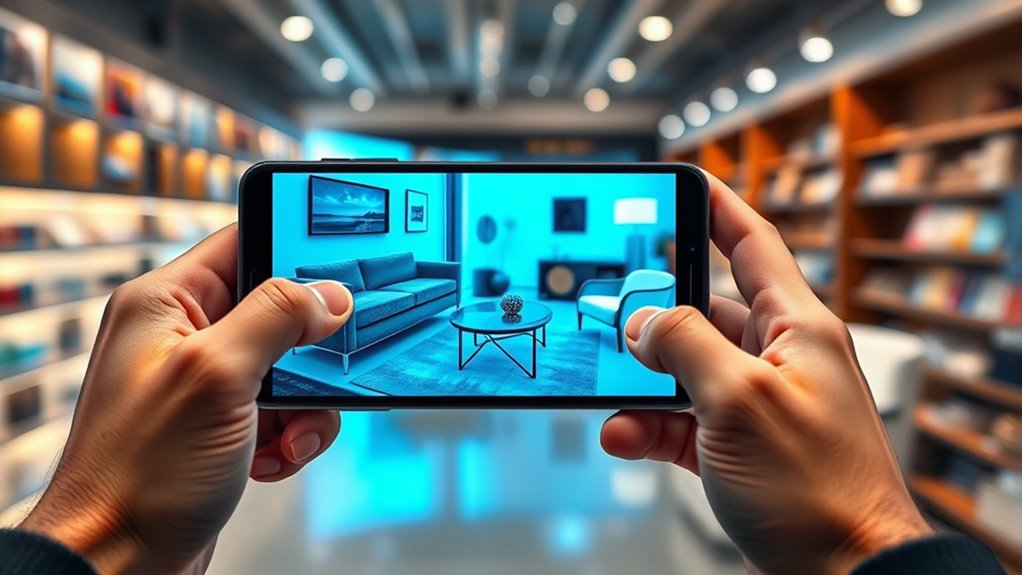
Have you ever wondered how augmented reality is transforming the way businesses sell products? It’s a game-changer, especially when it comes to giving customers a more engaging shopping experience. With augmented reality, you can now try before you buy, making the entire process more interactive and personalized. One of the most exciting developments is virtual fitting, which allows you to see how clothes, accessories, or even makeup will look on you without stepping into a store. Instead of relying solely on your imagination or static images, you can use your smartphone or a kiosk equipped with AR technology to see real-time overlays of products on your body. This not only boosts confidence in your purchasing decision but also reduces the hassle of returns due to mismatched expectations. Additionally, incorporating skincare patches into AR experiences could help users visualize how products like patches would perform on their skin, enhancing confidence in their choices.
Augmented reality transforms shopping with virtual fitting, making try-ons interactive, personalized, and confidence-boosting.
Interactive displays are another cornerstone of AR in sales. When you enter a store or visit a website, these displays invite you to explore products in a way that feels natural and intuitive. Instead of flipping through catalogs or viewing static images, you interact with digital representations that respond to your gestures and movements. For example, you might rotate a virtual sofa to view it from different angles or see how a new piece of jewelry looks on your hand. These interactive displays make the shopping experience more immersive, helping you visualize how products fit into your life. As a result, you spend less time guessing and more time making confident choices.
Using AR for virtual fitting and interactive displays can markedly influence your purchasing behavior. You’re empowered to experiment with different styles, colors, and sizes without commitment. This convenience encourages you to explore more options and find the perfect match for your preferences. For retailers, providing such experiences creates a sense of innovation and customer-centric service that can set them apart from competitors. It also streamlines the sales process, reducing uncertainty and increasing satisfaction. Plus, since these AR experiences are accessible from your home or in-store, they fit seamlessly into your daily routine, making shopping more flexible and enjoyable.
Ultimately, augmented reality transforms the way you interact with products before making a purchase. Virtual fitting and interactive displays turn traditional shopping into a dynamic, engaging adventure, removing barriers and building trust. As these technologies continue to evolve, expect your shopping experience to become even more personalized, convenient, and fun. This shift not only benefits you as a customer but also helps businesses connect more deeply with their audience, driving sales and fostering brand loyalty.

Wooden Street Booth Vendor Display Stand, Rolling Market Cart Stall with Red Awning & Table Cloth, Outdoor Vending Kiosk for Retail Shops Fairs
Pushcart with 4cm (1 5/8") Wheels: 4 locking casters ensure stability when stationary, while enabling easy transport when...
As an affiliate, we earn on qualifying purchases.
Frequently Asked Questions
How Does AR Impact Customer Decision-Making in Direct Sales?
AR enhances your customer decision-making by using visualization techniques that make products more tangible. It boosts customer engagement, allowing clients to virtually try items, which helps them see how products fit their needs. This interactive experience builds confidence and reduces hesitation, leading to quicker, more informed purchase decisions. You’ll find that AR creates a more immersive shopping journey, encouraging customers to buy with greater certainty and satisfaction.
What Industries Benefit Most From AR in Sales?
Think of AR as a key that unlocks new levels of retail innovation. You’ll find industries like fashion, furniture, and cosmetics benefit most from AR in sales, as it seamlessly integrates technology into the shopping experience. By allowing customers to virtually try products, you create engagement and reduce hesitation. This tech integration transforms traditional sales, making it easier for you to connect with customers and boost conversions in a competitive market.
ARe There Privacy Concerns With AR Customer Data Collection?
Yes, there are privacy concerns with AR customer data collection. You need to guarantee data security by protecting user information from breaches. It is crucial to obtain clear user consent before collecting any data, so customers understand how their information will be used. By prioritizing data security and transparency through user consent, you can build trust and comply with privacy regulations, reducing potential risks associated with AR data collection.
How Cost-Effective Is Implementing AR for Small Businesses?
Implementing AR can be cost-effective for small businesses, but you should consider implementation costs and scalability challenges. While initial setup might seem high, the technology can boost sales and customer engagement, leading to a good return on investment. However, as your business grows, you’ll need to adapt the AR solutions to handle increased demand and complexity, which could add to long-term costs. Planning carefully helps maximize benefits while managing expenses.
What ARe Future Trends for AR in Direct Sales?
You’ll see future AR trends in direct sales focusing on virtual try-ons and personalized experiences. As technology advances, you’ll offer customers more immersive and tailored interactions, making shopping more engaging. Expect increased use of AR for customizing products, real-time fittings, and virtual showrooms. These innovations will help you build stronger connections with your customers, boost sales, and differentiate your brand in a competitive market.

Jwevvie Portable Bar Table with Storage Shelves, Folding Mobile Bartending Station with Skirt, Carry Case, for Events, Party, Camping, Picnic, Tradeshow (15.2" D x 38.5" W x 34.5" H)
[Multi-Purpose Portable Bar] Max out your space with this 38.5" portable bar table & folding counter. Ideal as...
As an affiliate, we earn on qualifying purchases.
Conclusion
You might worry that augmented reality is too complex or costly, but it’s more accessible than you think. By allowing customers to virtually try products, you create an engaging experience that builds confidence and trust. Imagine shoppers confidently making purchases because they see how a piece looks in their space or on themselves. AR removes doubts, boosts satisfaction, and ultimately drives sales. Don’t let hesitation hold you back—embrace AR and transform your sales approach today.

Torched 3-Tier Retail Table Display Corner Stand with Shelves for Products - Portable | 3 Step Corner Display Rack for Retail Table Top, Counter Top, Craft Shows, Farmers Market, Tradeshows
3-Tier Corner Retail Table Display Stand with Shelves: This versatile display stand offers an effective solution for showcasing...
As an affiliate, we earn on qualifying purchases.

4 ft Folding Table with Metal Mesh Desktop, Grill Table Camping Table with Carry Handle,Adjustable Height (16.5" & 26"), Outdoor Table for Camp, Cooking, BBQ, RV, Picnic,Fits 4–8 People,Black
【Lightweight & Portable & Tool - Free Setup】Collapses to 23.6×23.6×2.56” (4 kg/8.8 lbs) with a carry handle—toss in...
As an affiliate, we earn on qualifying purchases.