

To offer discounts safely, plan them strategically to protect your profit margins and brand value. Use limited-time, targeted promotions that appeal to specific customer segments without overdoing it. Keep discounts brief and well-timed, so customers see them as special offers rather than regular sales. Monitor competitor tactics and adjust accordingly to stay competitive. By balancing attractive deals with careful management, you can boost sales without hurting your bottom line. Keep exploring to learn more about making discounts work for you.

Get business pricing on office and shipping supplies
- Business-only prices and quantity discounts
- Tax-exempt purchasing
- Multiple users, one account, clear invoices
Key Takeaways
- Set clear objectives and limits for discounts to prevent eroding profit margins.
- Use targeted, time-limited promotions to create urgency without over-discounting.
- Monitor competitor pricing strategies to stay competitive without excessive discounting.
- Balance discounts with value-added offers to maintain brand perception and customer trust.
- Regularly analyze sales data to assess discount effectiveness and adjust strategies accordingly.
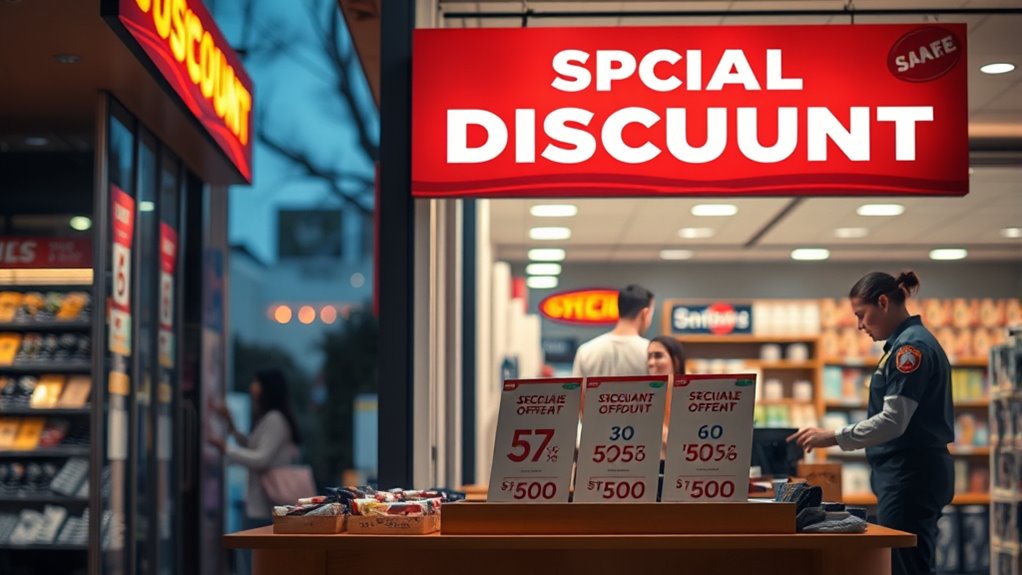
Offering discounts can boost sales and attract new customers, but it’s essential to do so safely to protect your profit margins and brand reputation. To do this effectively, you need to understand how pricing psychology influences customer behavior. Consumers often perceive discounts as a way to get more value for their money, which can drive impulse purchases and increase overall sales. However, if you overuse discounts or set them too deep, you risk devaluing your products and diminishing your brand’s perceived worth. It’s important to strike a balance where discounts seem appealing but still maintain your profit margins. This is where pricing psychology plays a crucial role. For example, using psychological pricing tactics like ending prices with .99 or offering limited-time deals can create a sense of urgency and make discounts feel more significant. By understanding how customers perceive value and price, you can craft discounts that motivate purchases without eroding your margins. Additionally, properly managing the frequency and size of discounts can prevent customers from waiting for sales before making a purchase, maintaining your brand’s integrity and profitability.
Alongside pricing psychology, competitor analysis is vital when planning your discount strategy. You need to know what your competitors are doing—are they offering steep discounts, bundle deals, or loyalty rewards? This knowledge helps you position your promotions smarter. If your competitors heavily discount, matching or beating their deals might be necessary to stay competitive. But if they’re not discounting as much, you can leverage exclusive or strategic discounts to stand out without engaging in a race to the bottom. Monitoring competitor activity also helps you identify market trends and customer expectations, ensuring your discounts align with what consumers find attractive and persuasive.
While offering discounts, always consider your overall pricing structure. If you consistently discount too deeply, customers might start to see your regular prices as inflated or unreasonable. This can harm your brand’s reputation and make it difficult to sell at full price later. Instead, use discounts as a tactical tool—perhaps for clearing inventory, rewarding loyal customers, or creating buzz around new products. Make sure your discounts are time-limited and targeted, so customers perceive them as special opportunities rather than standard pricing. This approach preserves your brand’s premium perception and maintains healthy profit margins. Incorporating space and organization strategies can also help in managing inventory and pricing more effectively.
As an affiliate, we earn on qualifying purchases.
Frequently Asked Questions
How Can I Measure the Success of My Discount Campaigns?
You can measure your discount campaigns’ success by analyzing sales analytics to track changes in revenue and units sold. Pay attention to customer engagement metrics like increased website traffic, repeat purchases, or social media interactions. Comparing pre- and post-campaign data helps you see if your discounts attract new customers or boost loyalty. This approach guarantees you understand the impact without hurting your bottom line, allowing for smarter future promotions.
What Legal Considerations Should I Keep in Mind When Offering Discounts?
When offering discounts, you should guarantee you comply with contract law and pricing regulations. Make sure your promotional terms are clear and transparent to avoid legal disputes. Avoid false advertising and ensure your discounts don’t violate any local laws or industry-specific regulations. Keep documentation of your promotions, and review any contractual agreements with partners. Staying informed about legal requirements helps you prevent potential legal issues and maintain consumer trust.
How Do Discounts Impact Customer Perception Long-Term?
Discounts can positively influence customer loyalty if used strategically, making customers feel valued and encouraging repeat business. However, frequent discounts may harm your brand perception, causing customers to see your products as less premium or question their quality. To maintain a healthy balance, use discounts sparingly, focus on building trust, and communicate value clearly, ensuring your long-term reputation and customer relationships stay strong.
What Tools Are Available to Automate Discount Management?
While managing discounts manually can be tedious, you can automate with tools that handle dynamic pricing and discount scheduling effortlessly. Software like Prisync or PriceIntelligence adjusts prices in real-time based on market trends, ensuring you stay competitive. These tools enable you to set rules for discounts, schedule promotions, and monitor performance seamlessly, saving you time, reducing errors, and helping you maintain profitability while keeping customers engaged with timely offers.
How Can I Prevent Discounts From Eroding Brand Value?
To prevent discounts from eroding your brand value, you should maintain brand consistency across all promotions and communications. Limit discount frequency and depth to preserve your premium perception. Use targeted offers for loyal customers rather than broad discounts, ensuring your brand’s exclusivity stays intact. Regularly review your discount strategies to ensure they align with your brand’s image, reinforcing its premium status and avoiding devaluation in the eyes of consumers.
As an affiliate, we earn on qualifying purchases.
Conclusion
By offering discounts carefully, you protect your profits while still attracting customers. Think of it like walking a tightrope—balance is key. While the thrill of a sale can boost sales, a reckless discount can hurt your bottom line more than you’d like. So, embrace smart strategies, keep your focus sharp, and enjoy the dance of generosity and profitability. With caution and creativity, your promotions can be both exciting and sustainable.
limited time promotional banners
As an affiliate, we earn on qualifying purchases.
As an affiliate, we earn on qualifying purchases.
competitor price monitoring tools
As an affiliate, we earn on qualifying purchases.
As an affiliate, we earn on qualifying purchases.
Fall Picks
fall essentials
As an affiliate, we earn on qualifying purchases.