
To set up an email marketing funnel that runs on autopilot, start by creating compelling opt-in offers to grow a targeted list. Segment your subscribers based on their preferences and behavior to send personalized, relevant content. Use automated campaigns like welcome emails and nurturing sequences to build trust and guide them toward purchase. Monitor and optimize your strategy regularly. Keep going, and you’ll discover how to turn subscribers into loyal customers with less effort.
Key Takeaways
- Create compelling opt-in offers to attract targeted subscribers and initiate the email funnel.
- Segment your list based on subscriber behavior and preferences for personalized, relevant messaging.
- Use automated drip campaigns to nurture leads with tailored content and strategic sequences.
- Employ engagement tactics like social proof and limited-time offers to convert subscribers into customers.
- Maintain long-term relationships with post-sale follow-ups, loyalty programs, and ongoing value-driven communication.
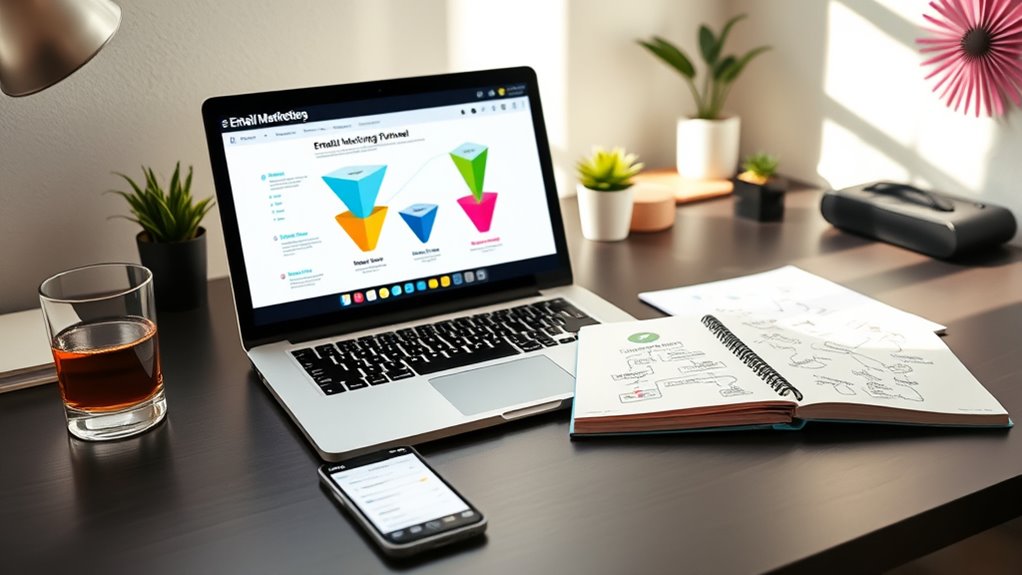
Have you ever wondered how businesses turn email subscribers into loyal customers? The secret lies in a well-designed email marketing funnel that guides prospects seamlessly from initial interest to a purchase, all on autopilot. It starts with effective list building, which is about capturing the right contacts and turning website visitors into engaged subscribers. You want to create compelling opt-in offers, like free downloads or discounts, that motivate visitors to share their email addresses. Once you’ve gathered a solid list, the real magic happens through email segmentation. By dividing your subscribers into targeted groups based on their behavior, preferences, or demographics, you can send highly relevant content that resonates with each segment. This personalization boosts engagement and builds trust, increasing the likelihood of conversions.
Effective email list building and segmentation turn subscribers into loyal customers through personalized, targeted content.
Building your list is just the first step. You need to nurture those relationships with strategic email sequences. Welcome emails set the tone, introducing your brand and offering value right away. From there, automated drip campaigns deliver tailored content that addresses your subscribers’ pain points or interests. For example, if someone signs up because they’re interested in a specific product, you can send them a series of emails demonstrating its benefits, sharing testimonials, or offering special promotions. Email segmentation ensures that each recipient receives messages aligned with their journey, making your communication feel personal rather than generic. Additionally, utilizing bulk email techniques can enhance your outreach efficiency without increasing costs.
As your subscribers move through the funnel, engagement is key. Use open rates, click-through rates, and purchase behaviors to refine your segmentation and messaging. The goal is to gradually guide them toward making a purchase, using persuasive content, limited-time offers, or social proof. When done right, this process feels natural and helpful rather than pushy. It creates a sense of familiarity and trust that encourages subscribers to choose your brand over competitors.
Eventually, your automated funnel will lead to the sale, with follow-up sequences designed to maximize conversions and encourage repeat business. Even after the sale, you can continue nurturing customers with additional offers, feedback requests, or loyalty programs. The beauty of a well-structured email marketing funnel is that it works tirelessly in the background, converting leads into loyal customers while you focus on other parts of your business. By consistently optimizing your list building strategies and refining your email segmentation, you’ll create a system that not only drives sales but builds long-term relationships on autopilot.

MASTERING ONLINE MARKETING - Create business success through content marketing, lead generation, and marketing automation.: Learn email marketing, search ... and Entrepreneurship Series Book 1)
As an affiliate, we earn on qualifying purchases.
Frequently Asked Questions
How Do I Segment My Email List Effectively?
You can segment your email list effectively by analyzing customer data to identify common traits, behaviors, and preferences. Use targeting strategies like past purchases, engagement levels, and demographics to create specific segments. Regularly update these segments to reflect changes in customer behavior, ensuring your messages are personalized and relevant. This approach improves open rates and conversions, making your email marketing more impactful and efficient.
What Are the Best Tools for Automating Email Funnels?
Think of automating your email funnels like planting a garden—you need the right tools to nurture growth. Use platforms like Mailchimp, ActiveCampaign, or ConvertKit to streamline your campaigns. These tools excel at personalization strategies and follow deliverability best practices, ensuring your messages reach inboxes. They allow you to create targeted sequences that nurture leads effortlessly, helping your sales blossom on autopilot while keeping your engagement high.
How Can I Improve Email Open Rates Consistently?
To improve your email open rates consistently, focus on subject line optimization by crafting compelling, curiosity-driven headlines. Incorporate personalization strategies, like using the recipient’s name or relevant interests, to make each email feel tailored. Test different subject lines to see what resonates best, and send emails at the most suitable times. Keeping your content relevant and engaging also encourages opens, building a loyal audience over time.
What Are Common Mistakes to Avoid in Email Funnel Design?
Avoid common mistakes in email funnel design by neglecting subject line optimization and personalization tactics. Don’t send generic messages; instead, craft compelling subject lines that grab attention and tailor content to your audience’s preferences. Failing to segment your list or ignoring personalization can reduce engagement. Make sure each email offers value, maintains clear calls-to-action, and respects your subscribers’ inboxes, boosting open rates and conversions.
How Do I Measure the ROI of My Email Marketing Funnel?
To measure the ROI of your email marketing funnel, track your conversion rates and revenue generated. Use A/B testing to compare different email elements and improve click-through rates, which directly impact ROI. Calculate ROI by subtracting your email campaign costs from the revenue it produces, then divide by the costs. Regularly analyze these metrics to optimize your funnel, ensuring you’re making data-driven decisions that maximize your returns.

ChatGPT for Ecommerce Marketing : How to Create Product Descriptions, Ads, Emails, SEO Content, and Social Media Posts That Drive Sales
As an affiliate, we earn on qualifying purchases.
Conclusion
Now, picture your email marketing funnel as a smooth river guiding your prospects from curiosity to conversion. Each step flows seamlessly, like a gentle current pulling them closer to that final sale. When you craft compelling opt-ins and nurture relationships, you’ll watch your sales bloom effortlessly on autopilot. Keep refining your process, and soon, your inbox will be bustling with enthusiastic customers, all happily sailing toward your offers without a hitch.

Ecommerce Empire Builders: The Definitive Guide To Starting & Scaling A Future-Proof Online Business
As an affiliate, we earn on qualifying purchases.

Click to Convert, The Ultimate Amazon Ads Strategy: This book is dedicated to sellers seeking to set up and optimize their ppc ads campaigns (Ecommerce Selling Mastery 2)
As an affiliate, we earn on qualifying purchases.