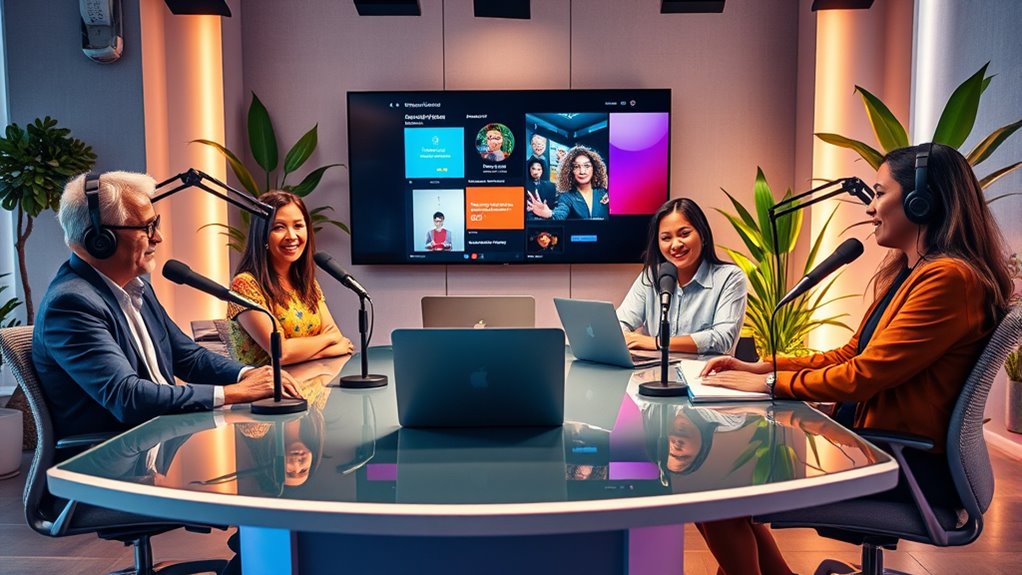

Collaborating on a podcast or YouTube channel allows you to tap into new audiences, boost your credibility, and create dynamic content. By partnering with others, you can share episodes, cross-promote on social media, and reach viewers or listeners you might not have accessed alone. These collaborations also help you learn new skills and inspire fresh ideas. If you want to discover more strategies for successful partnerships and long-term growth, keep exploring these tips.
Key Takeaways
- Reach out to individuals with complementary audiences to maximize cross-promotion potential.
- Plan collaborative content that offers unique value to both audiences, such as interviews or joint projects.
- Promote collaborations through social media, teaser clips, and shared graphics to increase visibility.
- Schedule and coordinate release times to ensure maximum promotional impact and audience engagement.
- Leverage guest expertise to enhance content quality and credibility, encouraging sharing and growth.
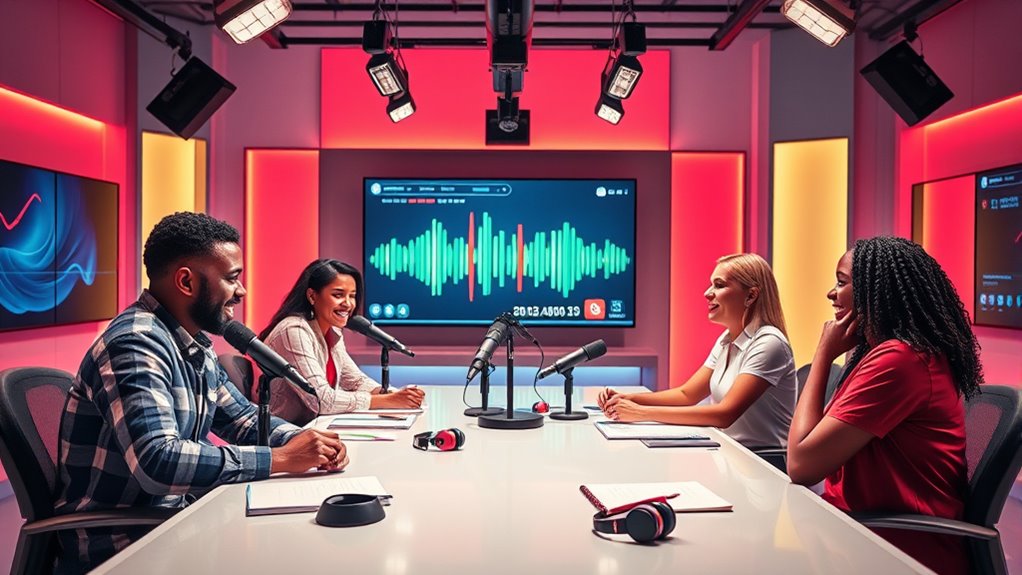
Ever wondered how collaborating on a podcast or YouTube channel can elevate your content and reach? By inviting guest appearances, you can introduce fresh perspectives, tap into new audiences, and boost your credibility. When you feature guests who bring unique expertise or storytelling styles, your content becomes more dynamic and engaging. Plus, these guests often share their appearance with their own followers, creating an excellent opportunity for cross promotion. This not only exposes your channel to a broader audience but also strengthens your network within your niche.
Guest appearances serve as a powerful tool for growth because they provide value to both your viewers and your guest. Your guest gets a platform to showcase their knowledge or products, while you gain access to their followers. When you promote the episode on social media and encourage your guest to do the same, you harness the power of cross promotion. This strategy amplifies your reach exponentially, helping you attract new subscribers or viewers who might not have discovered you otherwise. It’s a win-win situation that accelerates growth and builds relationships within your community.
Collaborating also offers tangible benefits beyond audience expansion. It allows you to learn from others, exchange ideas, and improve your content creation skills. Working with a guest can inspire new formats, topics, or even technical approaches, keeping your content fresh and innovative. As you develop partnerships over time, you might find collaborative opportunities evolving into long-term projects or sponsorships, further broadening your reach and revenue potential. Additionally, understanding candle-making techniques can inspire creative visuals or themes in your content, making your collaborations even more engaging.
To maximize these benefits, plan your guest appearances strategically. Reach out to individuals whose audience overlaps with yours or who can add valuable insight to your content. When scheduling, coordinate your cross promotion efforts—share teaser clips, behind-the-scenes moments, or snippets of the conversation beforehand. Make it easy for your guest to promote their appearance by providing them with shareable graphics or suggested captions. This collaborative approach maximizes exposure and creates a buzz around your content.
Ultimately, guest appearances and cross promotion are essential tools in your growth arsenal. They help diversify your content, bring in new viewers, and deepen your community ties. By choosing the right guests and promoting your collaborations effectively, you can substantially expand your reach, making your podcast or YouTube channel a must-watch destination. So, start reaching out, plan your collaborations, and watch your audience grow through the power of teamwork.

FIFINE USB/XLR Dynamic Microphone for Podcast Recording, PC Computer Gaming Streaming Mic with RGB Light, Mute Button, Headphones Jack, Desktop Stand, Vocal Mic for Singing YouTube-AmpliGame AM8
- Natural Audio Clarity: 50Hz-16KHz frequency response for balanced sound
- Directional Cardioid Microphone: Rejects off-axis noise for clear vocals
- XLR Connection Upgrade: Connects to audio interface for versatile use
As an affiliate, we earn on qualifying purchases.
As an affiliate, we earn on qualifying purchases.
Frequently Asked Questions
How Do I Find the Right Collaborators for My Niche?
You find the right collaborators by focusing on audience targeting and content consistency. Look for creators whose audience overlaps with yours and whose style complements your niche. Engage with their content, comment, and build genuine relationships. When proposing collaboration, emphasize mutual benefits and make certain your content aligns, maintaining consistency. This approach helps attract partners who genuinely connect with your brand, increasing your reach and engagement effectively.
What Are Common Legal Considerations When Collaborating?
Did you know 60% of collaborations face legal issues? When collaborating, you must consider intellectual property rights to safeguard your content. Draft clear contract negotiations that specify ownership, responsibilities, and revenue sharing. This helps prevent disputes and ensures both parties understand their rights. Always consult a legal professional to review agreements, so your creative partnership stays protected and focused on growth, not legal troubles.
How Can I Ensure Fair Distribution of Revenue?
To guarantee fair revenue sharing and profit distribution, you should create a clear agreement upfront that outlines each collaborator’s percentage of earnings. Use written contracts detailing how income from ads, sponsorships, or merchandise will be divided. Regularly track and document all revenue sources, and communicate openly with your partners. This transparency helps prevent disputes and guarantees everyone receives their fair share based on their contributions.
What Tools Facilitate Remote Collaboration Effectively?
Think of remote collaboration tools as the bridge connecting your ideas. You’ll find platforms like Google Workspace for collaborative editing, which allows real-time content creation, and Miro or MURAL for remote brainstorming, helping your team visualize concepts together. These tools keep everyone on the same page, regardless of location, making it easy to share ideas, edit content, and brainstorm seamlessly, turning your remote team into a synchronized orchestra.
How Do I Handle Disagreements During Collaborations?
When guest disagreements or content disagreements arise, address them calmly and openly. You should listen carefully, acknowledge their perspective, and clarify your own. If needed, suggest compromises or alternative ideas to keep the collaboration productive. Stay respectful, focus on common goals, and avoid escalating tension. Remember, open communication helps resolve conflicts quickly, ensuring your project stays on track and maintains a positive, collaborative atmosphere.
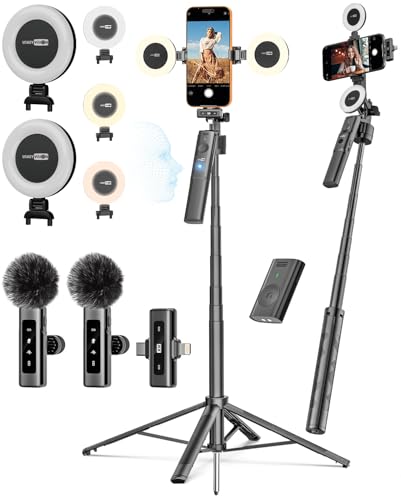
USKEYVISION Vlogging Kit for iPhone&Android,Content Creator Essentials,YouTube Starter Kit w/Wireless Microphone&Remote,68” Auto Face Tracking Tripod for iPhone w/Light for TikTok Video Recording
- Complete Content Creator Kit: Includes tripod, microphone, lights, remote, spike
- Auto Face Tracking Tripod: Follows your movement with gesture control
- 360° Rotation and 270° Tilt: Offers versatile shooting angles
As an affiliate, we earn on qualifying purchases.
As an affiliate, we earn on qualifying purchases.
Conclusion
By collaborating on a podcast or YouTube channel, you open doors to new audiences and fresh ideas. For example, teaming up with a fellow creator who shares your niche can boost your visibility and bring diverse perspectives. Imagine launching a joint series that combines your expertise—your reach grows, and your content becomes more dynamic. Ultimately, partnerships like these turn your passion into a powerful platform, making growth both achievable and exciting.
As an affiliate, we earn on qualifying purchases.

ALSO GO Podcast Equipment Bundle, Podcast Equipment with BM-800 Microphone(Gold) & F998 Sound Card, Recording Studio Equipment for Podcasting, Singing, Gaming, and Live Streaming YouTube Tiktok
- Complete Podcast Equipment Kit: Includes microphones, mixer, accessories
- Studio-Quality Sound with Cardioid Tech: Reduces noise, enhances audio clarity
- Upgraded F998 Sound Card: 16 effects, 7 modes, 4 voice changers
As an affiliate, we earn on qualifying purchases.
As an affiliate, we earn on qualifying purchases.