
TL;DR
AI companies are creating real-time, 24/7 monitoring systems that oversee business operations, highlighting decision gaps and operational risks. The initiative aims to improve resilience but raises questions about reliability and impact.
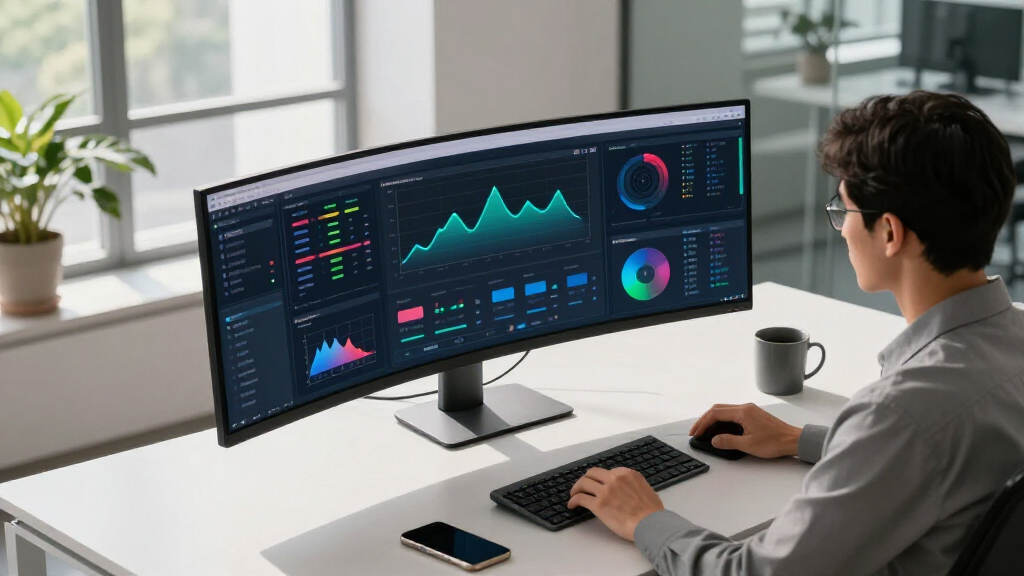
Several AI companies are now implementing continuous, 24/7 live monitoring systems that oversee business operations in real time, as detailed in the original analysis. These systems aim to identify decision gaps, operational risks, and performance issues as they happen, offering insights into organizational stability. This development marks a shift from isolated task automation to comprehensive, real-time organizational oversight, with potential implications for business resilience and management practices, as discussed in the original analysis.
Multiple AI firms have launched or are testing live monitoring platforms that track a company’s operational health around the clock. These systems incorporate AI-driven analysis of decision-making processes, financial metrics, and crisis management, providing live updates accessible to stakeholders. One prominent example is a synthetic company experiment where 13 AI-driven ’employees’ operate a business with a real cash burn of €105,000 monthly against €2,300 in recurring revenue, publicly exposing the company’s financial and operational state daily, as highlighted in the original analysis.
These monitoring tools do not merely observe but actively record every decision, action, and failure, creating an evolving, transparent record. This approach allows organizations to see not only what decisions are made but whether they are executed effectively, highlighting the gap between diagnosis and action. The experiment demonstrates that while AI models can identify problems and produce recommendations, completing critical actions remains a challenge, underscoring the importance of disciplined execution.
In one case, AI models successfully identified a hidden weakness in a sales process that led to closing a €55,000 deal, illustrating the potential of live monitoring to uncover overlooked opportunities. Conversely, even highly analytical AI systems failed to complete some tasks, emphasizing that thorough analysis alone does not guarantee operational success. The live experiment also tested trust and decision discipline, with AI models refusing to approve suspicious requests, maintaining operational integrity under pressure.
Implications of Continuous AI-Driven Business Oversight
This development indicates a shift toward increased transparency and proactive risk management in organizational operations. By providing immediate insights into decision gaps and operational weaknesses, businesses may be able to respond more quickly to emerging issues. However, the experiments also highlight that AI’s ability to diagnose problems does not necessarily ensure effective action, raising questions about the readiness of AI systems to manage complex business processes without human oversight. Stakeholders should consider both the analytical capabilities and the operational reliability of AI systems in dynamic environments.
As an affiliate, we earn on qualifying purchases.
Rise of Live Monitoring and AI-Driven Oversight
Traditional AI applications have focused on isolated tasks like automation or data analysis. Recently, firms have begun experimenting with integrated, continuous monitoring systems that provide live insights into organizational health. The concept gained prominence through experiments like the one conducted by a synthetic company with 13 AI ’employees,’ which publicly tracks its financial and operational status daily. This approach builds on the broader trend of transparency and automation in enterprise management, aiming to support timely decision-making and operational oversight.
Such initiatives are driven by advances in AI, machine learning, and real-time data processing, enabling organizations to observe and analyze their operations continuously. While these systems are still in experimental stages, they reflect a growing industry interest in moving beyond static dashboards toward dynamic, live oversight that can adapt and respond to emerging issues.
“These live monitoring systems expose the decision gaps that traditional oversight often misses, providing a new level of organizational transparency.”
— an anonymous researcher
real-time operational analytics tools
As an affiliate, we earn on qualifying purchases.
As an affiliate, we earn on qualifying purchases.
Unanswered Questions About AI Live Monitoring Effectiveness
It is still uncertain how widely adopted these live monitoring systems will become and whether they can reliably manage complex, real-world business environments without human oversight. The long-term impact on organizational decision-making, trust, and operational outcomes remains to be seen. Additionally, questions about data privacy, security, and potential over-reliance on AI-driven insights are still under discussion among industry experts.
AI-driven business risk management platform
As an affiliate, we earn on qualifying purchases.
As an affiliate, we earn on qualifying purchases.
Next Steps for AI-Driven Business Monitoring Adoption
As these live monitoring systems develop further, more companies may consider piloting or adopting them for critical operational functions. Future efforts are likely to focus on enhancing AI’s capacity to execute decisions, integrating human oversight, and improving transparency features. The broader adoption of such systems will depend on demonstrating tangible benefits in operational resilience and risk mitigation, as well as addressing ethical and security considerations.
enterprise performance monitoring system
As an affiliate, we earn on qualifying purchases.
As an affiliate, we earn on qualifying purchases.
Key Questions
How do AI live monitoring systems improve business stability?
They provide continuous, real-time insights into operational and financial health, enabling faster detection and response to issues, which can help prevent crises and support resilience.
What are the main challenges of implementing these systems?
Ensuring AI systems can reliably complete critical actions, maintaining trust, managing data security, and integrating AI decisions with human oversight are key challenges.
Will AI replace human decision-makers in business management?
Currently, AI systems are intended to assist and support human decision-making. Complete replacement is uncertain, especially given the current limitations in translating diagnosis into action.
Are there risks associated with continuous AI monitoring?
Yes, potential risks include data privacy concerns, over-reliance on AI systems, errors in autonomous decision-making, and security vulnerabilities.
When might these systems become standard in businesses?
Wider adoption will depend on demonstrating clear operational benefits and addressing technical and ethical challenges, which may take several years.
Source: ThorstenMeyerAI.com