📊 Full opportunity report: The Open Stack AI Infrastructure Hiding In The Microduck Toy on ThorstenMeyerAI.com — validation score, market gap, and execution plan.
TL;DR
Hugging Face has launched Microduck, an affordable, open-source AI robot embedded in a toy-like device. While it aims to democratize embodied AI, security and privacy concerns arise due to its open platform and data collection features.
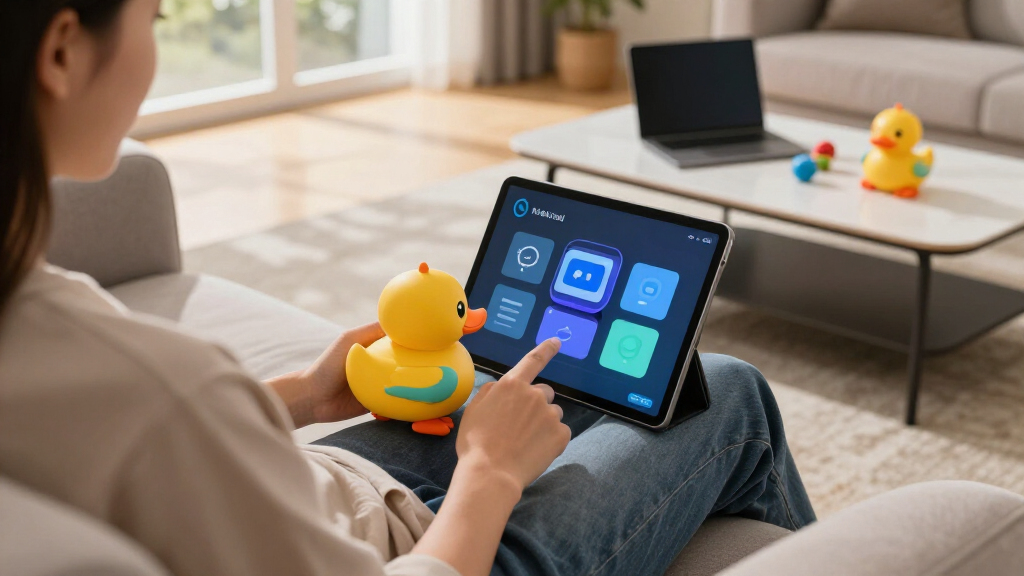
Hugging Face has introduced Microduck, a small, open-source AI robot designed for developers and researchers, priced at $399 and shipping before Christmas. The device, shaped like a toy duck, contains hardware capable of movement, object manipulation, and environmental sensing, and is built to facilitate reinforcement learning in embodied AI. This launch highlights a significant shift in making advanced AI hardware accessible and customizable, with implications for security and privacy in home environments.
Microduck is a compact, lightweight robot approximately 25 centimeters tall and under 800 grams, developed in collaboration with Pollen Robotics, a French startup acquired by Hugging Face in April 2025. It features 15 motors, IMUs, a camera, microphone, speaker, WiFi, Bluetooth, and LiDAR, enabling it to perform actions like waddling, sitting, recovering from falls, and even rollerblading in demos. The hardware’s affordability and open design aim to democratize embodied reinforcement learning, allowing developers to read, fork, and retrain the entire system via open-source tools hosted on GitHub.
Preorders began on Thursday at $399, with shipments expected before Christmas. While the toy-like appearance masks its technical sophistication, experts caution that the demos—such as sock retrieval and roller skating—are curated and not indicative of fully reliable, real-world performance. The device’s integrated sensors and network connectivity raise privacy concerns, especially as it operates within private homes, collecting data through cameras, microphones, and LiDAR.
Hugging Face is doing to robotics what it did to model weights: making the substrate open, cheap, and forkable. The duck is the marketing. Open embodied RL at $399 is the story.
Implications of Open-Source Robotics Accessibility
The launch of Microduck signifies a major step toward democratizing embodied AI by making hardware and training tools open and affordable. This could accelerate innovation in robotics, enabling a broader range of developers and researchers to experiment with physical AI behaviors. However, the open architecture also raises security and privacy risks, as devices with networked sensors in private spaces could be vulnerable to breaches or misuse, especially given recent incidents involving open infrastructure.
As an affiliate, we earn on qualifying purchases.
Background on Open-Source Robotics and Industry Trends
Hugging Face has established itself as a leader in open AI model sharing, promoting transparency and community-driven development. Its acquisition of Pollen Robotics and subsequent product launches, like Reachy Mini and now Microduck, reflect a strategic shift toward open embodied AI. The robotics industry has traditionally favored proprietary, high-cost systems; Microduck’s open-source approach challenges this paradigm by offering accessible, customizable hardware. Recent security incidents, including breaches at OpenAI, underscore the vulnerabilities inherent in open infrastructure, which are now mirrored in the robotics sphere.
The potential Nvidia acquisition, valued at around $13 billion, signals industry confidence in Hugging Face's approach and its integration into broader AI hardware ecosystems. This context heightens the relevance of Microduck’s open platform, as it embodies both the democratization and the risks associated with open AI development.
"Our goal is to make embodied AI accessible to everyone, and Microduck is a step toward that vision—small, affordable, and open for experimentation."
— Clem Delangue, CEO of Hugging Face
As an affiliate, we earn on qualifying purchases.
Security and Privacy Risks of Open Embodied AI
It remains unclear how effectively Hugging Face will mitigate security vulnerabilities associated with Microduck’s open architecture and networked sensors. The potential for breaches or misuse of data collected by the device in private homes has not been fully addressed, and the implications of widespread adoption are still uncertain.
programmable toy robot with sensors
As an affiliate, we earn on qualifying purchases.
As an affiliate, we earn on qualifying purchases.
Future Developments and Industry Impact
Hugging Face plans to continue refining Microduck’s software and hardware, with updates to security protocols and privacy safeguards likely. The broader industry will monitor how open embodied AI platforms like Microduck influence robotics innovation and regulation. Additionally, the potential Nvidia acquisition could accelerate integration of Microduck’s open approach into larger AI hardware ecosystems, shaping the future landscape of accessible robotics development.
embodied reinforcement learning robot
As an affiliate, we earn on qualifying purchases.
As an affiliate, we earn on qualifying purchases.
Key Questions
What is Microduck?
Microduck is a small, open-source AI robot developed by Hugging Face, designed for developers and researchers to experiment with embodied reinforcement learning. It features hardware capable of movement, object manipulation, and environmental sensing, all at an affordable price.
Why is the open-source approach significant?
Making the hardware and training environment open allows a broader community of developers to create, modify, and improve embodied AI systems. This approach aims to democratize robotics, similar to how open-source software transformed AI development.
What are the privacy concerns associated with Microduck?
The device contains cameras, microphones, and LiDAR sensors that operate within private homes, collecting data for learning purposes. This raises questions about data security, potential breaches, and user privacy, especially given the open nature of the platform.
How does the potential Nvidia acquisition impact this project?
If confirmed, Nvidia’s acquisition of Hugging Face could accelerate the integration of Microduck’s open platform into larger AI hardware ecosystems, potentially increasing its reach but also raising concerns about consolidation and control over open-source robotics tools.
What are the next steps for Microduck?
Hugging Face will likely release software updates, security patches, and new features. Industry observers will also watch for regulatory developments and how the open platform influences broader adoption and safety standards in robotics.
Source: ThorstenMeyerAI.com