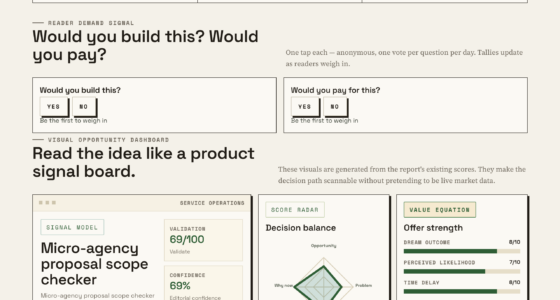
📊 Full opportunity report: A Product Sourcing Marketplace For Independent Retailers on IdeaNavigator AI — validation score, market gap, and execution plan.

Get business pricing on office and shipping supplies
- Business-only prices and quantity discounts
- Tax-exempt purchasing
- Multiple users, one account, clear invoices
TL;DR

A proposal for a product-sourcing marketplace would let independent retailers place trial-size orders that fall below distributors’ usual minimums. The concept has not been shown to be operating: its suggested test is to broker orders manually between 20 brands and 50 shops, then measure whether trial purchases lead to standard reorders within a quarter.
IdeaNavigator AI has proposed a product-sourcing marketplace that would let independent retailers test new merchandise in small quantities, addressing distributor order minimums that can make experimentation difficult. The concept is at the proposal stage; no operating marketplace, completed pilot or measured sales results are reported.
In its proposal, IdeaNavigator AI describes a dedicated marketplace lane for trial-size wholesale orders. Participating brands would set lower minimum quantities and use consolidated fulfillment, while shop owners could test assortments of around five units before committing to a standard wholesale order. The proposal does not specify which product categories, regions or shipping partners would be involved.
IdeaNavigator AI says retailers would track how trial products sell, allowing brands to assess demand. Under the suggested model, a successful test could lead to a standard wholesale relationship. The proposal does not define what counts as a successful test, how long a retailer would have to report sales, or whether any reorder would be required.
The proposal’s revenue model combines a commission on orders with paid analytics subscriptions for brands. To test the idea, IdeaNavigator AI recommends manually brokering trial orders between 20 brands and 50 shops and measuring whether trial purchases turn into standard reorders within a quarter. These are recommended pilot parameters, not results from a pilot already conducted.
Why Small Trial Orders Matter
For a small shop, a high opening order can tie up cash and shelf space before there is evidence that customers want a product. A lower-quantity test could reduce the size of that initial commitment and give retailers a way to explore merchandise beyond their established bestsellers. Whether it would do so depends on the actual minimums, product costs, delivery charges and terms offered.
The concept also rests on a practical constraint: small orders can be expensive to fulfill. Consolidating shipments might make five-unit tests more workable, but the proposal provides no shipping-cost figures or operating model showing that the savings would cover picking, packing and delivery. If fulfillment costs stay high, either retailers or brands could face prices that weaken the appeal of trial orders.
Brands could gain information about how products perform in independent shops before seeking wider distribution. Paid analytics might be useful if the data is detailed, reliable and worth the subscription price. That value has not been established. The proposal’s suggested pilot would need to show not only that shops place trial orders, but also that those orders generate repeat purchases and that the resulting economics work for both sides.
Products Worth Considering

FLEXISPOT 32-Inch Electric Standing Desk Converter with Keyboard Tray

Apple iPad Air (4th Generation, 10.9-inch, Wi-Fi, 256GB) – Space Gray
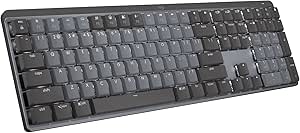
Logitech MX Mechanical Wireless Illuminated Keyboard, Tactile Quiet, Graphite
As an affiliate, we earn on qualifying purchases.
From Marketplace Model to Micro-Orders
IdeaNavigator AI’s proposal points to Faire as evidence that wholesale marketplaces can connect brands and independent retailers. It argues that a remaining opportunity is to make very small trial purchases workable through consolidated fulfillment. That comparison is the proposal’s framing; it does not establish how existing marketplaces handle minimums, what services they currently offer or whether a distinct small-order marketplace would attract customers.
In its description of the problem, IdeaNavigator AI says independent shop owners may want to sample new products but face distributor minimums or opening orders designed for larger buyers. The proposal says this can leave shops with more conservative selections and make product discovery dependent on periodic trade shows. It does not include interviews, survey findings or sales data establishing how common those experiences are.
IdeaNavigator AI presents manual order brokering as a first step, narrower than building a full marketplace. This would let the organizers test whether retailers and brands will participate before investing in platform features. The suggested 20-brand, 50-shop pilot would focus on conversion to standard reorders over one quarter, rather than treating marketplace launch or initial order volume as proof of a durable business.
Pilot Results and Costs Remain Unknown
IdeaNavigator AI’s proposal identifies no launch, participating brands, participating retailers or completed transactions. It is not clear whether any manual pilot has started. The proposal also reports no figures for order values, delivery costs, brand fees, retailer retention or the share of trial orders that become standard reorders.
The plan leaves open how brands would set micro-minimums, how mixed-brand shipments would be assembled, who would cover unsold stock and what terms would apply if a trial product does not sell. It also does not explain how sell-through data would be collected, shared or compared across shops. Until those details and pilot results are available, the marketplace’s demand and commercial viability remain unverified.
A Manual Test Would Come First
IdeaNavigator AI proposes arranging trial orders manually between 20 brands and 50 independent shops. The test would track whether participating retailers move from small initial purchases to standard wholesale reorders during a quarter. The proposal does not give a start date, identify organizers or say that brands and shops have committed to take part.
A useful assessment would need to report the number of shops that place orders, the time taken to sell through products, repeat-order rates and the costs of consolidating and delivering small shipments. Results would also need to distinguish retailers that reorder from those that simply try a product once. No outcome has been reported, so the concept’s next milestone is evidence from a pilot rather than a confirmed marketplace launch.
Source: IdeaNavigator AI proposal
Key Questions
Has the small-order sourcing marketplace launched?
No launch is reported. IdeaNavigator AI presents the idea as a proposal, with manual order brokering suggested as a way to test it.
How small would the proposed trial orders be?
IdeaNavigator AI gives five-unit assortments as an example of a trial order. It does not set a final minimum or say whether every brand would offer the same quantity.
How would the proposed marketplace make money?
IdeaNavigator AI suggests combining a take rate on orders with subscription analytics for brands. No fees or pricing have been specified.
What would the proposed pilot measure?
IdeaNavigator AI proposes brokering trial orders between 20 brands and 50 shops and tracking conversion to standard reorders within a quarter. These are proposed test parameters, not completed-pilot results.
What is still unknown about the idea?
IdeaNavigator AI reports no commitments, operating costs or sales results. The proposal also does not explain shipping arrangements, data collection or how unsold trial products would be handled.
Source: IdeaNavigator AI