TL;DR

Get business pricing on office and shipping supplies
- Business-only prices and quantity discounts
- Tax-exempt purchasing
- Multiple users, one account, clear invoices
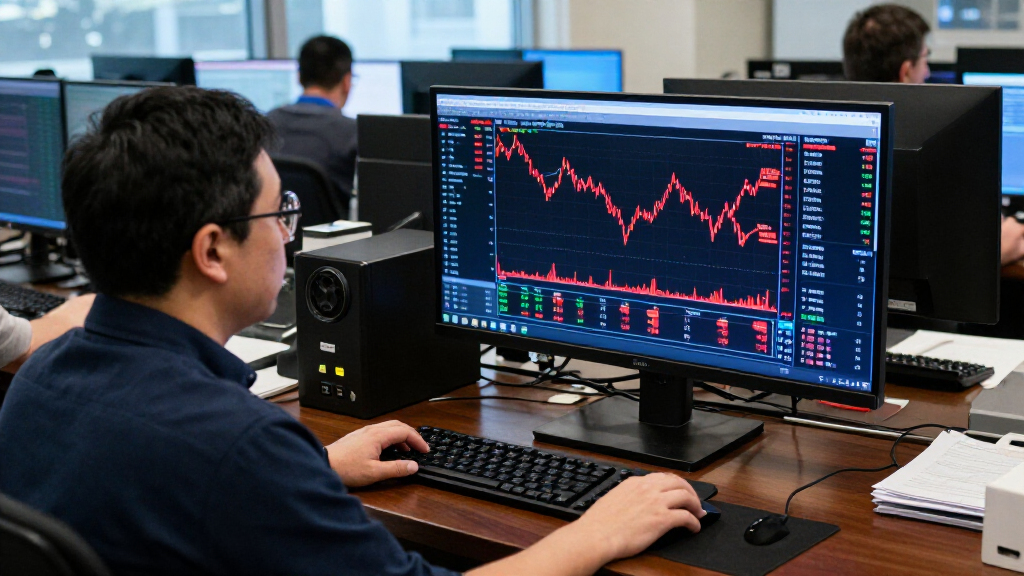
The Nasdaq Composite fell 2.6%, or 694 points, Thursday, while Meta shares dropped 7% after the company reported earnings per share below analysts’ expectations and raised the low end of its capital-spending forecast. Technology shares also faced pressure from concerns about AI costs, rising oil prices and the Federal Reserve’s upcoming meeting. The Dow edged higher, and the S&P 500 fell.
The Nasdaq Composite fell 694 points, or 2.6%, to 26,008 on Thursday as technology shares sold off after earnings from Meta Platforms and Tesla renewed concerns about the cost of artificial intelligence investment. The S&P 500 dropped 1.2% to 7,663, while the Dow Jones Industrial Average rose 0.02% to 52,867, leaving the broader market mixed ahead of next week’s Federal Reserve meeting.
Meta fell 7%, its steepest one-day decline since July, after the Facebook parent reported quarterly earnings per share of $3.83, below Wall Street expectations. Revenue of $64.6 billion and the company’s fourth-quarter revenue forecast both topped analysts’ estimates, according to the report. But free cash flow turned negative as Meta increased investment in AI initiatives, adding to investor concerns about spending and returns.
Meta raised the low end of its full-year capital-expenditure forecast and now expects to spend $135 billion to $145 billion, compared with its previous range of $130 billion to $145 billion. UBS Global Research analyst Stephen Ju argued that the investment could support future advertising and AI-product growth, saying the company was entering a “capex harvest cycle.” That is an analyst assessment, not a reported result or a guarantee of future performance.
Tesla shares fell 3.1% after its results. The automaker reported earnings of 48 cents per share on revenue of $28 billion, which the source says exceeded analyst expectations but was below the year-earlier level. Tesla also reported a 39% rise in operating expenses and cut its full-year capital-spending forecast to $20 billion from $25 billion. By contrast, Procter & Gamble rose 5.6% after reporting fiscal first-quarter results that beat expectations, according to the report.
The drop shows how investors are weighing strong revenue against the large and rising costs of AI investment. Meta’s sales and outlook beat estimates, but its lower-than-expected earnings per share, negative free cash flow and higher spending forecast coincided with a sharp share decline. That reaction matters beyond Meta because the company is one of the major technology stocks that can influence the Nasdaq and investor sentiment toward the sector.
Thursday’s session also reflected concerns outside corporate earnings. Oil prices climbed after President Donald Trump said late Wednesday that the United States was not currently negotiating with Iran to end the war in the Middle East. Higher oil prices can add to inflation concerns, while investors are watching for signals from the Federal Reserve next week. The source does not establish how much of the index decline came from each factor, so the day should not be read as proof of a single cause.
The diverging index results underline that this was not an across-the-board decline: the Dow edged higher as the Nasdaq and S&P 500 fell. P&G’s gain also offered a counterpoint to the technology sell-off, with its shares posting their best day in six years, according to Morningstar as cited in the report.
personal finance investing books for beginners
As an affiliate, we earn on qualifying purchases.
As an affiliate, we earn on qualifying purchases.
Earnings Set the Day’s Direction
The sell-off came during a busy reporting period for large U.S. companies. Meta and Tesla released quarterly results after Wednesday’s close, and investors responded to a mix of earnings, revenue, spending forecasts and operating costs. The source describes the reaction to poorly received results from some of the so-called Magnificent 7 technology companies as a factor in the broader tech-sector decline.
Oil added another pressure point. Front-month West Texas Intermediate crude futures rose 3% to $100.06 a barrel Thursday and were nearly 11% higher month to date, the report said. These figures describe the market at the time of the report; they do not establish how oil prices or inflation will develop. The market was also looking ahead to next week’s Federal Reserve meeting, where investors are focused on the possible effects of energy costs on inflation and interest rates.
Meta also disclosed a proposed share-class change. Its board approved the establishment of publicly traded, non-voting Class C shares, to be distributed to holders of Class A common stock and Class B super-voting shares. Meta said the new shares are expected to begin trading in January 2027, and that the Class A share price will reflect a two-for-one stock split. The company linked the plan to preserving CEO Mark Zuckerberg’s voting control and supporting its AI expansion.
“With regard to a potential merger with SpaceX, I think I said everything that should be said yesterday, tap-dancing through a minefield there.”
— Elon Musk, Tesla chief executive
stock market investing books for beginners
As an affiliate, we earn on qualifying purchases.
As an affiliate, we earn on qualifying purchases.
Investor Concerns Still Unresolved
The market report attributes Thursday’s technology weakness to earnings reactions and concerns about AI spending, while also identifying oil and inflation worries ahead of the Fed meeting. It does not quantify the contribution of each factor to the Nasdaq’s 2.6% decline, nor does it establish whether the share-price moves will continue.
Meta’s higher spending could support future products and advertising, as Ju argued, but the report provides no confirmed timetable or amount for returns from those investments. The impact of the proposed Class C shares on trading, governance and existing shareholders beyond the company’s stated split treatment also remains to be seen. Tesla’s remarks about a potential merger with SpaceX do not confirm that any transaction is planned or approved.
The supplied report does not identify the specific date of Thursday’s session. It states that the Federal Reserve meeting is next week, but does not provide the meeting’s expected decision or a forecast for interest rates. Those questions remain open as investors assess upcoming economic information and company results.
financial news subscription stock market analysis
As an affiliate, we earn on qualifying purchases.
As an affiliate, we earn on qualifying purchases.
Fed Meeting and Company Updates
Investors will turn to next week’s Federal Reserve meeting for guidance on interest rates and the central bank’s view of inflation, including the potential effect of higher oil prices. Thursday’s market moves do not determine what the Fed will decide; the report gives no expected policy outcome.
Markets will also continue to assess corporate earnings and spending plans, particularly whether heavy AI investment is matched by improved results over time. Meta’s announced Class C shares are scheduled to begin trading in January 2027, according to the company. For now, the immediate focus is on how investors respond to the latest earnings, spending forecasts and economic signals.
stock market tracking journal for investors
As an affiliate, we earn on qualifying purchases.
As an affiliate, we earn on qualifying purchases.
Key Questions
How much did the Nasdaq fall Thursday?
The Nasdaq Composite lost 694 points, or 2.6%, to close at 26,008, according to the report.
Why did Meta shares decline?
Meta fell 7% after earnings per share came in below analysts’ expectations. The company also reported negative free cash flow and raised the low end of its full-year capital-expenditure forecast to $135 billion, while revenue and its fourth-quarter revenue outlook beat estimates.
Did all major U.S. indexes fall?
No. The S&P 500 fell 1.2%, but the Dow Jones Industrial Average rose 0.02% to 52,867.
What happens next for markets?
Investors are watching next week’s Federal Reserve meeting for signals on interest rates and inflation, as well as further company results and updates on spending. The report does not specify what the Fed will decide.
Source: rss
Halloween Picks
halloween
As an affiliate, we earn on qualifying purchases.