
TL;DR

Get business pricing on office and shipping supplies
- Business-only prices and quantity discounts
- Tax-exempt purchasing
- Multiple users, one account, clear invoices
Refugee camps are transforming into self-sufficient economic zones, with residents engaging in local trade and entrepreneurship. This trend indicates a shift in refugee survival strategies, though its scale and sustainability remain uncertain.
Refugee camps around the world are increasingly developing into self-sustaining economic zones, with residents engaging in trade, small businesses, and resource management. This shift is confirmed by recent observations and reports, highlighting a new dimension of resilience among displaced populations. The trend matters because it could reshape humanitarian aid strategies and influence policy discussions on refugee integration and self-reliance.
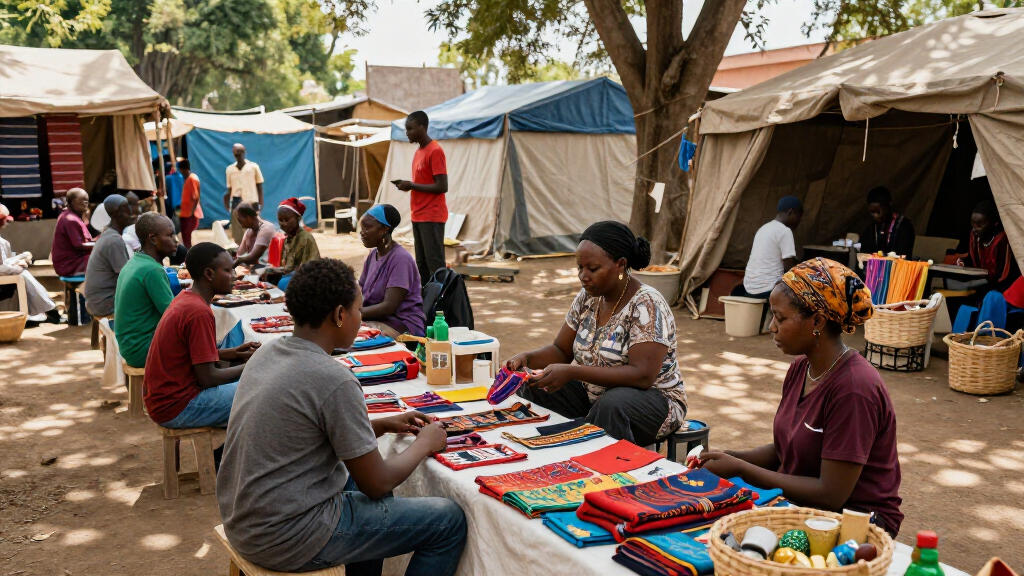
Recent reports indicate that in several refugee camps across different regions, residents are establishing markets, small shops, and service-based enterprises, effectively creating local economies. These developments are driven by the need for self-sufficiency amid limited aid resources and restrictions on movement. In some camps, residents trade goods like food, clothing, and household items, while others have started small-scale agricultural or craft businesses. Experts note that these economic activities can improve living conditions and foster community resilience, but the scale and long-term sustainability are still under assessment.
While these economic initiatives are largely informal and localized, they are gaining attention from humanitarian organizations and policymakers. Some camps have seen the emergence of barter systems and local currency use, further supporting economic activity. However, challenges such as access to capital, market regulation, and external support remain significant. It is also unclear how widespread this trend is or whether it can be scaled up to provide broader economic stability for displaced populations.
Implications for Refugee Self-Reliance and Aid Strategies
The emergence of mini economies within refugee camps could fundamentally alter approaches to humanitarian aid, shifting focus from direct aid to supporting local entrepreneurship and resource management. This trend may promote greater self-reliance among displaced populations, reduce dependency on external assistance, and foster community resilience. However, it also raises questions about regulation, sustainability, and the potential for economic disparities within camps. Policymakers and aid organizations are closely monitoring these developments to understand their long-term impact.
portable solar-powered LED lantern
As an affiliate, we earn on qualifying purchases.
As an affiliate, we earn on qualifying purchases.
Growing Trend of Economic Activities in Refugee Settings
Historically, refugee camps have been viewed primarily as temporary shelters dependent on external aid. However, recent years have seen an increasing recognition of the economic agency of displaced populations. In some regions, local markets and small businesses have existed for decades, but the current wave of economic self-organization appears more widespread and structured. This shift is partly driven by increasing restrictions on movement, limited aid resources, and the desire of refugees to maintain dignity and independence. The trend aligns with broader discussions about refugee rights, self-sufficiency, and the potential for camps to serve as hubs of economic activity rather than mere shelters.
As an affiliate, we earn on qualifying purchases.
Unclear Scope and Long-Term Impact of Camp Economies
It remains unclear how widespread this trend is across different regions and camp types. The long-term sustainability of these mini economies is also uncertain, especially regarding external support, market regulation, and potential inequalities. There is limited data on whether these activities can lead to meaningful economic independence or if they risk reinforcing existing vulnerabilities. Further research and monitoring are needed to assess the full implications and potential scalability of this development.
durable waterproof backpack for travel
As an affiliate, we earn on qualifying purchases.
As an affiliate, we earn on qualifying purchases.
Monitoring and Supporting Economic Self-Organization in Camps
Humanitarian agencies and policymakers are expected to increase efforts to monitor these emerging economies, explore ways to support sustainable entrepreneurship, and regulate markets within camps. Future initiatives may include microfinance programs, training, and infrastructure development aimed at formalizing and expanding economic activities. Researchers will also likely study the impact on community cohesion, resource distribution, and overall well-being among displaced populations. The next steps will determine whether this trend can be harnessed to improve long-term outcomes for refugees.
As an affiliate, we earn on qualifying purchases.
Key Questions
Are refugee camps becoming permanent economic zones?
Currently, most camps are still considered temporary, but the development of local economies suggests a shift toward more self-sufficient communities. The long-term permanence of these economies remains uncertain.
What types of businesses are emerging in refugee camps?
Residents are engaging in small shops, markets, agricultural activities, crafts, and service-based enterprises. The scale varies by location and resources available.
How are these economic activities supported or regulated?
Most are informal and driven by community needs, with limited external regulation. Some organizations are exploring ways to support and formalize these markets.
Could these mini economies improve refugees’ long-term prospects?
Potentially, if supported sustainably, they can enhance self-reliance and community resilience. However, challenges remain in ensuring stability and equitable growth.
What are the risks associated with camp-based economies?
Risks include market volatility, resource depletion, inequality, and the possibility of reinforcing vulnerabilities if not properly managed.
Source: rss
Halloween Picks
halloween
As an affiliate, we earn on qualifying purchases.