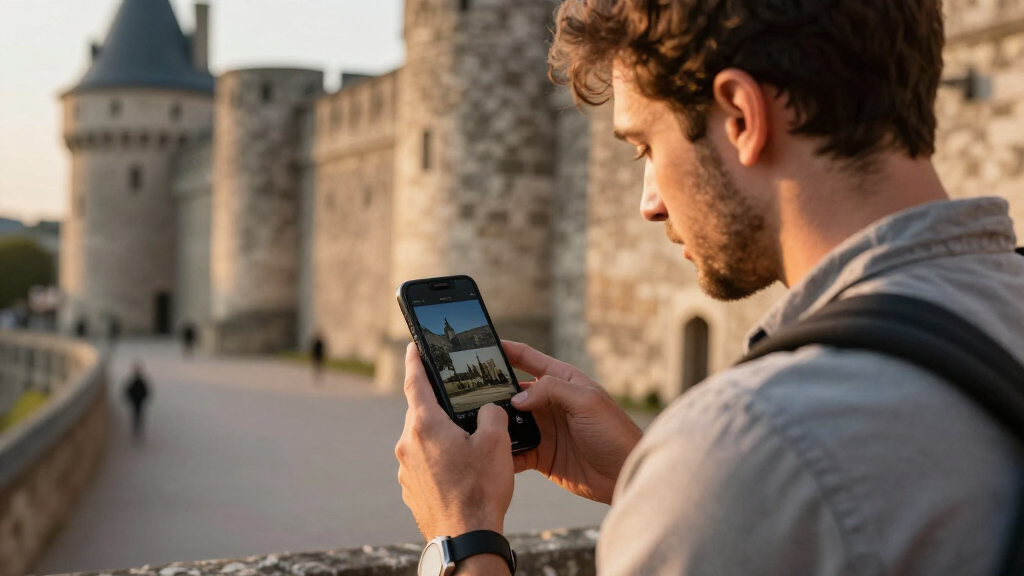

🔍 Read the full analysis: The New Frontier In Historical Documentation: AI And La Citadelle, 1693 on ThorstenMeyerAI.com

Get business pricing on office and shipping supplies
- Business-only prices and quantity discounts
- Tax-exempt purchasing
- Multiple users, one account, clear invoices
TL;DR
An AI-generated interactive digital exhibit recreates the 1693 siege of La Citadelle, offering a cinematic, explorable experience without images. The project follows a rigorous AI-guided workflow, balancing history and art.
An AI-generated interactive exhibit now vividly reconstructs the 1693 siege of La Citadelle, offering a cinematic, explorable experience rooted in historical detail. This project exemplifies the potential of AI in digital history, as detailed in the original analysis. Developed through a meticulous AI-guided workflow, the project balances educational intent with artistic storytelling, making it a significant advance in digital history documentation.
The exhibit, titled La Citadelle — An Anatomy of Siege, 1693, is hosted on a dedicated website that simulates the siege using layered SVGs, CSS, and canvas elements, avoiding static images entirely. It features a dynamic, scroll-driven diagram that visually transforms terrain, military movements, and artillery trajectories into an immersive narrative. This digital reconstruction was built through a three-stage AI process: initial construction with layered graphics, iterative critique for coherence and plausibility, and final approval by an art director, ensuring both historical accuracy and aesthetic restraint. For more details, see the original analysis in this digital archive.
The site employs a restrained color palette reminiscent of archival materials—parchment, fortress ink, smoke grey, and vivid red accents—and combines elegant typography with interactive elements. The signature interaction involves animated SVG layers depicting earthworks, trenches, and fortifications, complemented by real-time canvas trajectories of shells and explosions. The entire experience is self-hosted, built with pure HTML, CSS, and JavaScript, with no external images or frameworks, ensuring scalability and fidelity across devices.
Implications for Digital History and Education
This project demonstrates how AI can produce highly detailed, interactive historical reconstructions without relying on static images or traditional media. It offers a new model for digital history, combining artistic storytelling with precise, layered visualizations. Such exhibits could revolutionize educational tools, enabling immersive learning experiences that are both engaging and accurate, while also setting new standards for AI-driven content creation in cultural heritage sectors.
interactive historical exhibit software
As an affiliate, we earn on qualifying purchases.
As an affiliate, we earn on qualifying purchases.
Background of AI in Digital Historical Reconstructions
Recent advancements in AI and web technologies have enabled the creation of complex, layered digital reconstructions of historical events. The development of this exhibit follows a broader trend of using AI to generate interactive, scalable visualizations that balance artistic expression with fidelity to historical sources. The project builds on prior efforts but distinguishes itself through its entirely code-based, image-free approach, emphasizing scalability, responsiveness, and emotional depth rooted in a fictional siege narrative. The site is part of a larger series of AI-crafted digital history exhibits, each exploring different aspects of history through layered, cinematic storytelling.
“This project exemplifies how AI can craft layered, immersive historical visualizations that are both educational and artistically compelling.”
— Thorsten Meyer
As an affiliate, we earn on qualifying purchases.
Unanswered Questions About Accuracy and Scope
While the technical execution and artistic design are well-documented, it remains unclear how closely the reconstruction adheres to actual historical records of the 1693 siege. The project emphasizes visual storytelling and artistic interpretation, and the level of historical verification has not been publicly detailed. Additionally, it is not yet confirmed whether this approach can be scaled to other historical events or if it is a one-off experiment in AI-driven digital exhibits.
historical reconstruction virtual tour
As an affiliate, we earn on qualifying purchases.
As an affiliate, we earn on qualifying purchases.
Future Developments in AI-Generated Digital History
The exhibit is currently live and accessible online, serving as a prototype for future AI-driven historical reconstructions. Developers and historians are expected to evaluate its educational effectiveness and historical accuracy further. Future steps may include expanding the methodology to other events, integrating more scholarly input, and developing standards for AI-assisted digital history projects. The creators plan to monitor user engagement and feedback to refine the approach and explore broader applications in museums, education, and cultural preservation.
As an affiliate, we earn on qualifying purchases.
Key Questions
How accurate is the reconstruction of the 1693 siege?
The exhibit emphasizes visual storytelling and artistic interpretation; its historical accuracy has not been fully verified publicly. It aims to balance fidelity with immersive storytelling.
Can this AI approach be used for other historical events?
Yes, the methodology is designed to be scalable, allowing adaptation to other events, though each would require a tailored process similar to this project.
What makes this exhibit different from traditional digital reconstructions?
It is entirely code-based, image-free, and driven by AI critique and approval processes, enabling scalable, cinematic visualizations without static images or external assets.
Will this technology replace traditional history exhibits?
It offers a complementary approach that enhances engagement and understanding but is unlikely to replace physical or conventional digital exhibits entirely. Instead, it broadens the toolkit for cultural preservation and education.
Source: ThorstenMeyerAI.com
Halloween Picks
halloween
As an affiliate, we earn on qualifying purchases.