TL;DR

Get business pricing on office and shipping supplies
- Business-only prices and quantity discounts
- Tax-exempt purchasing
- Multiple users, one account, clear invoices
A Forsa survey for Germany’s Federation of German Consumer Organisations found 91% of respondents generally approve of recipient verification for bank transfers, while 27% share concerns about unnecessary warnings. Consumer advocates say frequent alerts caused by name variations may lead customers to ignore warnings; the banking industry says extra alerts can be safer when details do not match.
Germany’s Federation of German Consumer Organisations is urging banks to make recipient checks for transfers less prone to warnings over minor name differences, arguing that repeated alerts could cause customers to ignore legitimate fraud warnings. A Forsa survey conducted for the organisation found that 91% of respondents generally approve of the checks, but the consumer group says their implementation still produces too many unnecessary alerts for some users.
Recipient verification compares the name entered for a bank transfer with the name associated with the account. When they do not match exactly, customers receive a warning and can decide whether to proceed. The checks were introduced by German banks and savings banks about a year ago in response to European legal requirements, according to the Frankfurter Allgemeine Zeitung (F.A.Z.).
The Forsa survey found that 68% consider the system well implemented. At the same time, 27% of respondents shared the consumer organisation’s criticism. The survey also included 295 reports from customers to consumer advice centres. Among online banking users who had received at least one warning, 58% said they received warnings regularly—on roughly a quarter to almost every transfer.
Complaints described alerts triggered by details such as double spaces, special characters, umlauts or a missing second given name. The consumer organisation says names may be recorded in full when an account is opened even if the account holder does not normally use a middle or second name. These examples are complaints reported to advice centres, not an estimate of how often each issue occurs across all bank transfers.
Frequent Alerts Could Weaken Fraud Checks
The dispute concerns a trade-off at the point when customers authorize a payment: more warnings can flag possible mistakes, but alerts that arise from harmless variations may become easy to dismiss. Felicitas Makait of the consumer organisation said that if online banking users receive warnings too often, they may ignore them even when a warning is justified. That could weaken the security benefit the checks are intended to provide.
The issue is particularly relevant as instant transfers leave less time to correct a payment after it has been sent. The F.A.Z. report notes that recovering money sent to the wrong account was already difficult and is impossible in the age of instant transfers. That is the report’s framing of the risk; the material does not give figures on losses or establish that recipient checks have reduced fraud.
For customers, the practical question is whether an alert points to a meaningful discrepancy or merely a difference in how a name is written. For banks, changing that threshold means balancing convenience against the possibility of approving a transfer to the wrong recipient.
Products Worth Considering

FLEXISPOT EN1-PRO Electric Standing Desk, 79 x 32, Black Walnut
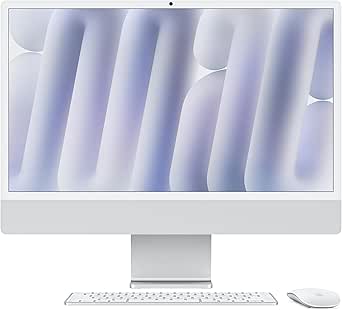
Apple iMac 2024 All-in-One Desktop with M4 Chip, 24‑inch Retina Display, 16GB Unified Memory, 256GB SSD, Silver

HP Sprocket Panorama Portable Color Photo and Label Printer
As an affiliate, we earn on qualifying purchases.
How Germany’s Recipient Check Works
The system was introduced following requirements from the European legislator. It asks banks to compare the recipient name supplied by the payer with account details before a transfer is completed. If the details do not match, the customer is warned and asked whether to continue. The measure was initially met with strong public criticism, the F.A.Z. reported, but the controversy later eased.
The German Banking Industry Committee says the European banking sector has agreed on common implementation standards that distinguish between a match, a near match and no match. Its spokesperson said minor differences such as typos, spacing or spelling can be detected and handled accordingly. The committee brings together banks and savings banks in Germany; the spokesperson quoted by the F.A.Z. represented the National Association of German Cooperative Banks, which was then leading the committee.
Both consumer advocates and the banking side also point to a related problem: the name a customer knows may not be the recipient’s formal account name. The report gives the example of a hairdresser known to customers as Coiffeur Jean-Pierre whose registered name is Wolfgang Müller. Both sides agree that businesses should clearly state the recipient name on invoices.
“Bank customers receive too many unnecessary warnings, which leave them feeling unsure.”
— Felicitas Makait, Federation of German Consumer Organisations
How Often Are Alerts Unnecessary?
The survey provides evidence of recurring warnings among users who had received at least one, but it does not establish what share of all alerts are unnecessary or how often a warning has prevented a mistaken transfer. The reported figures also do not show whether warning frequency differs by bank, payment method or type of name discrepancy.
The consumer organisation says the regulatory framework offers recommendations rather than firm rules, while the banking spokesperson confirms that detailed implementation allows some discretion and may vary between institutions. The available information does not specify which banks use more flexible matching or how they classify particular name differences. It is also unclear whether European or German authorities plan to issue more prescriptive rules.
Banks Face Calls for Clearer Matching
The consumer organisation is calling for checks that can recognize a recipient despite common variations, including reversed first and last names, an omitted second given name, or differences involving special characters and hyphens. The banking industry has not announced a change to its approach in the report. Its spokesperson instead defended warnings when details remain uncertain.
For now, the clearest shared proposal is that businesses state the recipient’s formal account name on invoices. Whether that will reduce mismatches, or whether banks will adjust their systems, remains to be seen. No implementation timetable or planned policy change was reported.
Key Questions
What is recipient verification for a bank transfer?
It is a check that compares the recipient name entered by a customer with the name associated with the destination account. If the details do not match, the customer receives a warning before proceeding.
What did the Forsa survey find?
In a survey for the Federation of German Consumer Organisations, 91% of respondents said they generally approve of recipient verification and 68% considered it well implemented. The report also said 27% shared the consumer group’s criticism of unnecessary warnings.
Why do customers receive warnings over small differences?
Complaints cited double spaces, special characters, umlauts, hyphens and second given names as possible triggers. The report does not establish how common each cause is across all transfers or at individual banks.
What changes are consumer advocates seeking?
The Federation of German Consumer Organisations wants systems to recognize common variations, such as a missing second name or reversed first and last names. It argues that this could reduce unnecessary warnings while preserving useful checks.
Have banks agreed to change the system?
No change was announced in the F.A.Z. report. The banking industry defended its cautious approach, while acknowledging that institutions have some discretion in how they apply the detailed rules.
Source: rss