
TL;DR

Get business pricing on office and shipping supplies
- Business-only prices and quantity discounts
- Tax-exempt purchasing
- Multiple users, one account, clear invoices
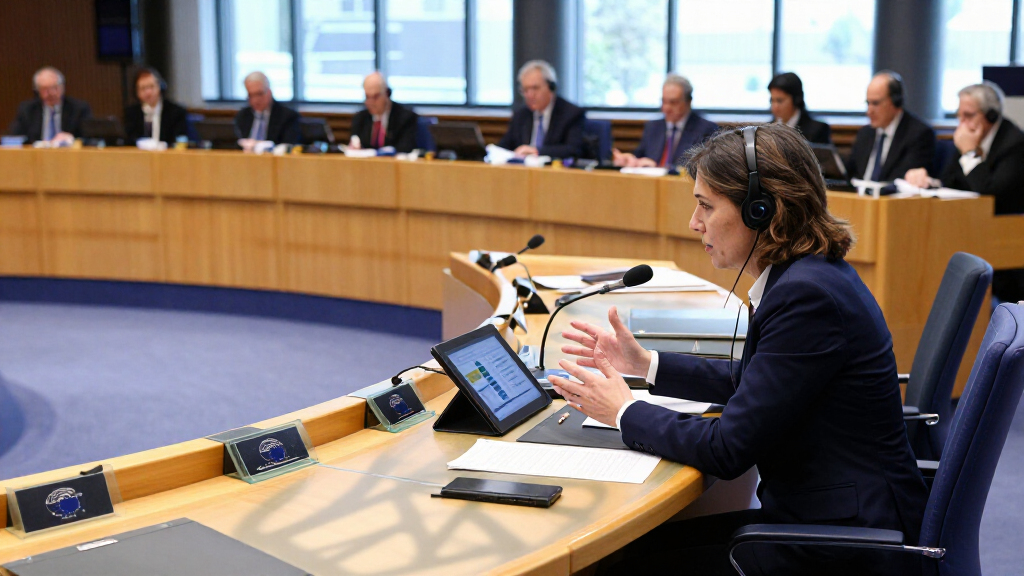
ECB President Christine Lagarde told the European Parliament’s ECON Committee on 28 September 2026 that the ECB raised its three key interest rates by 25 basis points to prevent the energy shock from feeding into inflation. She also said firms will devote around 10% of total investment to AI in 2026, with AI-related borrowing already accounting for roughly a quarter of credit growth to firms.
European Central Bank President Christine Lagarde told EU lawmakers on 28 September 2026 that the ECB had raised its three key interest rates by 25 basis points to keep an energy-driven rise in inflation from becoming embedded, and warned that artificial intelligence is already reshaping investment, labour markets and inflation dynamics in the euro area. Speaking at the regular hearing of the Committee on Economic and Monetary Affairs of the European Parliament in Brussels, Lagarde said firms are set to devote around 10% of total investment to AI in 2026, and that AI-related borrowing already accounts for roughly a quarter of credit growth to firms.
On the economic outlook, Lagarde said the euro area proved resilient despite the energy shock, posting solid real GDP growth in the second quarter of 2026 that was broad-based across most countries and sectors, a pattern expected to have continued in the third quarter. Manufacturing is being supported by higher government spending on defence and infrastructure, consumer confidence has rebounded from spring lows, and unemployment stood at 6.4% in July. The September ECB staff projections baseline sees growth of 0.9% in 2026, 1.4% in 2027 and 1.5% in 2028.
Inflation, however, is rising. Headline inflation increased to 3.2% in August, up from 2.9% in July, driven largely by energy inflation, which jumped to 14.3% from 10.3%, reflecting strong refining margins on liquid fuels and higher energy commodity prices. Inflation excluding energy and food edged down to 2.4%. Wage growth is cooling rather than accelerating: compensation per employee stood at 3.3% in the second quarter, down from 3.6% in the first. The September projections see headline inflation averaging 3.0% in 2026, 2.5% in 2027 and 2.1% in 2028.
Explaining the rate decision, Lagarde said the ECB applies a clear strategy to energy shocks, assessed through “three criteria”: the inflation outlook, the dynamics of underlying inflation, and the transmission of monetary policy. “We do not react to energy prices, we react if we see risks of higher energy prices becoming embedded in inflation,” she said. She noted that long-term interest rates have risen notably since the last meeting, which will slow growth and reduce policy pass-through by more than projected in September.
Why the Rate Hike and AI Warnings Matter
The 25-basis-point increase signals that the ECB, after a period of easing, is actively countering the renewed energy-driven inflation surge rather than looking through it. Lagarde characterised the stance as a “middle path”: the shock is too large to ignore, but the bank sees no evidence yet of second-round effects in wages, so a measured response is deemed appropriate.
Her remarks on AI matter because they place the technology squarely on the monetary policy agenda. With AI-related borrowing already accounting for roughly a quarter of credit growth to firms, according to Lagarde, the technology is no longer a niche investment theme but a visible force in credit markets, business investment and productivity. She said AI could significantly enhance Europe’s productivity, competitiveness and living standards, while stressing that “success is not automatic” and that benefits must be seized while risks are managed appropriately.
Top picks for "hear committee economic"
As an affiliate, we earn on qualifying purchases.
The ECB’s Energy Shock Playbook
Lagarde framed the September decision within the framework she laid out earlier this year, describing the current stance as the “middle path” between looking through the energy shock entirely and reacting aggressively. The euro area has weathered successive energy shocks since 2022, and the ECB has repeatedly emphasised distinguishing direct energy price effects from broader inflation dynamics.
The hearing is part of the ECB’s regular dialogue with the European Parliament’s ECON Committee, a recurring accountability exercise in which the ECB president presents the economic outlook and monetary policy decisions. This session focused specifically on artificial intelligence as a transformative economic force, which Lagarde called a topic that “goes to the heart of Europe’s economic future.”
“We do not react to energy prices, we react if we see risks of higher energy prices becoming embedded in inflation.”
— Christine Lagarde, President of the European Central Bank
Open Questions on Inflation and AI
Lagarde repeatedly stressed that the outlook is surrounded by high uncertainty, with upside risks for inflation and downside risks for growth. Whether energy prices will ultimately feed into wages and broader prices remains unresolved; she said wages “do not show a material response” to the energy shock so far, but noted inflation expectations over shorter horizons remain elevated.
On AI, she described its overall macroeconomic effect as uncertain, working through several interconnected channels. The published text of the speech is truncated before the full elaboration of how AI may affect inflation and the wider economy, so the detailed mechanism she described to the Committee is not fully captured in the available source. It is also not yet clear whether the third-quarter growth pattern matched expectations, as that data was still incoming at the time of the hearing.
Upcoming Data and Policy Decisions
Markets and lawmakers will watch upcoming euro area inflation releases and wage data for signs of whether the energy shock is spreading into underlying inflation — the key trigger for further ECB action under the framework Lagarde described. The ECB’s next monetary policy meeting will test whether the “middle path” holds or whether stronger responses become warranted.
On the AI side, the ECB’s analytical focus is likely to intensify, given that AI-related credit growth is now a measurable component of corporate borrowing. Future staff projections will need to incorporate AI’s effects on productivity, investment and prices, and the Parliament’s ECON Committee is expected to continue pressing the ECB on how the technology factors into its assessments.
Key Questions
What did the ECB decide at its September 2026 meeting?
The ECB raised its three key interest rates by 25 basis points, according to Lagarde, in order to keep an energy-driven increase in inflation from becoming embedded in the economy.
Why is euro area inflation rising again?
Headline inflation rose to 3.2% in August, driven mainly by energy inflation, which climbed to 14.3% on strong refining margins for liquid fuels and higher energy commodity prices. Inflation excluding energy and food actually edged down, to 2.4%.
How is AI affecting the euro area economy?
According to Lagarde, firms will devote around 10% of total investment to AI in 2026, and AI-related borrowing already accounts for roughly a quarter of credit growth to firms. AI is also visible in digital services, business investment and exports, but its overall macroeconomic effect remains uncertain.
Will the ECB raise rates further?
This is not yet clear. Lagarde said the ECB sees no signs yet of inflation becoming embedded and no evidence of energy prices feeding into wages, and described the current stance as a measured “middle path.” Future decisions depend on the inflation outlook, underlying inflation dynamics and monetary policy transmission.
What is the ECB’s growth forecast for the euro area?
The September ECB staff projections baseline expects growth of 0.9% in 2026, 1.4% in 2027 and 1.5% in 2028, supported by falling energy prices, a robust labour market, and stronger business and housing investment.
Source: primary
Halloween Picks
halloween
As an affiliate, we earn on qualifying purchases.