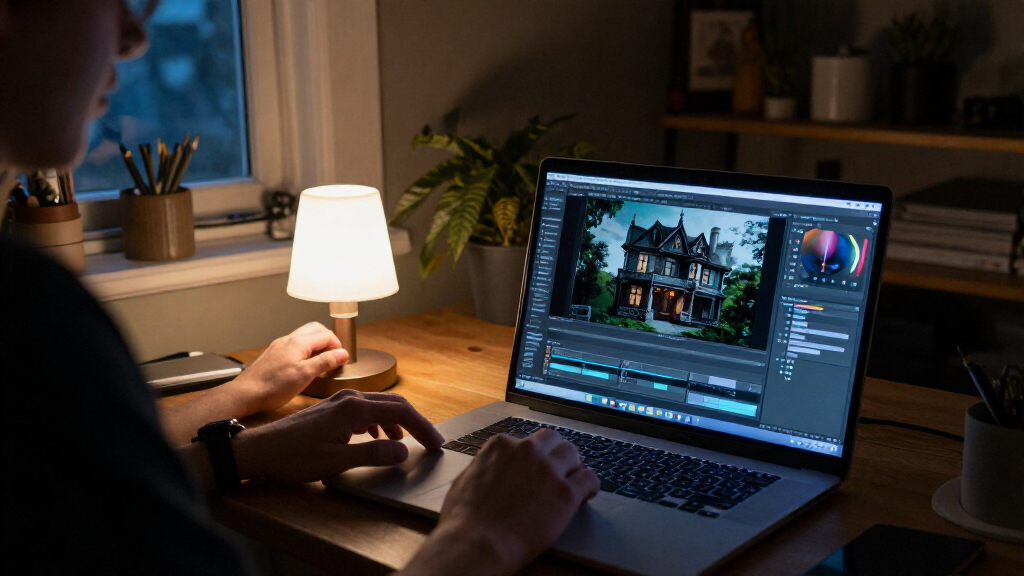
🔍 Read the full analysis: One Night With AI: Making Hollow House And Reworking Its First Version on ThorstenMeyerAI.com

Get business pricing on office and shipping supplies
- Business-only prices and quantity discounts
- Tax-exempt purchasing
- Multiple users, one account, clear invoices
TL;DR
Hollow House, a 97-second AI-generated horror-comedy, was made overnight on October 27–28, 2026, after its creator discarded two earlier versions. Thorsten Meyer’s account says the final version worked because of faster editing and a single video model referencing the full cast, not because the images improved. The production used 2,220 Higgsfield credits, which Meyer valued at about $95 under his plan, plus ElevenLabs audio generation.
Filmmaker Thorsten Meyer says he made Hollow House, a 97-second AI-generated horror-comedy, overnight on October 27–28 after rejecting two earlier cuts as ineffective. In an account published October 28, Meyer describes how he revised the production from 20 longer shots to a faster, three-segment version, a case study in how editing and human decisions shaped a short film made with generative tools.
The short’s premise places a real ghost among the staff of an extreme haunted attraction. When a guest says the safe word, the scares should stop; in Meyer’s story, they do not. The employees respond to the supernatural intruder with workplace procedures, including asking whether he signed a waiver. The characters, voices and sets were AI-generated, according to Meyer.
Meyer says the first version used 20 shots and ran 2 minutes 15 seconds. He described its visuals as successful but called the film “terribly boring and amateurish.” His comparison with the short that inspired the project found about 74 cuts over 2 minutes 14 seconds, or an average of roughly 1.8 seconds per cut; the first Hollow House version averaged 5.6 seconds. Meyer says the final cut was assembled from three roughly 30-second segments generated with one model using the full cast as references, and runs 1:37.
The production account puts the total at 2,220 Higgsfield credits across all three versions, which Meyer estimates at about $95 at his plan price. He also reports using about 2,100 ElevenLabs characters for music and sound effects. These are the creator’s figures and cost estimate, not an independently audited production budget.
A one-night AI film case study · October 27–28, 2026
One Night With AI: Making Hollow House And Reworking Its First Version
Thorsten Meyer’s 97-second horror-comedy took three versions to find its rhythm. His account points to editing choices and a changed generation workflow as the decisive moves.
01 / The edit
Three versions to find the story
The premise: a real ghost joins the staff of an extreme haunted attraction. When a guest says the safe word, the scares should stop—but they do not. The employees respond with workplace procedure, including a question about the waiver.
Good-looking, slow-moving
Meyer said the visuals held together, with consistent faces, costumes and haunted-house color. The pacing weakened the comedy.
2:15 20 shots · about 5.6 seconds per shotA second attempt
Meyer says he discarded two earlier versions before the final cut. The supplied account does not detail this version’s shot count or runtime.
Cut Further version-specific details not reportedFaster rhythm, new workflow
Three roughly 30-second segments were generated with one model, using the full cast as references. Meyer says the shorter, faster edit worked.
1:37 Final runtime · human-selected timing and gradeAverage time per cut
Meyer counted about 74 cuts across 2:14 in the short that inspired the project. These figures describe his comparison, not an independent edit analysis.
What changed, according to Meyer
Bars summarize the account’s emphasis; they are not measured production scores.
02 / The workflow
From character sheets to final cut
The tools generated images, video, voices and sound. Meyer’s account describes the choices that shaped what stayed in the film.
Set the cast
Eight character reference images made with Nano Banana 2 through Higgsfield were intended to keep appearances stable.
Build the first cut
Twenty start images were animated with Veo 3.1 Fast, which generated speech and sound alongside visuals.
Check and retake
Meyer says he checked generated dialogue against the script with Whisper and retook a garbled line.
Rework the rhythm
He moved to three segments with the full cast as references, then chose the edit and applied the final color grade.
03 / Production notes
Where the tools pushed back
Meyer’s examples show practical limits encountered during generation. They are observations from one production, not a general benchmark.
The shouted “HEY!”
Meyer says Veo rendered the word as letters being spoken. He described the shout in words instead of capitalizing it.
A turn became a whole-body move
Attempts to turn the ghost’s head 180 degrees instead moved the character’s body, according to the account.
Changing the action
One lifting scene was blocked. A revised prompt described the guest as floating, though Meyer found the result less dramatic.
04 / The takeaway
Generation supplied material. Editing supplied the pace.
Comedy needs timing
The first cut’s visuals were described as successful, but Meyer called it “terribly boring and amateurish.” His key revision was structural.
References shaped the cast
Character sheets and full-cast references were used to help preserve appearance across generated shots and segments.
Discarding was part of making
Meyer identifies rejecting cuts, changing the model workflow and grading the final film as human decisions central to the result.
What this account does not establish
The production details and estimates come from Meyer; they are not independently audited. The account does not provide a shot-by-shot breakdown of the final edit, exact model settings for every segment, total editing time, or audience response. It also does not clarify how the roughly 2,100 ElevenLabs characters were split between music and sound effects, or whether the Higgsfield estimate includes costs beyond the cited plan price. One creator’s overnight workflow cannot establish typical costs or results for other projects.
05 / Key questions
At a glance
What is Hollow House?
A 97-second horror-comedy short about a ghost joining the staff of an extreme haunted attraction. Meyer says its characters, voices and sets were AI-generated.
Why were three versions made?
Meyer says he rejected the first two. The first ran 2:15 across 20 shots; the final cut runs 1:37 and uses three roughly 30-second segments.
How much did it cost?
He reports 2,220 Higgsfield credits, valued at about $95 under his plan, plus roughly 2,100 ElevenLabs characters. These are creator estimates, not a verified full budget.
What changed between cuts?
According to Meyer, the main change was faster pacing alongside a different generation workflow: the full cast was supplied as references to one model.
Editing Changed the Final Cut
The production account points to a distinction that can be lost in discussion of AI filmmaking: generating polished images did not, by Meyer’s description, solve the storytelling problem. He says the first cut had consistent faces, costumes and a suitable haunted-house palette, but its slower rhythm weakened the comedy. The decisive revision was structural: shorter, faster cuts and a different way of generating the footage.
That makes Hollow House relevant to readers following generative video as a creative tool. The example suggests that image and sound generation can speed up parts of production, while choices about timing, performance, continuity and what to discard still require human judgment. Meyer identifies his own calls—rejecting the first cut, changing the model workflow and applying the final color grade—as central to the result. The account is a single creator’s experience, not evidence that the same workflow or cost will produce similar results for other projects.
Products Worth Considering

Brother TD-2020A 2‑Inch Direct Thermal Desktop Label Printer with USB

Logitech MX Mechanical Full-Size Wireless Mechanical Keyboard, Tactile Quiet Switches, Backlit Keys, Bluetooth, USB-C, Multi-Device, Graphit

Logitech MX Master 4 for Mac, Ergonomic Bluetooth Mouse with Haptic Feedback, Ultra-Fast Scrolling, USB-C Charging, for MacOS, iPadOS, Windo
As an affiliate, we earn on qualifying purchases.
From Character Sheets to Three Versions
Before generating video, Meyer created eight character reference images with Nano Banana 2 through the Higgsfield platform. He says the images were intended to keep the cast’s appearance stable across shots, as the video models could otherwise alter details such as hair and clothing. For the first version, he generated a start image for each of 20 shots and animated those frames with Veo 3.1 Fast, which produced speech and sound alongside the visuals.
Meyer’s account also describes practical limits and workarounds. Veo rendered a shouted “HEY!” as the letters being spoken, so he says shouting had to be described in words rather than capitalized. Attempts to show the ghost turning its head 180 degrees instead moved the character’s whole body. One version of a lifting scene was blocked, while a revised prompt describing the guest as floating produced a less dramatic result. Meyer says he checked generated dialogue against the script using Whisper, then retook a line that had come back garbled.
The story structure, characters and jokes are Meyer’s, according to his account, while its structure was inspired by an AI horror-comedy short shared on X. He describes the final production method as three segments generated with one model and the cast supplied as references. The account does not provide a full technical breakdown of every model setting or identify all tools used for each final segment.
““The first version looked great, and when I watched it I called it what it was: terribly boring and amateurish.””
— Thorsten Meyer, describing his first cut
What the Account Does Not Establish
The production details come from Meyer’s own account; the source provides no independent verification of the credit total, cost estimate or time spent. It also does not give a shot-by-shot breakdown of the final cut, specify the exact model used to generate each final segment, or explain how much time was spent on editing and post-production beyond describing the overnight schedule.
It is also unclear how the stated 2,100 ElevenLabs characters were divided between music and sound effects, or whether the estimate includes any costs beyond the cited Higgsfield plan price. Meyer’s account says the short that inspired the structure was shared on X but does not identify it in the supplied material. The film’s performance, audience response and any further distribution plans are not reported.
The Film and Its Workflow
Meyer’s October 28 account links to the finished 1:37 Hollow House short and presents the character sheets, start frames, failed attempts and a contact sheet as production materials. Those materials allow readers to compare the planned workflow with the creator’s description of the revisions, although the account does not say whether further versions or a longer film are planned.
For now, the next step for readers is to view the short alongside the published behind-the-scenes material. Any broader claims about cost, reliability or how well the method transfers to other AI productions would require more projects and independently comparable production details.
Key Questions
What is Hollow House?
Hollow House is a 97-second horror-comedy short about a ghost joining the staff of an extreme haunted attraction. Meyer says its characters, voices and sets were generated with AI.
Why were three versions made?
Meyer says he rejected the first two versions and that only the third worked for him. The first had 20 shots and ran 2:15; the final version uses three roughly 30-second segments and runs 1:37.
How much did the production cost?
Meyer reports spending 2,220 Higgsfield credits, which he valued at about $95 at his plan price, and about 2,100 ElevenLabs characters for music and sound effects. Those figures are his estimate, not an independently verified full budget.
What changed between the first and final versions?
According to Meyer, the main change was pacing: the first cut averaged 5.6 seconds per shot, while the final version used faster cuts. He also says he changed the generation workflow, using one model with the full cast as references.
Source: ThorstenMeyerAI.com