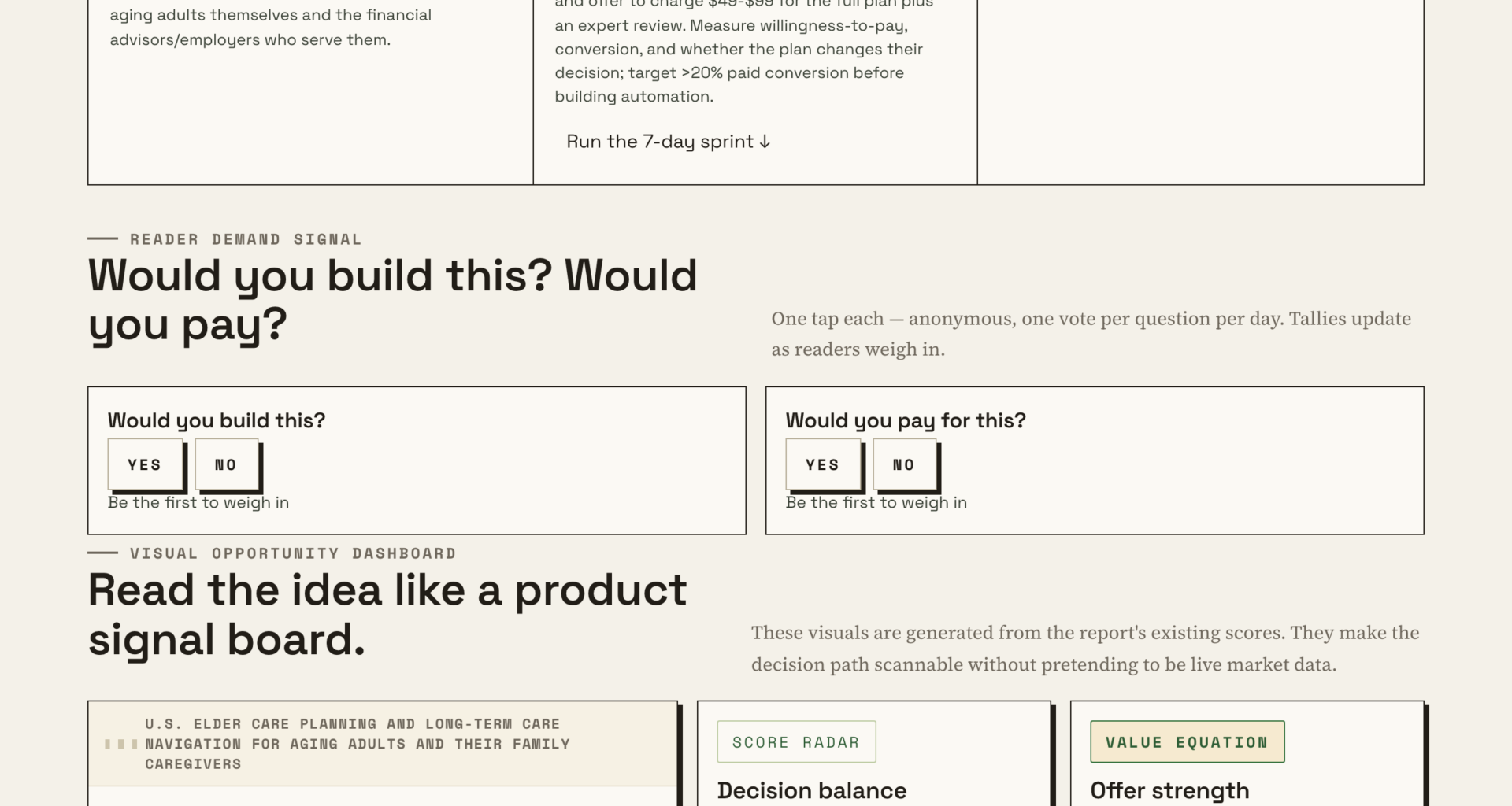

📊 Full opportunity report: Retirement Care Planner on IdeaNavigator AI — validation score, market gap, and execution plan.

Get office and shipping supplies delivered free — and shop member deals
- Fast, free delivery on millions of items
- Access to Prime Big Deal Days deals on October 6–7
- Prime Video, Amazon Music and more included
TL;DR
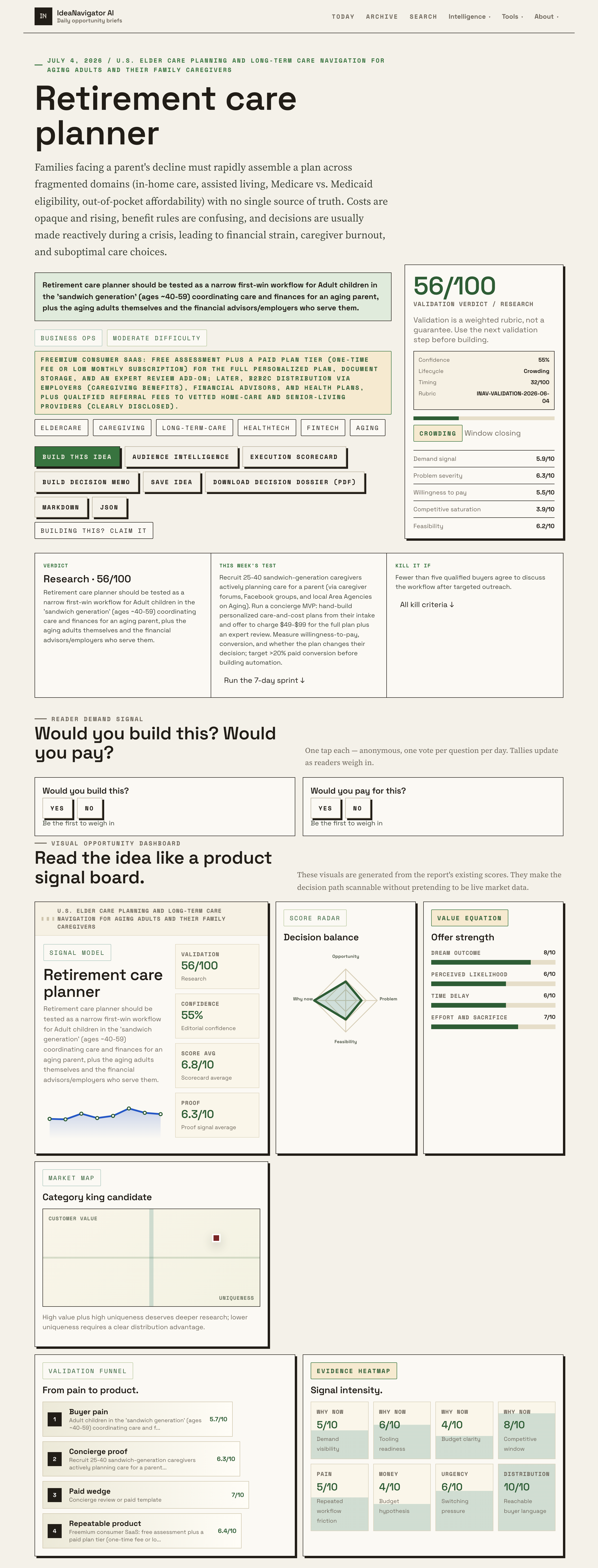
A pilot program for a retirement care planning web app is underway, targeting caregivers aged 40-59. It offers personalized care and cost plans to address the complexities of elder care. The initiative aims to improve decision-making amid rising costs and fragmented options.
IdeaNavigator AI is piloting a web-based retirement care planning tool aimed at adult children in the ‘sandwich generation’ who are managing care and finances for aging parents. This development responds to the growing demand for structured guidance amid rising elder care costs and complex benefit rules, addressing a critical gap in current planning options.
The proposed web app offers a personalized plan based on a brief intake about the parent’s health, location, and finances. It provides localized cost comparisons between in-home care, assisted living, and nursing homes, along with explanations of Medicare and Medicaid eligibility, affordability projections, and a prioritized action checklist with vetted local providers. The initial testing focuses on a single high-cost state to manage data complexity.
This initiative is targeting the U.S. market, where approximately 73 million people will be 65+ by 2030, and nearly 70% of those turning 65 will need long-term care, according to demographic projections. Costs for elder care have risen sharply, with median assisted living costs reaching $6,200 per month and nursing home semi-private rooms costing around around $115,000 annually. Caregivers report significant financial and emotional strain, creating demand for accessible, structured planning tools.
The MVP (minimum viable product) involves a free assessment followed by a paid plan tier, either as a one-time fee or a low monthly subscription. The plan includes a comprehensive personalized care and cost analysis, document storage, and optional expert review. Future revenue streams could include partnerships with employers, financial advisors, health plans, and referral fees to vetted providers.
Why a Care Planning Tool Matters Now
This development is significant because it addresses a critical gap in elder care planning, which is often reactive and fragmented. By providing a structured, personalized approach, it can help families make more informed decisions, potentially reducing financial strain and caregiver burnout. As the aging population grows and costs continue to rise, accessible digital tools like this could transform how families approach long-term care planning, making it more proactive and transparent.
As an affiliate, we earn on qualifying purchases.
Growing Need for Elder Care Planning Solutions
The U.S. is experiencing a demographic shift with a rapidly increasing senior population. Currently, nearly 73 million Americans are projected to be 65 or older by 2030, with a high likelihood of needing long-term care. Costs for elder care have surged in recent years, with median assisted living costs reaching $6,200/month and nursing home expenses averaging $115,000/year. Despite these figures, families often face opaque pricing, confusing benefit rules, and reactive decision-making, which can lead to financial hardship and caregiver burnout.
Several startups and organizations have attempted to simplify elder care navigation, but most lack comprehensive, personalized planning tools. This new initiative from IdeaNavigator AI aims to fill that gap by offering tailored, localized guidance based on individual family circumstances, initially focusing on high-cost states to refine the model.
“Families need a structured way to navigate the complex landscape of elder care costs and benefits, especially as costs continue to rise and options multiply.”
— an anonymous researcher
As an affiliate, we earn on qualifying purchases.
Unclear Aspects of the Pilot and Future Expansion
It remains uncertain how effective the MVP will be in changing caregiver decision-making or reducing costs. The pilot is still in testing, with plans to recruit 25-40 caregivers for initial validation. It is also unclear how quickly the platform can scale beyond the initial high-cost state or how providers and families will respond to the paid plans and referral models. Further data is needed to confirm user willingness to pay and the tool’s impact on decision quality.
As an affiliate, we earn on qualifying purchases.
Next Steps for Validating and Scaling the Care Planner
The immediate next step is to complete the pilot testing with recruited caregivers, measuring willingness to pay, plan accuracy, and decision impact. Based on these results, the team plans to refine the platform, expand testing to more states, and develop automation features. Long-term, the goal is to establish partnerships with employers, financial advisors, and health plans to embed the tool into broader caregiving support services.
assisted living facility checklist
As an affiliate, we earn on qualifying purchases.
As an affiliate, we earn on qualifying purchases.
Key Questions
How will the web app determine the best care options?
The app uses local cost data, benefit eligibility rules, and a personalized intake to generate a tailored care plan, including cost comparisons and provider options.
Will families have to pay for this service?
The initial MVP offers a free assessment, with a paid plan tier for detailed analysis, document storage, and expert review. Future models may include subscription options or employer/partner integrations.
Can this tool help families in all states?
The pilot is initially focusing on a high-cost state to manage data complexity, but plans include expanding to other regions as the model proves effective.
How does this differ from existing elder care resources?
Unlike general information resources, this tool offers personalized, localized care and cost planning based on individual circumstances, aiming to improve decision quality and reduce reactive crisis management.
Source: IdeaNavigator AI
Fall Picks
fall essentials
As an affiliate, we earn on qualifying purchases.