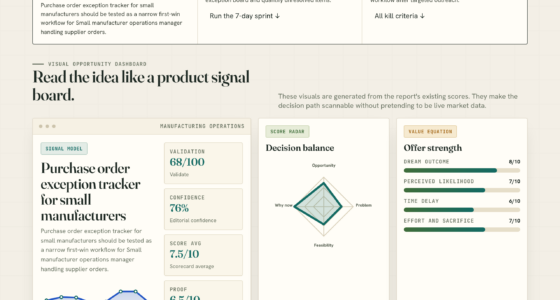
📊 Full opportunity report: Could Kylie Jenner’s Victoria’s Secret Debut Shift Retail Attention? on IdeaNavigator AI — validation score, market gap, and execution plan.

Get business pricing on office and shipping supplies
- Business-only prices and quantity discounts
- Tax-exempt purchasing
- Multiple users, one account, clear invoices
TL;DR
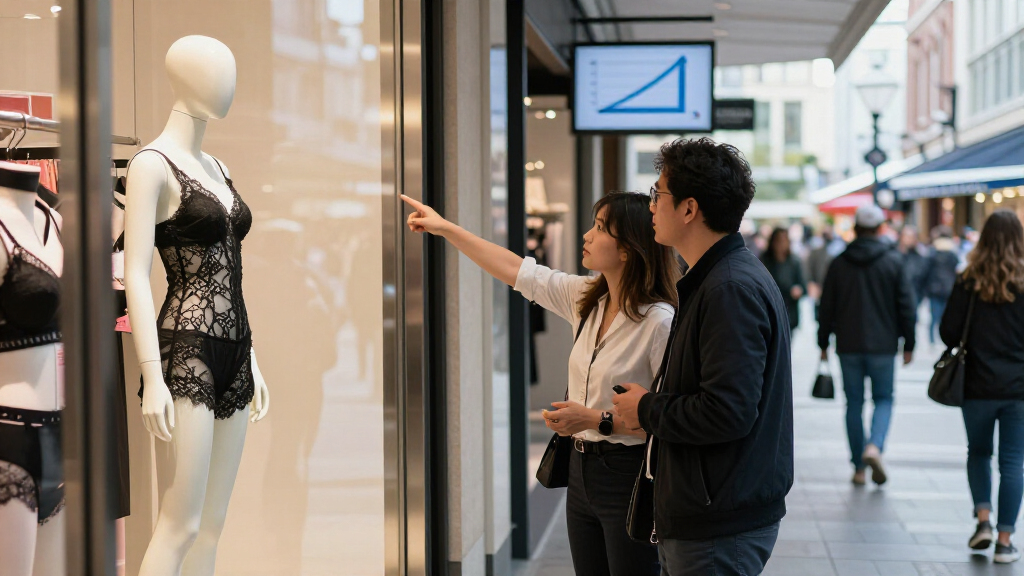
Kylie Jenner walked in the Victoria’s Secret Fashion Show, an appearance proposed as a test case for a role-focused fashion retail signal monitor. The available information describes a possible product and validation plan, not evidence that her appearance changed sales, buying decisions or consumer demand.
Kylie Jenner walked in the Victoria’s Secret Fashion Show, an appearance that IdeaNavigator AI has framed as a potential test case for a retail trend-monitoring service aimed at apparel buyers and merchandisers. The proposal argues that quickly identifying celebrity and style developments could help commercial teams decide what deserves attention, but it provides no evidence of resulting sales, consumer demand or changed buying decisions.
The proposed service would monitor RSS feeds and similar sources for style trends, product drops and celebrity moments, then filter the results for people buying or merchandising apparel. Each item would be turned into a short brief covering what changed, why it might matter and what action a reader could consider. Jenner’s runway appearance is offered as an example of the kind of event the system might flag, rather than proof that it affected retail performance.
IdeaNavigator AI rates the signal 88 out of 100. That score is presented as part of the proposal; no scoring method, underlying dataset or comparison baseline is given. It should not be read as a measured estimate of consumer interest or commercial impact. The proposed business model is a subscription for apparel-industry buyers or merchandisers seeking an early, role-filtered read on developments.
The suggested validation is a small trial: hand-deliver a brief about this appearance and two other style, product or celebrity developments to five people who work as apparel buyers or merchandisers. The proposal says to track whether a recipient changes a decision or forwards the brief to a colleague. No trial results are reported, and there is no confirmation that the service has been built or offered to subscribers.
From Runway Moment to Buying Desk
The proposal concerns a practical challenge for retail teams: relevant signals can appear across news and other feeds, while buyers and merchandisers need to decide whether a development has implications for products, timing or customer interest. A filtered summary could, in principle, reduce the time spent finding and sorting such items. But the article’s example establishes only the proposed workflow, not that Jenner’s appearance should prompt a specific inventory or merchandising decision.
That distinction matters because a celebrity appearance is not, by itself, evidence of a trend that will translate into purchases. For retailers, a useful monitoring product would need to show that its alerts are timely and relevant and that users act on them in ways that improve their work. The proposed test—checking for changed decisions or internal sharing—could offer an initial indication of usefulness, but it would not establish sales impact or prove that the service works across the wider market.
Victoria's Secret fashion show clothing
As an affiliate, we earn on qualifying purchases.
As an affiliate, we earn on qualifying purchases.
The Proposed Signal-Monitoring Workflow
IdeaNavigator AI describes the idea as a narrow product opportunity for one intended user group: apparel buyers and merchandisers. Its stated problem is that style developments, launches and celebrity appearances are scattered across sources and are not automatically filtered for a particular job. The suggested response is not a general fashion-news roundup, but a brief that connects an item to a reader’s work.
The proposal’s timing argument is that style and celebrity developments can move quickly, making a same-day, role-specific briefing more useful than a generic weekly digest. That is the proposal’s rationale, not a documented comparison of turnaround times or a finding about buyer behavior. No existing service, retailer response, product launch date or partnership is identified.
The example is Kylie Jenner’s appearance at the Victoria’s Secret Fashion Show. The supplied details do not describe what she wore, the show’s date, the response to her appearance or any related product release. Those details are not needed to explain the product concept, but their absence means the appearance cannot be tied here to a particular retail outcome.
celebrity-inspired fashion accessories
As an affiliate, we earn on qualifying purchases.
As an affiliate, we earn on qualifying purchases.
No Retail Impact Is Documented
The available account does not establish when Jenner walked in the show, how shoppers or fashion audiences responded, or whether any retailer changed a buying or merchandising decision as a result. It also gives no sales, search-interest or inventory data linked to the appearance. The 88/100 rating has no stated methodology, so its meaning beyond the proposal’s internal signal rating is unclear.
It remains unknown whether the monitoring service exists, which feeds it would cover, how it would determine relevance, how quickly it would issue briefs or what a subscription would cost. The five-person exercise is a proposed validation step, not a completed test. Until results are available, claims that the appearance shifted retail attention or that the tool could produce commercial gains remain unverified.
trend monitoring tools for apparel buyers
As an affiliate, we earn on qualifying purchases.
As an affiliate, we earn on qualifying purchases.
A Five-Reader Test Is Proposed
The next step outlined by IdeaNavigator AI is to deliver three short briefs—the Jenner appearance and two other style, product or celebrity developments—to five apparel buyers or merchandisers. The proposed measures are whether anyone changes a decision or shares a brief with a colleague. No timetable beyond the suggestion to conduct the test “this week” is specified, and no participant responses have been reported.
Those findings would help show whether the intended audience considers the briefs useful enough to act on or circulate. A small trial would still be preliminary: it would not establish wider demand, forecast sales effects or show that the 88/100 score predicts business value. The proposal does not say whether a product launch will follow or identify a date for one.
Source: IdeaNavigator AI
As an affiliate, we earn on qualifying purchases.
Key Questions
What is the news about Kylie Jenner and Victoria’s Secret?
Jenner walked in the Victoria’s Secret Fashion Show. IdeaNavigator AI uses the appearance as an example for a proposed service that would flag fashion and celebrity developments for apparel buyers and merchandisers.
Did Jenner’s appearance change retail sales or buying decisions?
No such effect is documented in the available information. It includes no sales figures, retailer decisions or consumer-demand data linked to the appearance.
What would the proposed monitoring service do?
It would monitor RSS feeds and similar sources, filter developments for apparel buyers and merchandisers, and produce short briefs on what changed and why it might matter. The proposal does not confirm that the service has been built.
What does the 88/100 signal score mean?
IdeaNavigator AI gives the opportunity an 88 out of 100 rating, but provides no scoring method or comparison baseline. The score cannot be treated as a measurement of sales impact or public interest.
How would the idea be tested?
The proposed test would send briefs on three developments to five apparel buyers or merchandisers, then check whether recipients change a decision or forward a brief. No results have been reported.
Source: IdeaNavigator AI
Halloween Picks
halloween
As an affiliate, we earn on qualifying purchases.