📊 Full opportunity report: Fair-value appraisals for used GPUs and AI hardware on IdeaNavigator AI — validation score, market gap, and execution plan.

Get business pricing on office and shipping supplies
- Business-only prices and quantity discounts
- Tax-exempt purchasing
- Multiple users, one account, clear invoices
TL;DR
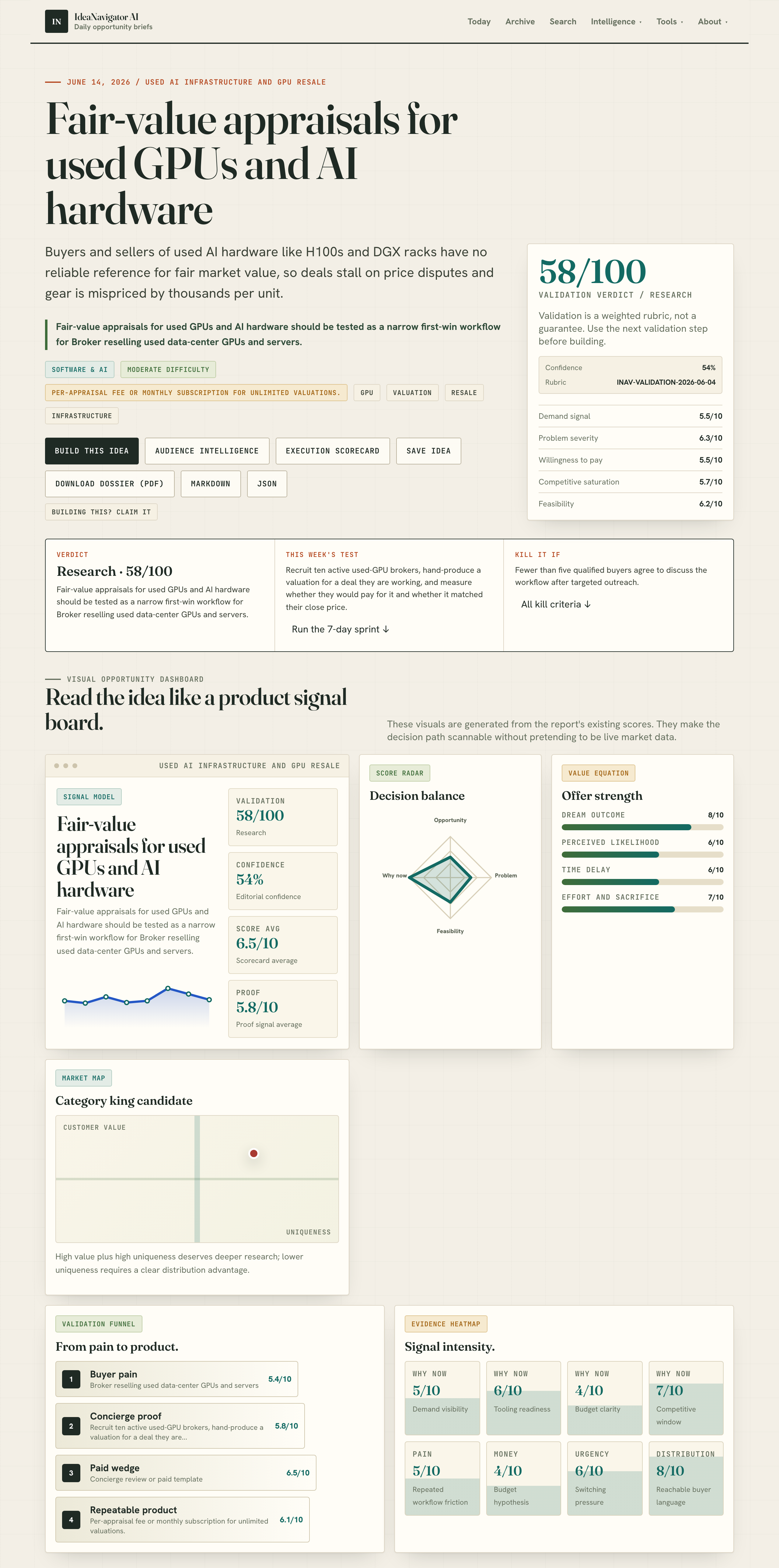
A new manual valuation method for used GPUs and AI hardware is being tested to establish fair market prices. This aims to reduce disputes and mispricing in the secondary market, especially as hyperscalers refresh their hardware rapidly.
IdeaNavigator AI is testing a manual valuation tool designed to provide brokers with fair market value ranges for used data-center GPUs and AI hardware, addressing longstanding pricing disputes in the secondary market.
The initiative focuses on creating a simple, manual valuation sheet where brokers input GPU model, condition, and quantity to receive a curated range based on recent comparable sales. The goal is to establish a transparent reference point for pricing, which is currently lacking in the used AI hardware market.
This approach is aimed at brokers reselling used GPUs like H100s and DGX racks, who face challenges in pricing due to a lack of reliable benchmarks. Hyperscalers and labs are rapidly replacing hardware, flooding the secondary market with recent-generation gear, further complicating valuation efforts.
Initial validation involves recruiting ten active brokers to test whether the tool’s valuations align with their deal prices and if brokers would be willing to pay for such a service, potentially generating revenue through per-appraisal fees or subscriptions.
Addressing Pricing Disputes in the Used AI Market
This development could significantly improve transparency and efficiency in the resale of used AI hardware, reducing price disputes and mispricing that currently hinder deals. Reliable fair-value appraisals would benefit brokers, buyers, and sellers by establishing clearer market benchmarks, especially as supply chains for AI infrastructure become more dynamic.
As the secondary market for AI hardware expands rapidly, establishing standardized valuation methods could also attract more institutional participation and foster market stability.
Products Worth Considering

Logitech MX Keys S Combo Wireless Keyboard and Mouse, Graphite

Canon SELPHY CP1500 Wireless Compact Photo Printer Bundle with RP-108 Ink and Paper Set, White

Logitech MX Ergo S Advanced Wireless Trackball Mouse USB-C – Graphite
As an affiliate, we earn on qualifying purchases.
Rapid Hardware Refreshes Drive Secondary Market Challenges
Recently, hyperscalers and research labs have been aggressively upgrading their GPU fleets, leading to large volumes of recent-generation hardware entering the secondary market. This influx has created a lack of transparent pricing benchmarks, resulting in frequent price disputes and misvaluations. Currently, brokers rely on informal estimates and limited comparable sales, which hampers deal efficiency and profitability.
Previous efforts to standardize valuations have been limited, and the absence of a reliable, easy-to-use tool has been a persistent obstacle in the used AI hardware resale industry.
“The manual valuation sheet could provide a much-needed reference point for brokers struggling with inconsistent pricing.”
— an anonymous researcher
Uncertainty Over Adoption and Effectiveness
It is not yet clear how widely the manual valuation tool will be adopted by brokers or how accurately it will reflect actual market prices. The effectiveness of the approach in reducing disputes and mispricing remains to be validated through real-world testing and feedback.
Next Steps Include Pilot Testing and Market Validation
IdeaNavigator AI plans to recruit ten active brokers to test the valuation sheet, comparing its outputs with actual deal prices. Success in these trials could lead to broader deployment, development of an automated version, and potential commercialization through subscription services or per-appraisal fees. Further, industry feedback will shape refinements to improve accuracy and usability.
Key Questions
How will the valuation tool be used in practice?
Brokers will input GPU model, condition, and quantity to receive a fair-value range based on recent comparable sales, aiding pricing decisions during resale negotiations.
Can this tool replace existing pricing methods?
It aims to supplement current informal estimates by providing a more standardized reference, but full replacement will depend on validation results and industry acceptance.
Will the tool work for all types of AI hardware?
Initially, the focus is on popular data-center GPUs like H100s and DGX racks. Expansion to other hardware types will depend on pilot outcomes and market demand.
What are the main benefits for brokers?
The tool could reduce deal friction, improve pricing accuracy, and potentially generate revenue through valuation services, making secondary market transactions more efficient.
When will the tool be available for broader use?
Following successful pilot testing, broader deployment could occur within the next several months, with ongoing refinements based on user feedback.
Source: IdeaNavigator AI