
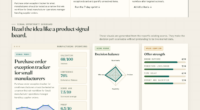
📊 Full opportunity report: The CFO’s new operating system. Anthropic, OpenAI, and the consulting margin that just got compressed. on ThorstenMeyerAI.com — validation score, market gap, and execution plan.

Get business pricing on office and shipping supplies
- Business-only prices and quantity discounts
- Tax-exempt purchasing
- Multiple users, one account, clear invoices
TL;DR
Anthropic announced a $1.5 billion joint venture to embed Claude AI in private equity-backed enterprise finance operations. OpenAI is pursuing a similar strategy with a $4 billion raise. These moves signal a structural shift from software licensing to integrated, vertical AI deployment for CFO functions.
Anthropic announced a $1.5 billion joint venture with major private equity firms and Goldman Sachs on May 4, 2026, aimed at embedding Claude AI into private equity portfolio companies’ finance operations. This marks a significant shift toward integrated AI operating systems replacing traditional consulting models for enterprise CFO functions, making AI deployment faster and more embedded within workflows.
Between November 2024 and May 2026, the enterprise AI business model shifted from selling models to CFOs towards a vertically integrated approach. Anthropic’s joint venture involves deploying Claude AI directly within private equity-backed companies, supported by PE capital and forward-deployed engineers, with pre-built agent templates for functions like valuation, reconciliation, and earnings review. On May 5, Anthropic launched ten finance-specific agents paired with Microsoft 365 integrations, achieving a benchmark score of 64.37% on the Vals AI Finance Agent test. Meanwhile, OpenAI is pursuing a similar strategy with a $4 billion raise and a parallel joint venture, signaling industry validation of this new deployment architecture. Share data indicates Anthropic’s enterprise AI market share has risen to around 40%, surpassing OpenAI’s 27%, and first-time adoption metrics show Anthropic leading in paid enterprise use. This structural shift replaces the traditional software licensing and consulting model, compressing implementation timelines from 18-36 months to weeks, and collapsing margins from a 1:6 software-to-services ratio to a unified vendor relationship supported by PE-backed deployment.The CFO’s new
operating system.
Anthropic, OpenAI,
and the consulting
margin that just
got compressed.
+ Goldman + Apollo + others JV
Finance Agent benchmark
+ MS365 add-ins shipped May 5
structurally exposed to compression
The AI labs stopped selling models. They are selling operating systems for the Office of the CFO — and the layer that historically sat between the software vendor and the enterprise, the consulting tier, is what gets vertically captured.Thorsten Meyer · The CFO’s New Operating System · Enterprise Reorg 01
Impact of Vertical Integration on Enterprise Finance
This shift fundamentally changes how enterprise finance functions are implemented and scaled, reducing costs and timeframes while increasing AI’s role in core CFO activities. The move toward embedded, agent-based operating systems supported by PE capital and integrated into daily workflows signifies a transformation in enterprise AI adoption, with potential implications for consulting firms, software vendors, and industry valuation models. As AI functions become embedded, traditional consulting margins are compressed, and enterprise CFOs will reorganize around managed AI agents, accelerating digital transformation timelines and reshaping industry dynamics.As an affiliate, we earn on qualifying purchases.
From Model Sales to Integrated Operating Systems
Historically, enterprise AI adoption involved software vendors selling licenses, followed by lengthy, costly implementation by third-party consultants. Between late 2024 and mid-2026, this model shifted toward a vertical integration where AI labs like Anthropic and OpenAI provide pre-built agent templates and deployment architectures directly supported by private equity-backed engineering teams. The May 2026 joint ventures exemplify this change, with Anthropic partnering with major PE firms and Goldman Sachs, and OpenAI raising $4 billion for similar initiatives. Market share data shows a rapid increase in enterprise adoption, with Anthropic surpassing OpenAI in paid enterprise AI usage for the first time. This evolution reflects a broader industry trend toward embedding AI within workflows, reducing reliance on traditional consulting and licensing models.“Anthropic and OpenAI have stopped selling models; they are now selling operating systems for CFO functions, packaged as vertical-specific agent templates, deployed by PE-backed engineers, and integrated into workflows.”
— Thorsten Meyer
As an affiliate, we earn on qualifying purchases.
Unclear Aspects of Deployment and Market Impact
While the announced joint ventures and new agent templates are confirmed, it remains unclear how quickly and broadly these integrated systems will replace traditional consulting and licensing models across all enterprise sectors. The long-term impact on consulting margins and industry valuation is still evolving, and the competitive dynamics between Anthropic and OpenAI are subject to further development.
AI integration with Microsoft 365 for finance
As an affiliate, we earn on qualifying purchases.
As an affiliate, we earn on qualifying purchases.
Next Steps in Enterprise AI Deployment
Expect further rollout of pre-built agent templates and deeper integration into enterprise workflows, with private equity-backed deployment teams expanding their footprint. Monitoring share data and adoption rates over the coming quarters will clarify how quickly this structural shift consolidates. Additionally, industry partnerships, like PwC’s Office of the CFO unit built on Anthropic’s technology, will serve as case studies for broader adoption and adaptation.
AI-driven financial analysis software
As an affiliate, we earn on qualifying purchases.
As an affiliate, we earn on qualifying purchases.
Key Questions
How does this shift affect traditional consulting firms?
Traditional consulting firms face margin compression as AI-driven deployment reduces the need for lengthy, costly implementation projects. They may respond through partnerships or by developing their own integrated AI solutions.
Anthropic’s rise to roughly 40% of US enterprise AI spending indicates a rapid industry shift toward embedded, agent-based AI operating systems, positioning it as a leading provider in this new architecture.
Will OpenAI’s parallel funding strategy match Anthropic’s success?
OpenAI’s $4 billion raise and joint venture indicate strong industry validation, but its market share and adoption pace will determine if it can match or surpass Anthropic’s influence in enterprise finance.
How soon will CFO functions reorganize around AI agents?
Industry estimates suggest a timeline of 18-36 months for widespread CFO reorganization around managed AI agents, driven by deployment speed and cost efficiencies.
What are the risks of this integrated AI deployment model?
Potential risks include over-reliance on specific vendors, integration challenges, and slower-than-expected adoption, which could impact long-term ROI and industry stability.
Source: ThorstenMeyerAI.com
Halloween Picks
halloween
As an affiliate, we earn on qualifying purchases.