
TL;DR

Get business pricing on office and shipping supplies
- Business-only prices and quantity discounts
- Tax-exempt purchasing
- Multiple users, one account, clear invoices
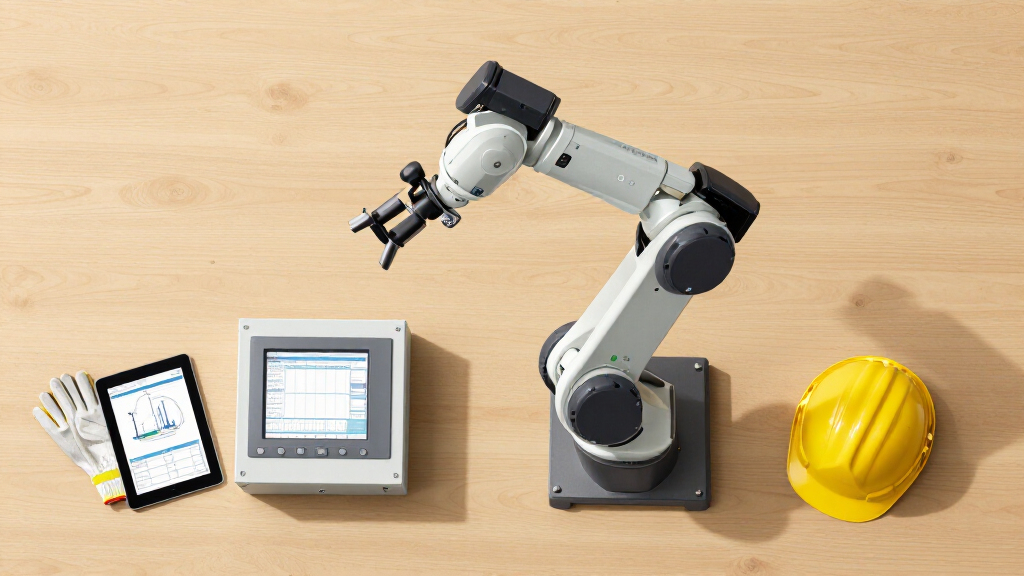
Siemens asserts that the most valuable AI applications will be in physical industrial environments rather than chatbots or language models. The company is developing specialized models and platforms, partnering with NVIDIA, to embed AI into factories and infrastructure, emphasizing proprietary data and domain knowledge.
Siemens has revealed that its primary AI focus is on physical industrial environments, asserting that the next frontier of AI value lies in manufacturing, infrastructure, and automation rather than language-based chatbots. The company’s strategy involves developing specialized models and platforms designed for industrial data, emphasizing its proprietary data assets and domain expertise, and partnering with NVIDIA to accelerate this vision.
At CES 2026, Siemens CEO Roland Busch emphasized that ‘Industrial AI is no longer a feature; it’s a force shaping the next century,’ highlighting a shift from traditional AI applications to physical-world AI. Siemens’ core initiative is the Industrial Foundation Model (IFM), announced at Hannover Messe 2025, designed to process 3D models, engineering drawings, sensor telemetry, and automation logic, tailored specifically for industrial contexts.
The company’s partnership with NVIDIA aims to create an ‘Industrial AI Operating System,’ integrating GPU-accelerated simulations, generative digital twins, and autonomous manufacturing. Siemens plans to launch its first fully AI-driven, adaptive factory at its Erlangen plant in Germany in 2026, serving as a blueprint for global deployment. Early projects include digital twin tools like PepsiCo’s facility simulations and nine industrial copilots across the supply chain.
Siemens emphasizes its proprietary data and domain expertise as key advantages, noting that its decades of industrial data—engineering models, operational telemetry, automation logic—are unmatched by startups or labs. The company also points out that its existing customer relationships with manufacturers like PepsiCo and Audi facilitate a smoother transition to AI-native tools. However, critics highlight that much of Siemens’ AI infrastructure relies on NVIDIA’s hardware and software, raising questions about sovereignty and dependency.
Implications of Siemens’ Focus on Physical AI
Siemens’ emphasis on industrial and physical AI could reshape manufacturing and infrastructure, making AI a core driver of efficiency and innovation on the factory floor. This approach leverages Siemens’ extensive industrial data and domain expertise, potentially providing a competitive edge over general-purpose AI models. However, reliance on NVIDIA’s technology and the slow pace of industrial adoption pose challenges. The move signifies a strategic shift toward embedding AI deeply into physical systems, which could influence the future landscape of manufacturing technology and industrial automation.
As an affiliate, we earn on qualifying purchases.
Background on Siemens’ Industrial AI Strategy
Siemens has long been a leader in automation and industrial software, with a history spanning 175 years. Its recent focus on AI emphasizes specialized models trained on proprietary industrial data, contrasting with the broader trend of language models and chatbots. The company announced the Industrial Foundation Model (IFM) at Hannover Messe 2025, aiming to process complex industrial data for optimization. The partnership with NVIDIA, announced at CES 2026, builds on Siemens’ existing industrial relationships and expertise, positioning the company as a pioneer in physical AI applications for manufacturing and infrastructure.
While other tech firms are investing heavily in general-purpose AI and edge AI, Siemens’ strategy centers on domain-specific AI tailored for physical environments, with plans for a flagship AI-driven factory in 2026. This approach reflects a broader industry debate about where AI can deliver the most durable value—on the shop floor versus in digital services or language interfaces.
“‘Industrial AI is no longer a feature; it’s a force that will reshape the next century.’”
— Roland Busch, Siemens CEO
As an affiliate, we earn on qualifying purchases.
Unconfirmed Aspects of Siemens’ Industrial AI Vision
Much of Siemens’ planned AI infrastructure, including the ‘Industrial AI Operating System,’ remains in development, with no detailed hardware configurations, deployment timelines, or validated performance metrics publicly disclosed. The fully AI-driven factory at Erlangen is slated for 2026, but specifics about its operational capabilities and scalability are still emerging. Additionally, Siemens’ heavy reliance on NVIDIA’s hardware and libraries raises questions about dependency and technological sovereignty, especially for European customers concerned about vendor lock-in.
As an affiliate, we earn on qualifying purchases.
Upcoming Milestones for Siemens’ Industrial AI Initiatives
Siemens plans to debut its fully AI-driven factory in Erlangen in 2026, serving as a proof-of-concept for its broader industrial AI platform. The company will also introduce Digital Twin Composer and expand its industrial copilots across supply chains. Observers should watch for performance results, customer adoption rates, and how Siemens manages its dependency on NVIDIA’s technology. Further announcements on hardware specifications, deployment timelines, and validation studies are expected throughout 2026.
As an affiliate, we earn on qualifying purchases.
Key Questions
How is Siemens’ approach to industrial AI different from general-purpose AI models?
Siemens focuses on domain-specific models trained on proprietary industrial data, such as 3D models, sensor telemetry, and automation logic, tailored to physical environments rather than language or text-based data.
What role does NVIDIA play in Siemens’ industrial AI strategy?
NVIDIA provides GPU-accelerated simulation tools, physics-based AI models, and the underlying hardware infrastructure for Siemens’ platform, forming a key part of the ‘Industrial AI Operating System’.
When will Siemens’s fully AI-driven factory be operational?
The company targets launching the factory at its Erlangen site in 2026, with ongoing development and testing phases leading up to that milestone.
What are the potential risks of Siemens’ reliance on NVIDIA technology?
The dependency on NVIDIA’s hardware and software could raise concerns about vendor lock-in, technological sovereignty, and European data governance, especially for customers wary of reliance on non-European suppliers.
Why does Siemens believe physical AI will be more valuable than chat-based AI?
Siemens argues that the relevant ‘language’ in manufacturing involves 3D models, sensor data, and physics, which require specialized models and domain expertise, making physical AI more directly impactful for productivity and innovation.
Source: ThorstenMeyerAI.com
Halloween Picks
halloween
As an affiliate, we earn on qualifying purchases.