

To handle team disagreements effectively, promote open communication by creating a safe environment where everyone feels comfortable sharing concerns. Address conflicts promptly using active listening and encourage collaboration to find common ground. Clearly define roles and expectations to prevent misunderstandings, and offer resources to empower your team to resolve issues independently. Building trust and focusing on shared goals strengthen relationships. Keep exploring strategies that help you keep your downline cohesive and moving forward.
Key Takeaways
- Promote open communication and create a safe environment for team members to express concerns honestly.
- Address conflicts promptly with individual or group conversations, practicing active listening to understand different perspectives.
- Encourage articulation of needs and focus on shared goals to find common ground and rebuild trust.
- Set clear boundaries, roles, and expectations to reduce misunderstandings and ensure team alignment.
- Offer training on communication and conflict management to empower team members to resolve disputes constructively.
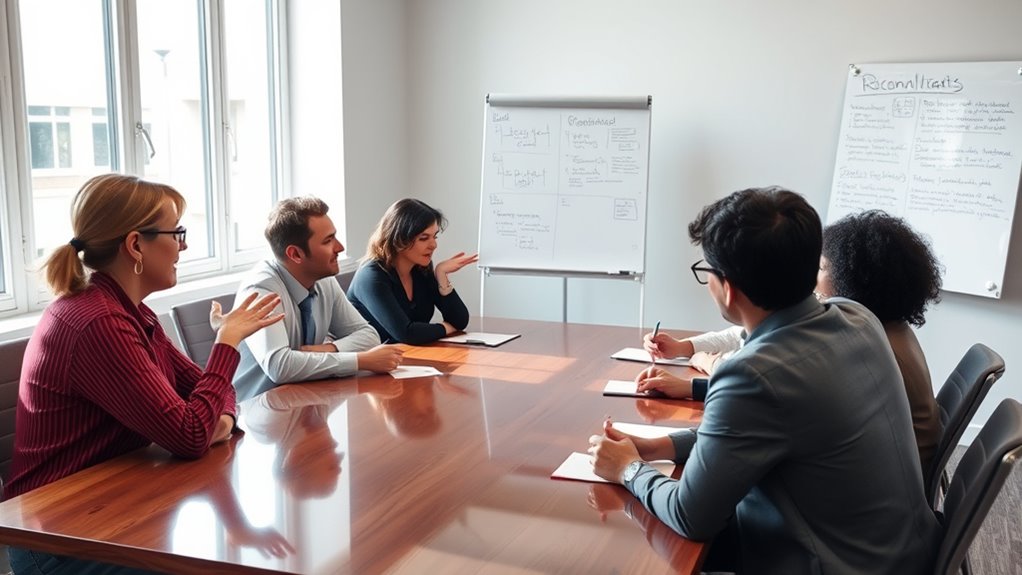
Conflicts within your downline can hinder growth and team cohesion, but addressing them effectively is crucial for long-term success. When disagreements arise, they often stem from miscommunication, differing expectations, or personality clashes. Your role is to foster open and honest team communication, which is essential for identifying issues early and preventing conflicts from escalating. By creating an environment where team members feel safe to express concerns, you encourage transparency and trust. Clear communication helps clarify misunderstandings before they turn into bigger problems, making conflict management strategies more effective.
Implementing conflict management strategies requires a proactive approach. First, when you notice tension, address it promptly. Waiting only allows negative emotions to deepen and misunderstandings to grow. Sit down with the involved parties individually or together, depending on the situation. During these conversations, listen actively, giving each person space to share their perspective without interruption or judgment. This exemplifies your commitment to understanding their concerns and helps diffuse defensiveness. When everyone feels heard, solutions become more collaborative rather than confrontational.
Address tension promptly, listen actively, and foster understanding for collaborative conflict resolution.
Next, focus on finding common ground. Encourage your team members to articulate what they need and want from each other. Often, conflicts stem from unmet expectations or assumptions. By guiding the conversation toward shared goals and mutual respect, you help rebuild relationships and restore team harmony. Remind everyone of the bigger picture — the collective success of your downline — which can shift focus away from individual grievances toward solutions that benefit everyone.
Another effective conflict management strategy is setting clear boundaries and expectations from the start. Regularly communicate team policies, roles, and responsibilities to prevent ambiguity. When everyone understands their specific duties and what’s expected of them, misunderstandings diminish. Reinforce these expectations through consistent follow-up and feedback, which keeps the team aligned and reduces the likelihood of disputes. Additionally, understanding the role of contrast ratio in visual clarity can help you evaluate and improve any multimedia presentations or visual aids used during team meetings or training sessions.
Lastly, training your team in conflict resolution can be a game-changer. Offer resources or workshops that teach effective communication, emotional intelligence, and problem-solving skills. Empowering your downline with these tools enables them to handle disagreements constructively, independently, and without unnecessary escalation. Remember, your leadership in managing conflicts can inspire your team to adopt healthier communication habits, fostering a more cohesive and resilient group. Handling conflicts with tact and clarity not only resolves issues but also strengthens your team’s overall dynamic, paving the way for sustained growth.
Frequently Asked Questions
How Can I Prevent Conflicts Before They Start?
You can prevent conflicts by implementing preventative strategies like clear communication and setting expectations early. Foster an open environment where team members feel comfortable sharing concerns, enabling early detection of potential issues. Regular check-ins help you gauge team dynamics and address misunderstandings before they escalate. By staying proactive and attentive, you create a positive atmosphere that minimizes conflicts and promotes teamwork, ensuring smoother collaboration within your downline.
What Are Effective Ways to Build Trust Among Team Members?
You can build trust among team members by practicing consistent trust building and rapport development. Be transparent, listen actively, and show genuine interest in their ideas and concerns. Recognize their achievements and provide support. Keep your commitments and communicate openly to foster a positive environment. When team members feel valued and understood, trust naturally grows, creating a strong foundation for collaboration and reducing the likelihood of conflicts.
How Do I Handle Repeated Disagreements With the Same Individual?
Like steering stormy seas, handling repeated disagreements requires setting clear personal boundaries to prevent conflict escalation. You confront the issue directly, calmly reminding your team member of respectful communication. If the pattern persists, establish boundaries firmly, emphasizing mutual respect. Keep your tone steady, like a lighthouse guiding ships safely. This approach helps defuse tension, fosters understanding, and ultimately steers your team back towards harmony and collaboration.
What Role Does Active Listening Play in Conflict Resolution?
Active listening plays a vital role in conflict resolution by fostering empathy development and understanding. When you genuinely pay attention, you notice nonverbal cues like gestures and facial expressions, which reveal underlying feelings. This helps you respond thoughtfully and build trust. By actively engaging, you show your team member that you value their perspective, making conflicts easier to resolve and strengthening your overall relationship.
How Can I Motivate a Team After Resolving a Conflict?
Think of your team as a garden that needs nurturing after a storm. To motivate, use targeted motivational strategies like recognition and goal-setting to reignite their passion. Reinforce team unity by celebrating small wins and showing appreciation. Share a clear vision and inspire confidence, so your team feels valued and energized. This approach will help transform conflict resolution into a catalyst for renewed motivation and stronger collaboration.
Conclusion
By addressing team disagreements promptly and openly, you foster a stronger, more cohesive downline. For example, imagine two team members clash over sales strategies; by facilitating a calm discussion, you help them find common ground. This not only resolves the conflict but also builds trust and collaboration. Remember, your proactive approach creates a positive environment where everyone feels heard and valued, ultimately driving your team’s success.