📊 Full opportunity report: AI-Assisted Report Writing For Investigation Professionals on IdeaNavigator AI — validation score, market gap, and execution plan.

Get business pricing on office and shipping supplies
- Business-only prices and quantity discounts
- Tax-exempt purchasing
- Multiple users, one account, clear invoices
TL;DR
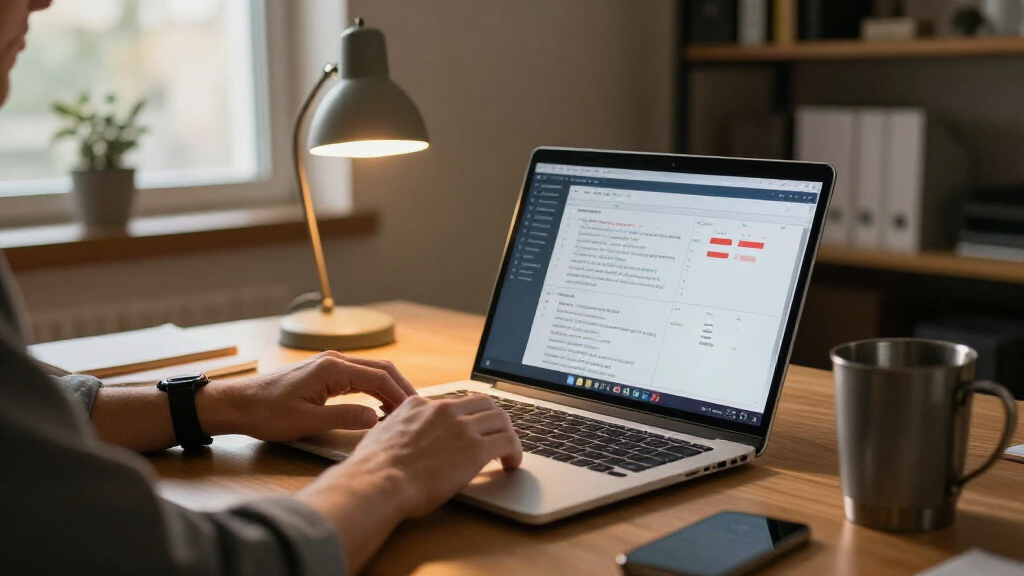
IdeaNavigator AI proposes testing an AI report generator as a narrow first use case for independent private investigators and small firms. The proposed tool would turn field notes, timestamped photos and GPS tracks into chronological report drafts, but no product launch, test results or admissibility findings are reported.
IdeaNavigator AI has proposed testing an AI-assisted report generator for independent private investigators and small firms, targeting the hours spent turning surveillance notes, photographs and GPS records into formal case narratives. The proposal describes a potential workflow and a way to test it; it does not report that a product has launched or that its reports have been accepted in court.
The proposed minimum viable product would take in field notes, timestamped photos and GPS tracks, then arrange observations into a chronological report. It would add references to exhibits, flag possible gaps in the timeline and export a draft in the firm’s own template. A human review pass is part of the proposed workflow, rather than an optional afterthought.
The business concept is a monthly per-seat subscription, with pricing tiers based on report volume. No prices, customer commitments, operating costs or revenue estimates are provided. The proposal also does not name a product, identify a development team or give a release schedule.
For validation, IdeaNavigator AI suggests converting recent case files from 10 firms into reports, asking the firms’ attorneys to review whether the drafts meet admissibility standards, and measuring time saved per report. This is a proposed test, not a completed study: no firms, attorneys, results, accuracy rates or time-saving figures are identified.
Investigation technology · Proposal overview
AI-Assisted Report Writing for Investigation Professionals
IdeaNavigator AI proposes testing a focused report generator for independent investigators and small firms. The concept turns case records into a chronological draft for human review.
01 / The proposed product
From field records to a reviewable draft
The tool is framed as a drafting aid for one recurring task: assembling surveillance records into a formal case narrative.
Bring records together
Use investigator field notes, timestamped photographs, and GPS tracks as the proposed inputs.
Build a chronology
Arrange observations, add exhibit references, and flag possible gaps in the timeline.
Review, then export
A human review pass is part of the concept. The draft would then export in the firm’s own template.
02 / Proposed workflow
Every draft must lead back to evidence
Generated prose would organize investigator-provided material; it would not independently establish what happened.
Case records
Notes, photo timestamps, and location tracks.
Chronology
Sort observations and identify possible timeline gaps.
Report narrative
Add references to the underlying exhibits.
Human review
Check claims against source records before template export.
03 / Why traceability matters
The courtroom raises the stakes
Reports can shape how clients, attorneys, and courts assess evidence. A faster draft is useful only when its chronology and references can be checked.
Keep the source visible
Timestamp errors, omitted observations, or unsupported connective language could change how events are understood. The proposal does not explain how the system would prevent or correct these errors.
Measure the full workload
Time saved depends on how much checking and correction a draft needs. No review-time, accuracy, or time-saving figures have been reported.
04 / Validation plan
A ten-firm test is proposed
The suggested exercise is a recommendation, not a completed study. No recruitment, timetable, attorney panel, or results are identified.
Compare drafts with case files
Use recent records from private-investigation firms, ask their attorneys to review admissibility quality, and measure time saved per report—including the effort spent correcting drafts.
05 / Open questions
What remains unknown
The proposal outlines a product direction and business model, while leaving key product, legal, and operating details unanswered.
Has a product launched?
No launch is reported. There is no product name, release date, or completed pilot.
Would reports be admissible?
That is not established. Attorney review is proposed, but there are no findings or court decisions.
How would it handle sensitive records?
Security controls, retention rules, audit logs, integrations, and preservation of source records are unspecified.
How might it earn revenue?
A monthly per-seat subscription with report-volume tiers is proposed. No prices, customers, costs, or revenue estimates are provided.
The Courtroom Raises the Stakes
Investigation reports can affect how clients, attorneys and courts assess evidence. The proposed tool is aimed at reducing the administrative work of assembling records, but a faster draft is useful only if its chronology is faithful to the underlying material and its references can be checked. Report quality and traceability are therefore central to the idea, not merely formatting details.
The suggested review process recognizes that generated prose needs scrutiny before use. Timestamp errors, omitted observations or unsupported connective language could change how a sequence of events is understood. The proposal says the system would flag timeline gaps, but it does not explain how those flags would be generated or how the tool would prevent errors. Attorney review and comparison with original records would be necessary to assess whether the workflow helps without introducing new risks.
For small firms, the potential benefit is practical: time spent writing reports is time not available for other case work, and the proposal describes some of that writing as unbilled. Whether automation would reduce total workload depends on the time required to check and correct drafts, as well as the quality of the inputs. Those effects have not been measured.
Products Worth Considering

Brother TD-2020A 2‑Inch Direct Thermal Desktop Label Printer with USB

Dell 34-Inch S3425DW Curved WQHD USB-C Monitor

Logitech MX Master 4 for Mac, Ergonomic Bluetooth Mouse with Haptic Feedback, Ultra-Fast Scrolling, USB-C Charging, for MacOS, iPadOS, Windo
As an affiliate, we earn on qualifying purchases.
A Proposed Workflow for Small Firms
The idea is framed as a focused product for one buyer: an independent investigator or small private-investigation firm. Its stated problem is the work that follows a day of surveillance, when an investigator must assemble chronological narratives from notes, images and location records. The proposal says report quality can determine whether the work holds up in a courtroom, but provides no case examples or legal analysis to substantiate that assertion.
IdeaNavigator AI argues that current language models can transform structured observations into formal narrative and that investigators remain underserved by modern software. These are the proposal’s rationale, not reported findings from a market survey or technical evaluation. The proposed product sits within investigation-services software and concentrates on report drafting rather than broader case management or investigative decision-making.
The distinction matters: the outlined system would organize and draft from investigator-provided records, not independently establish what happened. Its suggested features—chronology, exhibit references, gap flags and firm-specific exports—describe a product concept. The material does not specify data-security controls, retention policies, integrations, model providers or how source records would be preserved alongside generated text.
Testing and Safeguards Are Unreported
No product launch or pilot results are reported. It is unknown whether any firms have agreed to participate, how many reports would be tested, or what criteria attorneys would use to assess admissibility quality. The proposed 10-firm exercise is a recommendation, not evidence that the system works.
Technical and operational details are also open. The proposal does not describe protections for confidential case material, procedures for correcting incorrect timestamps or text, audit logs, or whether generated drafts would retain links to original evidence. It also does not establish how much review time would be needed or whether any time savings would remain after revisions.
There is no reported comparison with existing reporting tools, no pricing schedule and no information about applicable court or jurisdiction-specific requirements. The proposal’s claims about unmet software needs and language-model capability have not been supported with market or performance data.
A Ten-Firm Test Is Proposed
The next step described by IdeaNavigator AI is to test the workflow using recent case files from 10 private-investigation firms. Attorneys would review the resulting reports for admissibility quality, while the firms measure time saved on each report. The proposal does not give a timetable or say that recruitment has begun.
Any useful evaluation would need to compare drafts against the original notes, photographs and GPS records, as well as account for corrections and review time. Until such results are reported, the concept remains an early product proposal. No launch, subscription pricing or legal acceptance has been established.
Source: IdeaNavigator AI
Key Questions
Has an AI report generator for investigators launched?
No launch is reported. IdeaNavigator AI describes a proposed product and validation plan, without naming a released tool or giving a launch date.
What would the proposed tool do?
It would turn field notes, timestamped photos and GPS tracks into a chronological draft, include exhibit references, flag possible timeline gaps and export to a firm’s template. Human review is included in the proposed workflow.
Has the tool been shown to save investigators time?
No time-saving results are reported. Measuring time saved per report is part of the proposed test with case files from 10 firms.
Would AI-generated reports be admissible in court?
That is not established. The proposal recommends attorney review of admissibility quality but provides no test findings or court decisions involving the proposed system.
How might the product make money?
The proposed model is a monthly subscription per seat, with tiers based on report volume. No prices or commercial terms are provided.
Source: IdeaNavigator AI