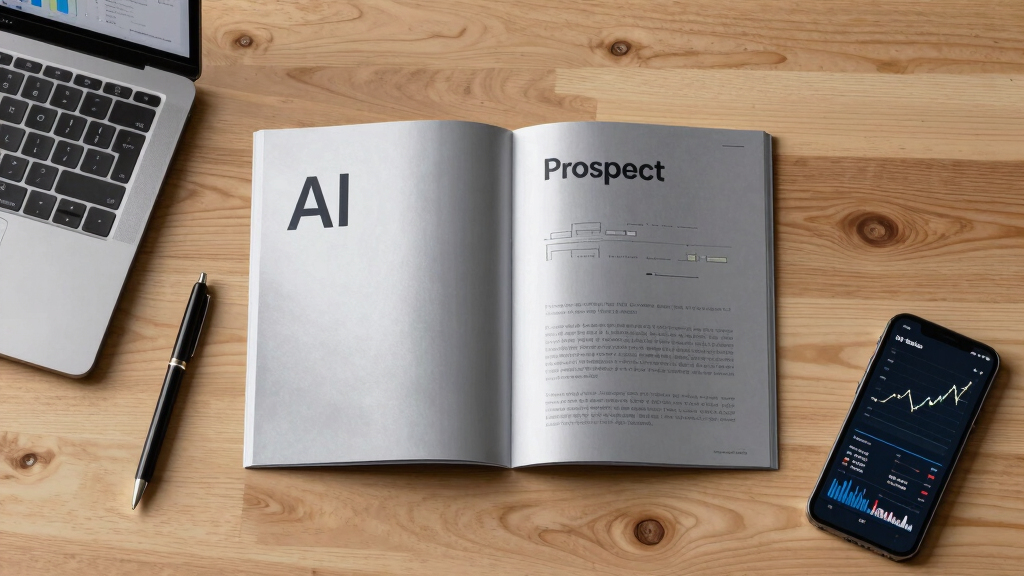

📊 Full opportunity report: The prospectus. Where the AI labs’ singular governance history meets the auditor. on ThorstenMeyerAI.com — validation score, market gap, and execution plan.

Get business pricing on office and shipping supplies
- Business-only prices and quantity discounts
- Tax-exempt purchasing
- Multiple users, one account, clear invoices
TL;DR
OpenAI is expected to file its confidential IPO prospectus with the SEC, revealing a complex governance history that could influence investor valuation. The filing will disclose structural risks linked to its nonprofit origins, litigation, and unique corporate setup.
OpenAI is poised to file its IPO prospectus confidentially with the SEC this Friday, marking a formal disclosure of its complex governance history, including nonprofit origins, litigation, and structural arrangements. This filing will translate years of corporate restructuring into a detailed, scrutinized document that could influence investor perceptions and valuation.
The upcoming IPO filing will include disclosures about OpenAI’s transformation from a nonprofit to a capped-profit entity, its controlling foundation holding approximately $130 billion in assets, and its partnership with Microsoft, which owns around 27% of the company with revenue rights tied to artificial general intelligence (AGI) verification. The prospectus must also address ongoing litigation, including a recent lawsuit from a co-founder, which OpenAI describes as a ‘calendar technicality.’ These factors introduce significant risk considerations for potential investors. Unlike typical tech IPOs, OpenAI’s unique governance structures—such as the foundation’s control, the AGI clause, and the litigation—must be explicitly disclosed as potential risk factors. The process of translating these complex arrangements into the standardized language of securities law will reveal the true market value of the company’s structural innovations. The filing is expected to serve as a critical point where narrative and legal disclosure intersect, and market valuation will be directly influenced by how these governance features are perceived as either mission-protecting or shareholder-limiting.The prospectus.
Where the AI labs’ singular
governance history meets
the auditor.
S-1 filing · the largest tech IPO ever
a nonprofit controls the board
Microsoft’s revenue rights
gross-vs-net question could reorder it
law
requires
- Nonprofit-to-PBC conversion with no clean precedent
- Foundation holds ~$130B and controls the board
- The AGI clause — an unquantifiable contingency
- Musk verdict won on a technicality, not the merits
- Dense copyright + chatbot-harm litigation
- PBC from inception — no conversion, no AGI clause, no Musk
- Cleaner enterprise-revenue story (Claude Code)
- BUT the Long-Term Benefit Trust elects a majority of directors
- The Snap / Lyft governance discount on trust control
- The gross-vs-net revenue question (see FIG. 05)
Both labs spent years building mission-protecting structures whose purpose is to subordinate shareholder return to mission — and both must now argue, in the same document, that mission-protection and public-market discipline can coexist. That argument is the real offering. The shares are just the instrument.Thorsten Meyer · The Prospectus · AI Governance 04
Implications of Governance Structures for Market Valuation
This IPO prospectus will force OpenAI to publicly disclose its intricate governance arrangements, including foundation control, litigation risks, and mission-based clauses. These disclosures could impact how investors value the company, potentially lowering its valuation if perceived as limiting shareholder rights or increasing risk. The process highlights how structural differences in corporate setup translate into tangible market risks, making the IPO a critical moment for understanding the true cost of mission-driven innovation in AI labs.AI governance risk management books
As an affiliate, we earn on qualifying purchases.
As an affiliate, we earn on qualifying purchases.
From Private Structures to Public Disclosures in AI Labs
OpenAI’s corporate evolution from a nonprofit to a capped-profit and then to a public benefit corporation has created a complex governance landscape. Its foundation still controls significant assets and the board, while its partnership with Microsoft and litigation history add layers of risk. Similar companies like Anthropic are preparing parallel IPOs, with different structural profiles, which will also face scrutiny in their prospectuses. Historically, such governance arrangements are rarely fully disclosed until the IPO, where they become material risks that markets must price.“The IPO prospectus is the moment when OpenAI’s complex governance history is laid bare, transforming narrative into legally mandated disclosure that will influence market valuation.”
— Thorsten Meyer
As an affiliate, we earn on qualifying purchases.
Unresolved Risks and Disclosure Challenges in the Prospectus
It is not yet clear how the SEC will interpret and evaluate OpenAI’s complex governance disclosures, particularly the AGI clause, litigation history, and foundation control. The final impact on valuation remains uncertain, as market perception will depend on how these factors are framed and understood in the prospectus. Additionally, the extent to which the SEC may require harmonization of revenue recognition or governance transparency is still developing.
corporate governance compliance software
As an affiliate, we earn on qualifying purchases.
As an affiliate, we earn on qualifying purchases.
Next Steps After Filing and Market Response
Following the confidential filing, OpenAI’s prospectus will undergo SEC review, with potential revisions before becoming public. Investors and analysts will scrutinize the disclosures to assess risks related to governance and litigation. The company’s valuation will be influenced by how these structural risks are perceived. The market’s response will set a precedent for how mission-driven AI labs are valued in public markets, especially concerning governance arrangements that diverge from traditional corporate models.
AI startup legal risk assessment tools
As an affiliate, we earn on qualifying purchases.
As an affiliate, we earn on qualifying purchases.
Key Questions
What are the main governance risks disclosed in OpenAI’s IPO prospectus?
The main risks include the foundation’s control over the company, the AGI clause that ties revenue to AI verification, ongoing litigation from a co-founder, and the implications of mission-protecting structures on shareholder rights and valuation.
How does OpenAI’s structure differ from typical tech companies?
OpenAI’s history includes a nonprofit origin, a foundation controlling assets and governance, a capped-profit model, and mission-based clauses like the AGI clause, which are uncommon in traditional corporate IPOs.
What impact could the disclosures have on OpenAI’s market valuation?
If the SEC views these governance features as increasing risk or limiting shareholder rights, it could lower the company’s valuation. Conversely, transparency might reassure investors about the company’s mission and long-term strategy.
Will Anthropic face similar disclosure challenges?
Yes, although Anthropic’s structure is different, with a Long-Term Benefit Trust and no history of nonprofit conversion, it still faces disclosure of governance arrangements that could influence valuation and investor perception.
When will the public see OpenAI’s full IPO prospectus?
OpenAI is expected to file confidentially with the SEC this Friday, with the prospectus likely becoming public within a few months after review and possible revisions.
Source: ThorstenMeyerAI.com
Halloween Picks
halloween
As an affiliate, we earn on qualifying purchases.