📊 Full opportunity report: Rehearse Your Business Story On Camera With A Speech Practice App on IdeaNavigator AI — validation score, market gap, and execution plan.

Get business pricing on office and shipping supplies
- Business-only prices and quantity discounts
- Tax-exempt purchasing
- Multiple users, one account, clear invoices
TL;DR
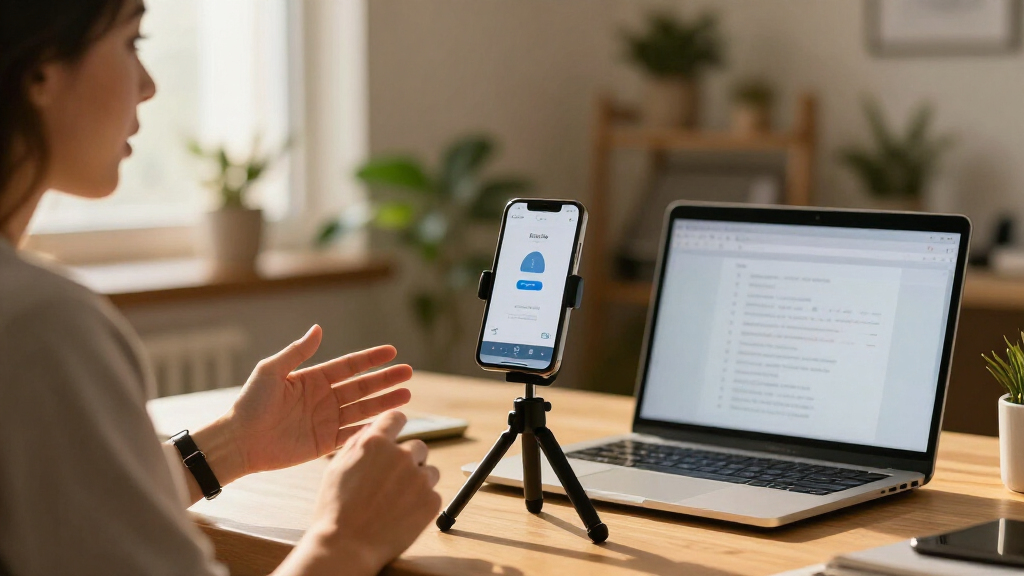
IdeaNavigator AI has outlined a proposed speech-practice app for business owners who struggle to record videos. The concept uses short daily exercises and feedback on delivery, but it remains an idea: no launch, trial results or evidence of effectiveness are provided.
IdeaNavigator AI has outlined a proposed practice app for business owners who freeze when recording themselves, with short camera exercises and private feedback intended to help them progress toward publishing real videos. The concept is framed as an early product opportunity, not a launched service, and its proposed test would measure whether participants publish a video within 45 days. These details come from IdeaNavigator AI’s online proposal; it does not report a launch or completed test.
According to IdeaNavigator AI’s proposal, the intended user is a business owner who believes video matters to their business but struggles to record. The outline describes a familiar barrier: stumbling, repeated takes and self-criticism can keep owners from posting at all. It argues that conventional public-speaking courses may not address the specific experience of speaking alone to a camera, though the proposal cites no research or user interviews to establish how widespread that gap is.
The proposed minimum viable product would offer daily, two-minute prompted exercises, starting with reading and progressing to speaking more freely. IdeaNavigator AI says the app would assess delivery measures including pace, filler words, eye line and energy, display progress over time and use confidence streaks to encourage regular practice. The stated goal is to help users move from rehearsals to recording business content; the proposal does not specify how the assessments would work or what standards would determine a score.
For validation, IdeaNavigator AI proposes a 30-day cohort of 100 business owners and a waitlist control group. The suggested outcome is the share of people who publish their first real video by day 45. The proposal also identifies a consumer subscription and a team tier for agencies coaching clients as possible revenue models. It reports no cohort underway, and provides no price, product release or test results.
IDEANAVIGATOR AI · PRODUCT CONCEPT
Rehearse Your Business Story On Camera With A Speech Practice App
A proposed practice app would help business owners rehearse short videos through daily prompts and delivery feedback. It remains an idea: no launch, trial results, or evidence of effectiveness has been reported.
01 / The proposed product
From camera pressure to daily practice
IdeaNavigator AI describes business owners who believe video could help their business but struggle to record themselves. The app concept focuses on solo camera practice, where repeated takes and self-criticism can keep people from posting.
01 · Start small
Short daily prompts
Two-minute exercises would begin with reading and gradually invite users to speak more freely on camera.
02 · Notice delivery
Feedback for practice
Proposed measures include pace, filler words, eye line, and vocal energy, with progress displayed over time.
03 · Build a routine
Move toward publishing
Confidence streaks are suggested to encourage regular practice, with the eventual aim of recording real business content.
02 / The intended journey
A route from rehearsal to a real video
The outline proposes one narrow outcome: help an owner who is uncomfortable recording reach the point of publishing a first business video.
Open the camera
Begin with a low-pressure, two-minute prompt.
Practice a take
Progress from reading aloud to speaking more naturally.
Review delivery
Use suggested feedback on pace, eye line, fillers, and energy.
Publish a video
Track whether users post their first real video by day 45.
03 / Proposed validation
Test publishing behavior, not just practice time
The suggested test would run a 30-day cohort of 100 business owners alongside a waitlist group. The main outcome would be the share of participants who publish a first real video by day 45. No cohort is reported as underway.
What the measure could show
A published video is a concrete behavior to track, and a waitlist comparison could help assess whether access to the exercises makes a difference.
What is still unspecified
The proposal gives no recruitment plan, publishing verification method, interpretation criteria, or completed results.
04 / What remains unknown
Key product questions are still open
The concept’s rationale is plausible, but its demand, usefulness, and technical approach have not been established by the proposal.
No release date, available app, or completed trial is identified.
Scoring standards, accuracy, privacy, and accessibility are not explained.
A consumer subscription and agency team tier are proposed; no pricing or demand evidence is provided.
05 / Key questions
What the proposal says—and leaves open
These answers reflect IdeaNavigator AI’s online proposal. They describe a proposed product and test, not an available service.
Has the app launched?
No launch is reported. No release date or available app is identified.
Who is it for?
Business owners who believe video may help their business but struggle to record themselves or post.
What would users practice?
Two-minute daily prompts, moving from reading to freer speech, with proposed delivery feedback.
How could it be tested?
A 30-day cohort of 100 owners compared with a waitlist group, measuring first video publication by day 45.
What remains unknown?
Effectiveness, customer demand, pricing, release timing, technical design, and video data handling.
Are there trial results?
No completed cohort or results are provided; the study is a recommendation for future validation.
SOURCE · IDEANAVIGATOR AI ONLINE PROPOSAL
Testing a Route From Practice to Posting
The proposal targets the gap between knowing that video can serve a business and actually appearing on camera. If the problem is as described in IdeaNavigator AI’s outline, a private practice tool could give owners a lower-pressure way to rehearse before publishing content under their own business name. That is a plausible product rationale, not evidence that the app would reduce anxiety or increase video output.
The proposed measure also focuses on a concrete behavior: publishing a first video by day 45, rather than only reporting confidence or time spent practising. IdeaNavigator AI suggests comparing participants with a waitlist group, which could help distinguish the effect of the exercises from changes that might happen without immediate access. But the outline does not explain how participants would be recruited, how publishing would be verified, or how results would be interpreted. Until such a test is completed and reported, potential benefits and demand remain unverified.
The concept also depends on automated feedback being useful and trusted. Scores on eye line, pace or vocal energy may give users a structure for practice, but IdeaNavigator AI’s proposal supplies no details about accuracy, privacy, accessibility or the risk of feedback discouraging users. Those questions could affect whether business owners return to the app and whether agencies would recommend it to clients.
Products Worth Considering

Canon PIXMA TR160 Wireless Portable Color Inkjet Printer

HP OfficeJet 250 Wireless Mobile All-in-One Inkjet Printer

Canon PIXMA PRO-200S Wireless Professional Inkjet Photo Printer
As an affiliate, we earn on qualifying purchases.
From Video Pressure to Practice
IdeaNavigator AI positions the idea within communication-skills training, describing video marketing pressure as reaching businesses of all sizes. Its outline argues that public-speaking instruction may not fit solo recording, where a speaker has no live audience and may repeat takes while judging their own performance. These points explain the proposed product’s focus, but the proposal includes no market data or comparative research to support them.
Rather than proposing a broad communications platform, the concept starts with one user and one outcome: a business owner who cannot get comfortable recording, and a first published video. That narrow framing shapes both the short exercises and the suggested validation plan. IdeaNavigator AI mentions multimodal AI as a way to assess delivery, but does not identify a technical system, developer, existing product or evidence that any particular model can provide dependable coaching.
What the Proposal Has Not Established
No product launch or completed trial is reported in IdeaNavigator AI’s proposal. The 100-person cohort and day-45 publishing measure are recommendations for validation, not results. It remains unknown whether business owners would sign up, complete daily exercises, pay for a subscription or publish more often after using the proposed app.
The outline gives no pricing, release schedule, technical specifications or named team. It also does not explain what data video analysis would collect or retain, how feedback would be checked for accuracy, or how the waitlist group would be matched to participants. The proposed agency tier is a possible business model, not evidence of agency demand.
A Cohort Would Test the Idea
In its proposal, IdeaNavigator AI describes the next step as a 30-day test with 100 owners, alongside a waitlist control group, followed by tracking whether participants publish a first real video by day 45. No start date, recruitment plan or public results timetable has been given. A future account of the test would need to report participation and completion rates as well as the publishing outcome to show how many users reached the stated goal.
Until a test is announced and results are available, the app remains a product concept. Any eventual move toward subscriptions or an agency offering would depend on whether the practice workflow is built, whether users find its feedback helpful and whether the validation results support continued development.
Source: IdeaNavigator AI
Key Questions
Has the camera-practice app launched?
No launch is reported. IdeaNavigator AI outlines a proposed product and a way to test it; no release date or available app is identified.
Who is the proposed app for?
According to IdeaNavigator AI’s proposal, it is aimed at business owners who know video may help their business but struggle to record themselves, including people who stumble, overthink takes or avoid posting.
What would users practise?
The proposal says the app would provide two-minute daily prompts, beginning with reading and progressing toward speaking more freely. It would offer feedback on pace, filler words, eye line and energy.
How would the idea be tested?
IdeaNavigator AI proposes a 30-day cohort of 100 owners compared with a waitlist group. The suggested measure is who publishes a first real video by day 45; no results have been reported.
What remains unknown about the product?
There is no confirmed pricing, launch schedule, technical design or evidence of effectiveness. Details about video privacy, feedback accuracy and customer demand are also not provided in the proposal.
Source: IdeaNavigator AI