

Modern marketing automation now focuses on deep personalization, allowing you to tailor messages based on individual behaviors and preferences at scale. Advanced AI-driven analytics predict customer actions, helping you engage proactively with relevant offers and content. Dynamic workflows respond in real time, creating seamless customer experiences across channels. Integration with data platforms guarantees your messages are precisely timed and targeted. Staying ahead with these evolving trends helps you foster long-term loyalty and meaningful connections—stay tuned to discover how to leverage these innovations effectively.
Key Takeaways
- Advanced personalization at scale tailors content based on individual behaviors and preferences for more relevant outreach.
- AI-driven predictive analytics forecast customer actions, enabling proactive, targeted engagement strategies.
- Automation now manages complex, dynamic workflows that adapt in real-time to customer interactions.
- Seamless integration with customer data platforms enhances segmentation and multi-channel personalized campaigns.
- Long-term engagement focuses on building loyalty through continuous optimization and meaningful, personalized communication.
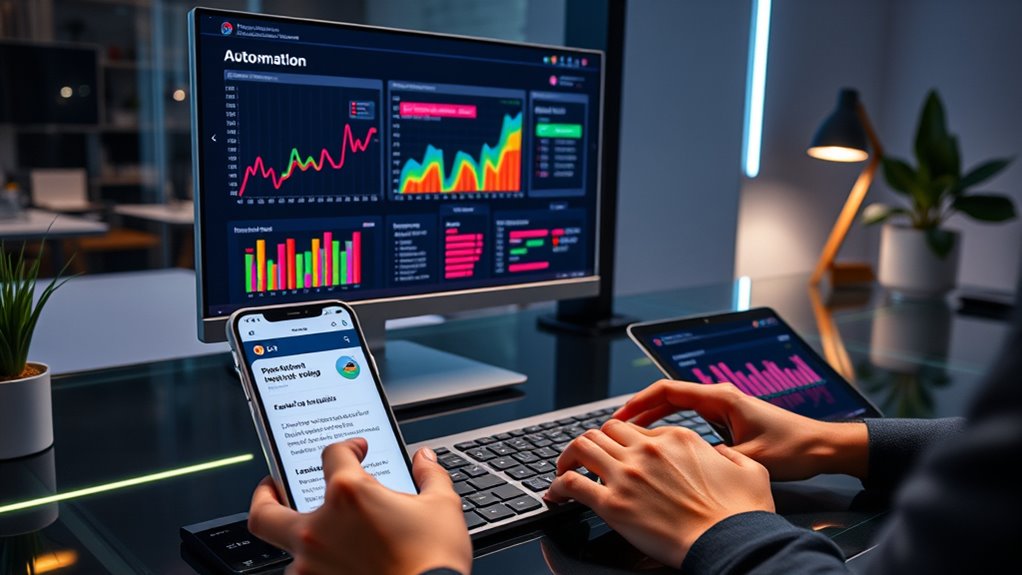
Marketing automation continues to transform how businesses engage with their audiences, making it easier to deliver personalized experiences at scale. As technology advances, you find yourself able to craft more effective personalization strategies that resonate with your target audience. Instead of generic messages, automation tools now allow you to tailor content based on individual behaviors, preferences, and interactions. This shift means you’re not just sending out mass emails or campaigns but creating highly targeted messages that feel personal and relevant. By leveraging AI-driven analytics, you gain deeper insights into customer journeys, enabling you to fine-tune your outreach in real-time. These analytics help you understand what content performs best, what timing works, and what triggers lead to conversions. With this data, you can optimize your campaigns continuously, ensuring that every touchpoint adds value and enhances customer engagement.
AI-driven analytics has become a game-changer, giving you the ability to predict customer needs and behaviors with remarkable accuracy. Instead of relying solely on historical data, sophisticated algorithms now analyze patterns to forecast future actions. This allows you to proactively engage prospects with personalized offers or content just when they’re most receptive. For example, if analytics indicate a customer is interested in a particular product category, your automation system can automatically send tailored recommendations or special discounts. This level of precision not only boosts your chances of closing sales but also builds trust and loyalty over time. You’re able to automate complex workflows that adapt dynamically based on customer interactions, making your outreach more timely and relevant.
Furthermore, these personalization strategies empowered by AI-driven analytics streamline your marketing efforts. You spend less time on guesswork and more on strategic initiatives that truly move the needle. Automation platforms now integrate seamlessly with customer data platforms, giving you a unified view of your audience. This integration makes it easier to segment your audience precisely and deliver the right message at the right moment. As a result, you can nurture leads through personalized email sequences, targeted ads, or social media interactions that feel less intrusive and more helpful. In this environment, your ability to automate personalized outreach isn’t just about efficiency; it’s about creating meaningful connections that foster long-term relationships. By staying ahead of these automation trends, you position your business to engage audiences more effectively than ever before.

AI Automation Blueprint: Build Smart AI Systems to Automate Business, Marketing, Content Creation, and Online Income
As an affiliate, we earn on qualifying purchases.
As an affiliate, we earn on qualifying purchases.
Frequently Asked Questions
How Does AI Personalize Marketing Outreach Effectively?
AI personalizes your marketing outreach effectively by utilizing behavioral targeting to understand your audience’s actions and preferences. It then automatically customizes content, ensuring each message resonates personally. You can set AI to analyze user data continuously, so your campaigns stay relevant and engaging. This combination of behavioral targeting and content customization helps you build stronger connections, boost engagement, and improve overall campaign performance effortlessly.
What Are the Privacy Concerns With Automation Tools?
Like Pandora’s box, automation tools can raise serious privacy concerns. You need to prioritize data privacy and guarantee user consent before collecting or using personal information. Without transparent practices, you risk losing trust and facing legal repercussions. Always be clear about how data is used, and give users control over their information. Staying compliant and respecting user privacy keeps your outreach effective and ethical.
Can Small Businesses Implement Advanced Automation?
Yes, small businesses can implement advanced automation effectively. You can start with customer segmentation to target your audience precisely and use content scheduling to deliver timely, relevant messages. By leveraging user-friendly tools, you don’t need extensive resources or technical skills. Automation helps you streamline outreach, nurture leads, and boost engagement, making it a practical solution for small businesses aiming to grow efficiently and stay competitive in today’s digital landscape.
How Do Automation Trends Vary Across Industries?
You’ll find automation trends vary across industries by focusing on industry-specific strategies and cross-channel integration. For example, retail emphasizes personalized customer journeys, while B2B leans on account-based marketing. Adapting your automation efforts to these industry nuances helps you deliver relevant content and streamline interactions. Staying updated on these trends enables you to refine your outreach, improve engagement, and stay ahead in your sector.
What Are the Future Predictions for Marketing Automation?
Future forecasts favor focused, flexible, and frictionless marketing automation. You’ll see more precise customer segmentation, enabling personalized experiences, and content customization that captivates your audience. As technology advances, expect smarter systems that seamlessly sync data and streamline workflows. This evolution promises more proactive, personalized outreach, helping you build better relationships, boost engagement, and enhance overall efficiency. Automation becomes not just a tool, but a strategic partner in your marketing success.

Hands-On Salesforce Data Cloud: Implementing and Managing a Real-Time Customer Data Platform
As an affiliate, we earn on qualifying purchases.
As an affiliate, we earn on qualifying purchases.
Conclusion
As you explore these marketing automation trends, remember that staying ahead means embracing new tools and strategies. For example, imagine a small e-commerce store using AI-driven email campaigns that adapt in real-time, boosting sales and customer engagement. By leveraging these innovations, you can streamline your outreach, personalize experiences, and stay competitive. Keep experimenting and refining your approach—automation is your secret weapon for smarter, more effective marketing.

The Simplified Hubspot User Guide: Master Marketing Automation with Ease
As an affiliate, we earn on qualifying purchases.
As an affiliate, we earn on qualifying purchases.

Predictive Analytics For Dummies (For Dummies Series)
As an affiliate, we earn on qualifying purchases.
As an affiliate, we earn on qualifying purchases.