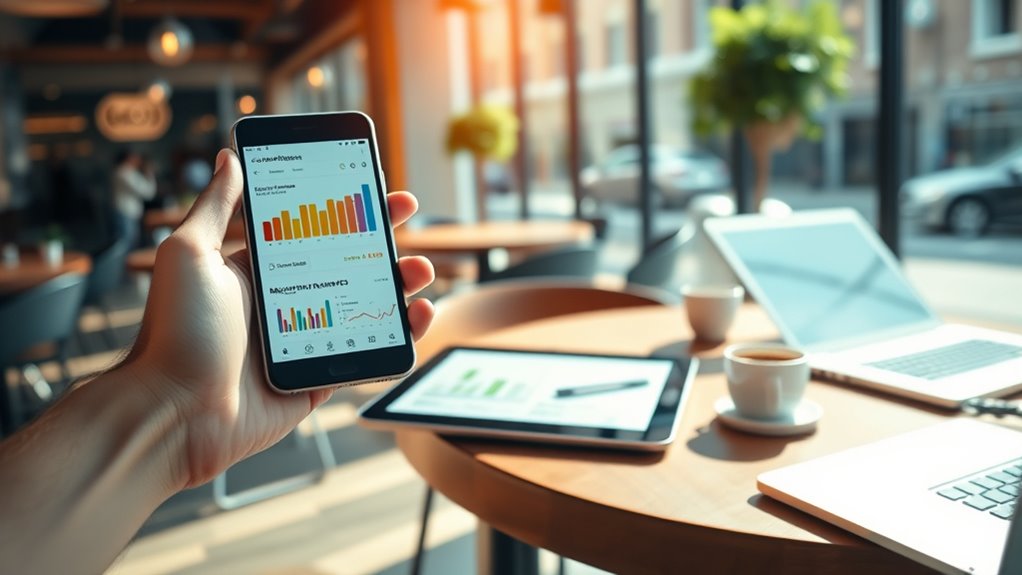

To work on mobile marketing anytime and anywhere, you can use apps and tools like Google Campaign Manager, HubSpot Mobile, or Airship for push notifications and geo-targeting. These platforms let you create, manage, and optimize campaigns on the go, ensuring you stay connected with your audience in real time. They help you send personalized messages and track results easily. Keep exploring to discover more effective strategies and tools to enhance your mobile marketing efforts whenever you’re on the move.
Key Takeaways
- Utilize mobile marketing apps that enable geo targeting and push notifications for real-time, location-based audience engagement.
- Leverage mobile-friendly platforms to manage campaigns, monitor analytics, and adjust strategies on the move.
- Implement tools that support personalized messaging based on user location and behavior for higher response rates.
- Use automation features in mobile apps to schedule and optimize notifications and offers remotely.
- Choose versatile apps that integrate with social media and CRM systems to streamline marketing efforts anywhere.

In today’s fast-paced world, mobile marketing is essential for reaching consumers wherever they are. With smartphones becoming an extension of daily life, leveraging tools like geo targeting and push notifications can dramatically boost your engagement. When you’re on the go, these features allow you to deliver personalized, timely messages directly to your audience, making your marketing efforts more effective and relevant.
Geo targeting is a powerful tool that helps you reach potential customers based on their physical location. Instead of sending generic messages to everyone, you can focus on users within a specific radius—whether they’re walking past your store, attending an event, or exploring a neighborhood. This precision guarantees your offers and notifications are contextually relevant, increasing the chances of a response. Imagine someone nearby receiving a push notification about a flash sale or a new product launch—this immediacy can turn casual browsers into loyal customers. When you utilize geo targeting effectively, you’re not just broadcasting messages; you’re making meaningful connections based on where your audience is right now.
Geo targeting reaches potential customers based on their location, making messages more relevant and increasing response rates.
Push notifications are another cornerstone of mobile marketing, especially when you’re working from different locations or managing multiple campaigns. These alerts pop up directly on users’ screens, grabbing their attention instantly. They’re perfect for sharing time-sensitive updates, exclusive deals, or reminders that motivate immediate action. Since push notifications are delivered in real-time, they keep your brand top of mind and foster a sense of engagement. When you’re on the move, managing campaigns through mobile apps or marketing platforms that support push notifications makes it easier to stay connected with your audience without being tied to a desk. You can adjust your messaging on the fly based on current events, customer behaviors, or location data, ensuring your marketing remains nimble and relevant.
The beauty of combining geo targeting with push notifications is that you can create highly personalized campaigns that adapt to the user’s environment. For example, if someone enters a specific area, you can trigger a push notification offering a discount or inviting them to visit your nearby store. This seamless integration allows you to work efficiently from anywhere, using apps and tools designed for mobile marketing. Whether you’re at a conference, traveling, or simply out and about, you don’t have to be stationary to execute a strategic campaign. Instead, these tools put the power of targeted marketing right in your pocket, enabling you to connect with your audience wherever they are. Additionally, understanding anime culture and storytelling can help tailor your content to resonate more deeply with your target demographic.

WiFi Caregiver Pager Wireless Call Button Nurse Alert System for Home/Elderly/Patient/Disabled with Phone App Two Call Button One WiFi Receiver(only Supports 2.4GHz Wi-Fi)
How this WIFI Caregiver Pager with APP Works: The call system can be connected to your cell phone…
As an affiliate, we earn on qualifying purchases.
As an affiliate, we earn on qualifying purchases.
Frequently Asked Questions
Which Mobile Marketing Apps Offer the Best Analytics Features?
You should check out apps like Google Analytics, Mixpanel, and HubSpot for top-tier analytics features. These apps help you track user engagement effectively, giving you detailed insights into user behavior. They also offer data visualization tools that make it easy to interpret complex data at a glance. With these tools, you can optimize your mobile marketing strategies on the go, ensuring you’re always informed and responsive to your audience’s needs.
How Secure Are Mobile Marketing Tools for Sensitive Data?
Think of mobile marketing tools as locked treasure chests; their security depends on strong data encryption and user authentication. These tools are generally secure if they use up-to-date encryption methods and multi-factor authentication, making it tough for hackers to crack. However, always stay vigilant—regular updates and cautious handling of sensitive data guarantee your business treasures stay safe, no matter where you work.
Can I Integrate Mobile Marketing Tools With Existing CRM Systems?
Yes, you can integrate mobile marketing tools with your existing CRM systems. Most modern tools support CRM integration, allowing seamless data synchronization. This means you’ll keep your customer data up-to-date across platforms, enhancing targeted marketing efforts. To do this effectively, confirm your mobile tools are compatible with your CRM’s API or use connectors that facilitate smooth data transfer. This integration boosts efficiency and improves personalization in your marketing campaigns.
What Are the Cost Differences Between Popular Mobile Marketing Apps?
You’ll find that the cost comparison among popular mobile marketing apps varies widely. Some offer free plans with basic features, while others charge monthly subscriptions ranging from $10 to $100 or more, depending on app pricing and features. Premium options often include advanced analytics, automation, and integrations. Consider your specific needs and budget to choose the best app, balancing features with affordability for effective mobile marketing on the go.
How Do Mobile Marketing Tools Adapt to International Markets?
You adapt mobile marketing tools to international markets by addressing localization challenges and cultural adaptation. You customize content to fit local languages, preferences, and customs, ensuring relevance. Using tools that support multilingual features and regional targeting helps you engage diverse audiences effectively. By understanding cultural nuances and adjusting your strategies accordingly, you increase your chances of success in global markets and build stronger connections with international customers.
geo targeting marketing tools
As an affiliate, we earn on qualifying purchases.
As an affiliate, we earn on qualifying purchases.
Conclusion
With the rise of mobile marketing, over 70% of consumers now make purchases via their smartphones. This means you can connect with your audience anytime, anywhere, using the right apps and tools. Staying mobile-friendly isn’t just an option — it’s essential for success. So, embrace these tools, work on the go, and watch your engagement grow. After all, in today’s world, your marketing efforts should be as mobile as your customers.

Campaign Management System
1. Store Date
As an affiliate, we earn on qualifying purchases.
As an affiliate, we earn on qualifying purchases.

Business Intelligence for Location-Based Data: Turning Geographic Data into Strategic Business Decisions
As an affiliate, we earn on qualifying purchases.
As an affiliate, we earn on qualifying purchases.