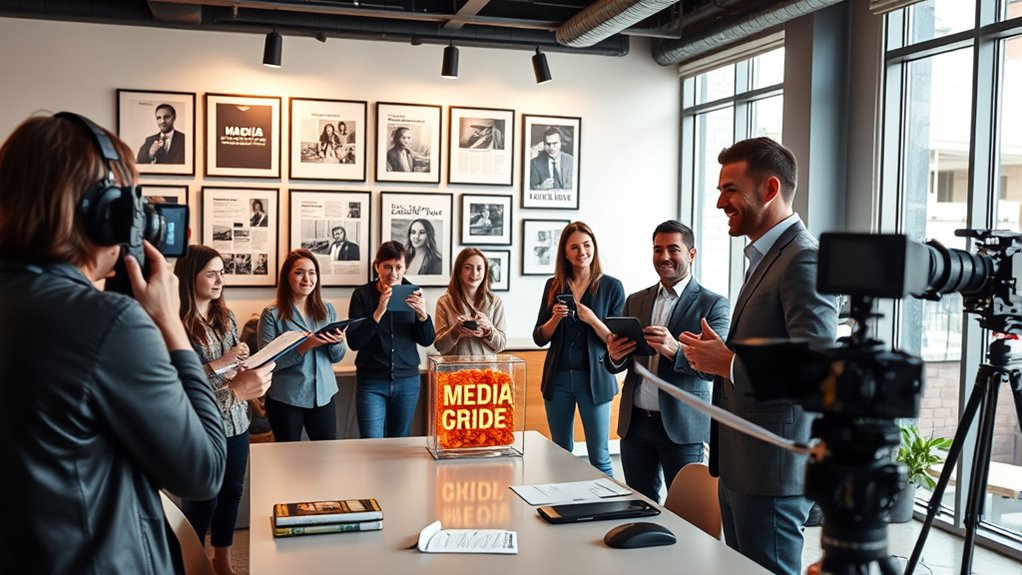

To get featured in the press and boost sales, focus on crafting a clear, compelling pitch that highlights your story’s newsworthiness and uniqueness. Research journalists who cover your industry, personalize your outreach, and keep messages concise and relevant. Build strong relationships by sharing useful info and engaging on social media. Providing visuals and timely updates makes your story more attractive. Keep these strategies in mind, and you’ll discover more tips to gain valuable media coverage.
Key Takeaways
- Identify and pitch newsworthy stories that highlight what makes your business unique and relevant to current trends.
- Personalize outreach to journalists by researching their interests and tailoring pitches accordingly.
- Build ongoing media relationships through prompt responses, sharing updates, and offering exclusive or timely information.
- Use clear, concise press releases and provide visuals or resources to make your story more appealing.
- Engage with journalists on social media to foster connections and stay top-of-mind beyond email outreach.
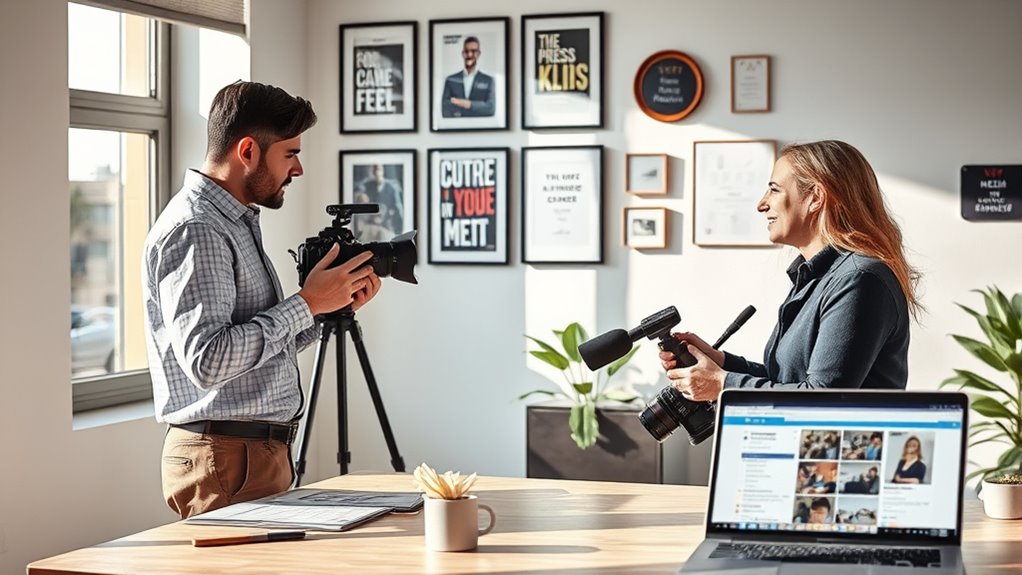
Are you wondering how to get your story noticed by the media? The key is mastering effective press outreach and building strong media relations. When you reach out to journalists and editors with a compelling story, you increase your chances of earning valuable press coverage that can boost your sales markedly. The first step is understanding what makes your story newsworthy. Think about what sets your business apart, the unique angle you offer, or a timely hook that resonates with current trends or issues. Once you identify this, you need to craft a clear, concise pitch that grabs attention quickly. Journalists receive countless emails daily, so making your pitch standout is essential.
Press outreach is all about making targeted, personalized contact with media professionals. Rather than sending mass emails, do your homework. Research which journalists cover your industry or niche, and learn about their interests and previous stories. When you reach out, personalize your message to show you’ve done your homework and genuinely understand their work. Highlight how your story aligns with their beat and why it would interest their readers. Keep your pitch short and to the point, emphasizing the newsworthiness and providing easy access to additional information or visuals if relevant. A well-crafted press release can support your outreach efforts but remember that personalized emails tend to perform better.
Personalize your media outreach by researching journalists and tailoring your message to their interests.
Building strong media relations is essential for long-term success. You want to establish trust and credibility with journalists by being reliable and respectful of their deadlines. Respond promptly to media inquiries, provide accurate information, and be available for interviews or follow-up questions. Don’t just pitch once and forget about it; maintain ongoing relationships by sharing updates, new story ideas, or exclusive offers that might interest them. Over time, journalists will come to see you as a valuable source of information and might turn to you when they’re covering stories related to your industry. Additionally, leveraging knowledge about essential oils and their benefits can help you craft compelling narratives that resonate with health-conscious audiences, increasing your chances of media interest.
Furthermore, consider engaging with media through social media channels. Follow journalists, comment thoughtfully on their posts, and share their work when appropriate. This helps you stay top-of-mind and creates a more personal connection beyond email pitches. Remember, media relations are built on mutual respect and trust. By consistently providing relevant, timely information, you position yourself as a reliable source. When your press outreach is strategic and your media relations are genuine, you’ll find it easier to secure media coverage that amplifies your message, reaches new audiences, and ultimately boosts your sales.

15W Wireless Voice Amplifier with 2 Magnetic Lavalier Mics & Noise Reduction - Bluetooth 5.3 PA System for Teachers, Tour Guide, Yoga - 15H Rechargeable Battery, Waist-Mount Design (White)
Wireless Voice Amplifier: This wireless voice amplifier features a premium 76mm large-sized horn and a built-in DSP intelligent...
As an affiliate, we earn on qualifying purchases.
Frequently Asked Questions
How Long Does It Typically Take to Secure Media Coverage?
It usually takes anywhere from a few days to several weeks to secure media coverage, depending on your pitching timelines and the outlet’s process. Timing expectations vary, so don’t get discouraged if you don’t hear back right away. Keep following up professionally, refine your pitch, and be patient. Consistency and persistence are key. Remember, some outlets may take longer, but your efforts will increase your chances of getting featured.
What Are Common Mistakes to Avoid When Pitching to Press?
Avoid common mistakes like sending generic media pitches without personalization, which can turn off journalists. Make sure your press release timing aligns with news cycles and avoids overwhelming reporters. Personalize your media pitch to show you understand the outlet’s audience and interests. Don’t follow up too aggressively or ignore the journalist’s guidelines. These steps increase your chances of securing media coverage and boosting your sales effectively.
How Can Small Businesses Stand Out to Journalists?
You can stand out to journalists by crafting compelling media pitch strategies that highlight your unique brand storytelling. Focus on what makes your business different and share authentic, relatable stories that resonate with their audience. Personalize your pitches, demonstrate your expertise, and provide clear, concise information. Show how your story aligns with current trends or topics, making it easier for journalists to see the value in featuring your business.
Is It Necessary to Hire a PR Agency for Media Coverage?
Think of hiring a PR agency as calling in a seasoned knight for a joust—you might handle it yourself, but they bring experience and strategy. It’s not always necessary; you can leverage press release strategies and media training to get noticed. Focus on crafting compelling stories and building relationships with journalists. With dedication, you can secure media coverage without hiring an agency, saving costs while still making a splash.
How Often Should I Follow up After Pitching My Story?
You should follow up about 5 to 7 days after your initial pitch, using good timing strategies. Keep your follow-up brief and polite, respecting the publication’s follow up etiquette. If you don’t hear back, wait another week before trying again. This shows persistence without being pushy. Staying professional and respectful helps build relationships with journalists, increasing your chances of getting featured in the press.

WinBridge Voice Amplifier with Bluetooth, Portable Speaker and Microphone Set, Wireless Mic Headset Speaker for Teachers, Tour Guide, Public Speaking, Fitness Instructors, Features Mute, 15W WB002
Teacher must haves: WB002 Bluetooth voice amplifier can be a thoughtful and practical gift for a teacher who...
As an affiliate, we earn on qualifying purchases.
Conclusion
Just like a lighthouse guides ships to safety, securing media coverage can steer your business toward success. When your story shines in the press, it attracts attention, builds trust, and boosts sales. Remember, every great brand started with a single spark—your compelling story. Keep pushing, stay authentic, and soon, your spotlight will grow brighter than ever, illuminating your path to greater visibility and growth. The horizon is waiting—time to set sail.

TONOR Voice Amplifier for Teachers, 15W Bluetooth Voice Amplifier with Wireless Headset Mic, Portable Megaphone Speaker Rechargeable PA System 82ft for Teaching, Speaking, Fitness Instructors K11
Powerful Sound: This voice amplifier has a high-sensitivity speaker for high sound fidelity. It features 20 adjustable frequencies...
As an affiliate, we earn on qualifying purchases.

ZOWEETEK ZW-Z258 Portable Rechargeable Mini Voice Amplifier for Teachers with Wired Microphone Headset and Waistband,Supports MP3 Format Audio for Speech, Class, Training,Tour Guide,Power Amplifiers
A True Original Voice Amplifier that amplifies your voice without making it mechanized in sound quality
As an affiliate, we earn on qualifying purchases.