

To raise prices without losing customers, communicate openly and early about the change, clearly explaining why it’s happening and how it benefits them. Be honest and emphasize the added value or improvements, reassuring customers of your commitment to quality. Reinforce trust by showing appreciation for their loyalty and consider offering incentives like discounts or flexible options. For more strategies on managing price hikes effectively, explore how you can turn this challenge into an opportunity.
Key Takeaways
- Communicate price increases transparently early, explaining the reasons and benefits to build trust and understanding.
- Highlight added value or improvements that justify the increase, reinforcing your commitment to quality.
- Offer incentives like loyalty discounts or flexible payment options to ease customer transition.
- Conduct competitive analysis to ensure your pricing remains attractive and position increases as aligned with market standards.
- Emphasize your ongoing value and dedication to customer satisfaction to strengthen loyalty despite the price change.
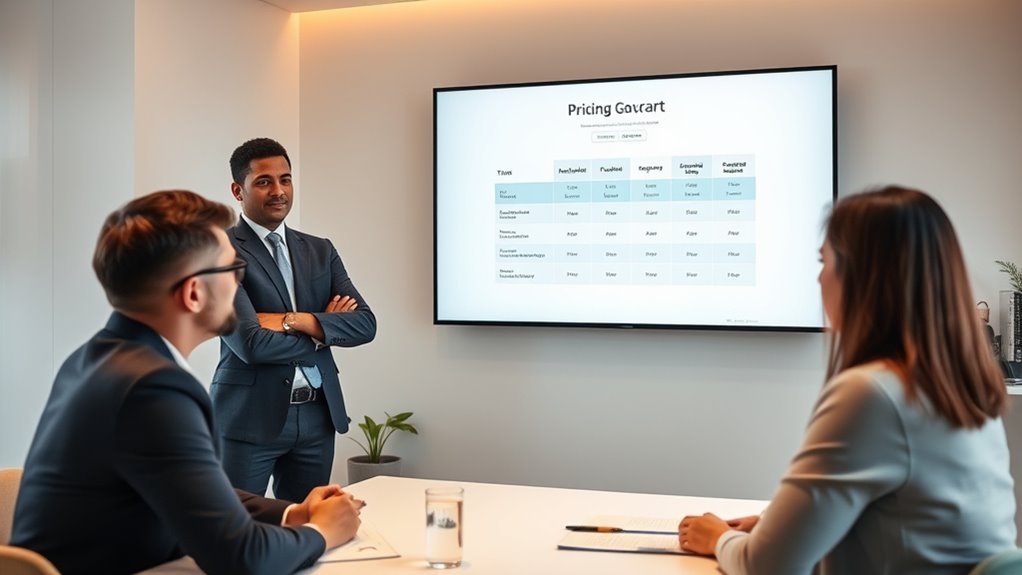
Have you ever found yourself surprised or frustrated by a sudden price increase? It’s a common experience, but how you handle it can make all the difference in whether your customers stay loyal or jump ship. Transparency is key here. When you communicate openly with your customers about why prices are going up, you build trust instead of eroding it. Customer communication should be honest, clear, and proactive. Let your customers know well in advance, explain the reasons behind the increase—whether it’s rising costs, inflation, or investments in quality—and emphasize how these changes benefit them. Avoid vague messages; instead, provide specific details that show you value their understanding. This approach helps reduce feelings of being blindsided or taken advantage of, which often lead to dissatisfaction or cancellations.
Openly communicate price changes early, explain reasons clearly, and highlight benefits to build trust and prevent customer frustration.
Additionally, conducting a thorough competitive analysis gives you valuable insights into what your competitors are doing. If you’re raising prices, you need to understand how those changes compare to the market. Are your prices still competitive? Are your offerings perceived as higher value? Knowing this helps you position your price increases strategically. If your competitors have also raised prices, your customers might be more understanding, especially if you can justify your increase with added value or improved service. If your prices are now higher than the market average, you’ll need to reinforce the unique benefits you provide that justify the additional cost. This could involve showcasing better quality, exclusive features, or superior customer service.
When you combine transparent customer communication with an in-depth competitive analysis, you can craft a message that resonates. Instead of just announcing a price hike, frame it as part of your commitment to quality and customer satisfaction. Reinforce your value proposition and remind your customers of what they’re still getting—perhaps even more than before. You can also consider offering incentives like loyalty discounts or flexible payment options to ease the transition. Remember, the goal isn’t just to justify the increase but to maintain a positive relationship. When customers feel respected and well-informed, they’re more likely to accept the change rather than resist it.
Furthermore, understanding the importance of Gold IRA Rollovers and how diversification impacts financial security can help you position your business as trustworthy and reliable during price adjustments. Ultimately, handling price increases with honesty and strategic insight minimizes the risk of losing customers. By communicating effectively and understanding your market landscape, you can navigate these adjustments smoothly. It’s about turning a potentially negative situation into an opportunity to reinforce your value and strengthen customer trust.
Frequently Asked Questions
How Can I Communicate Price Increases Effectively?
You should communicate price increases clearly and confidently, emphasizing value transparency. Explain the reasons behind the change, such as higher costs or improved quality, to help customers understand the necessity. Use customer education to highlight how your product or service continues to meet their needs. Be honest and empathetic, and offer support or alternative options if possible, ensuring your message builds trust rather than causing frustration.
What Are the Best Timing Strategies for Raising Prices?
You should time your price increases with seasonal trends and economic indicators. Implement changes during periods of high demand or when your market is thriving, as customers are more likely to accept the increase. Avoid raising prices during downturns or slow seasons, which can lead to dissatisfaction. Monitoring economic signals helps you choose the most advantageous moment, ensuring your customers perceive value rather than frustration.
How Do Competitors Typically Respond to Price Hikes?
Competitors often respond to price hikes with cautious market reactions, sometimes matching your new prices to stay competitive or slightly undercutting to attract customers. They may also introduce promotional offers or improve value to justify their pricing. Keep an eye on competitor pricing to anticipate moves and adjust your strategy accordingly. Staying informed helps you maintain your market position without losing customers, even amid changes in pricing dynamics.
Should I Offer Discounts During a Price Increase?
Yes, offering discounts during a price increase can be effective if done thoughtfully. Use discount strategies that align with your pricing psychology, like limited-time offers or loyalty discounts, to soften the impact. This approach helps reassure customers you value their business while maintaining your new pricing. It also encourages continued patronage, making the increase feel less abrupt and more strategic, ultimately protecting your customer relationships.
How Can I Maintain Customer Loyalty After Raising Prices?
Oh, sure, keep your customers loyal by pretending your price hike is a limited-time “luxury upgrade.” In reality, focus on customer retention by offering loyalty programs that reward ongoing patronage. Communicate openly about the reasons for the increase, emphasizing value, and guarantee your service remains exceptional. When customers feel appreciated and see tangible benefits, they’re more likely to stay, even at higher prices.
Conclusion
Remember, a wise person once said, “The best time to plant a tree was 20 years ago. The second best time is now.” When you handle price increases thoughtfully and communicate transparently, you can maintain customer trust and loyalty. Approach the change with confidence, emphasize your value, and listen to your clients’ concerns. By doing so, you’ll turn a necessary adjustment into an opportunity for growth and strengthened relationships.