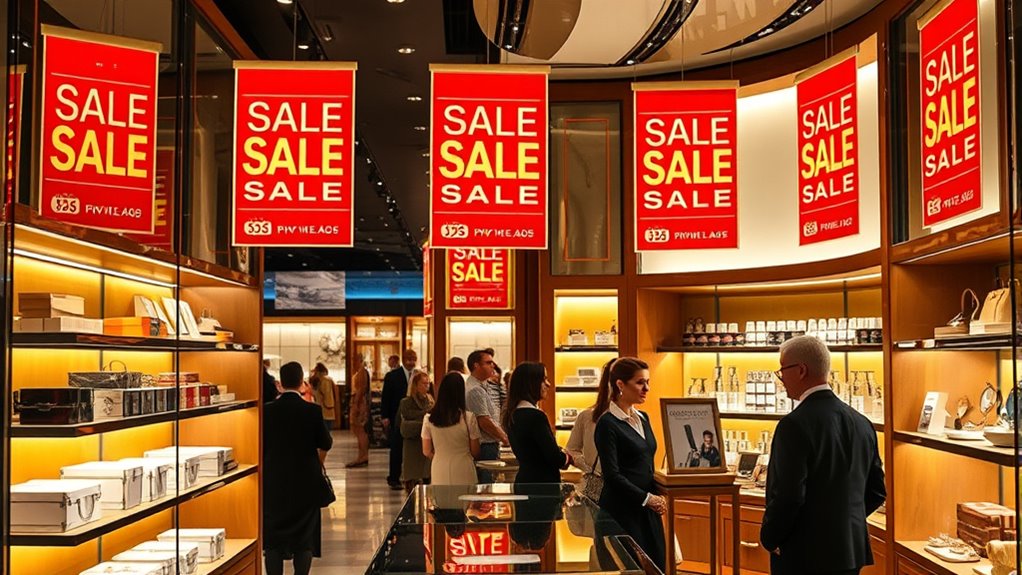

To run discounts without harming your brand, plan carefully by timing sales during special occasions and communicating them clearly. Focus on offering targeted, genuine discounts that create value and reward loyal customers. Avoid deep or frequent markdowns that could weaken your pricing integrity. Use discounts strategically to enhance your brand positioning and build trust, rather than as a quick fix. Discover more about balancing sales and brand strength to keep your image intact.
Key Takeaways
- Schedule discounts during strategic periods and communicate them clearly to create anticipation and prevent customer dependency.
- Use targeted offers like loyalty discounts or member-only sales to reward repeat customers without undermining brand value.
- Maintain consistency in discount timing and messaging to reinforce brand positioning and long-term trust.
- Avoid frequent deep discounts; instead, position sales as special events to preserve perceived quality and exclusivity.
- Clearly explain the reason for discounts, aligning them with brand values to build transparency and customer loyalty.

Offering discounts can be a powerful way to boost sales, but only if you do it right. When you carefully consider your pricing strategies, discounts can attract new customers and encourage repeat business without damaging your brand’s integrity. The key is to strike a balance—using discounts to create value while maintaining a perception of quality. If you slash prices too often or too deeply, you risk undermining your pricing structure and alienating loyal customers who see your products as worth more. Instead, think of discounts as a tool to reinforce customer loyalty, reward repeat buyers, and clear out inventory strategically.
Use discounts strategically to build loyalty and protect your brand’s integrity.
A well-planned approach to discounts starts with understanding your customer base. Are they motivated by savings, exclusivity, or both? If your customers value quality and brand reputation, offering frequent deep discounts might erode their trust. Instead, consider targeted pricing strategies like loyalty discounts or member-only sales. These not only incentivize repeat purchases but also make your loyal customers feel appreciated. Such tactics help you build long-term relationships, turning occasional buyers into brand advocates. Remember, discounts don’t have to be generic; personalized offers tied to customer behavior or purchase history can boost engagement and reinforce loyalty.
Timing and consistency are critical. If you run too many sales or offer discounts unpredictably, your audience might start waiting for the next deal instead of purchasing at regular prices. To prevent this, schedule discounts during specific periods, such as seasonal sales or special anniversaries, and communicate these plans clearly. This creates anticipation and helps customers associate your brand with value rather than constant price cuts. It also preserves your brand’s premium image, ensuring that discounts are seen as special events rather than default pricing.
Another important factor is transparency. Let your customers know why you’re offering discounts—whether it’s a holiday promotion, a clearance event, or a loyalty reward. This clarity fosters trust and makes the discount feel genuine rather than a desperate attempt to move products. When you’re transparent, you reinforce your brand’s integrity, which ultimately supports your pricing strategies and customer loyalty. Additionally, understanding the concept of creative techniques can help you develop innovative ways to present discounts that resonate positively with your audience. Keep in mind that discounts should complement your overall brand positioning, not undermine it. Use them thoughtfully as a strategic marketing tool rather than a crutch for poor sales or low perceived value.

The Luxury Strategy: Break the Rules of Marketing to Build Luxury Brands
As an affiliate, we earn on qualifying purchases.
As an affiliate, we earn on qualifying purchases.
Frequently Asked Questions
How Can I Measure the Success of My Discounts?
You can measure your discount success by tracking key metrics like sales volume, revenue, and profit margins during promotional periods. Analyze how your pricing strategies impact customer acquisition and retention. Pay close attention to discount timing, ensuring sales occur at most favorable moments without devaluing your brand. Use these insights to refine future discounts, balancing attractive offers with maintaining brand integrity and long-term growth.
What Are the Risks of Frequent Discounting?
Frequent discounting can erode your brand perception, turning your products into bargains rather than premium offerings. It risks training your customers’ minds with pricing psychology that discounts are the norm, making it hard to sell at full price later. This can also devalue your brand, diminishing its perceived worth and damaging long-term profitability. Stay strategic with discounts, so they complement your brand instead of undermining it.
How Do Discounts Influence Customer Loyalty Long-Term?
Discounts can positively influence your customer retention by strengthening their loyalty and encouraging repeat purchases. However, they also impact your price perception; frequent discounts may lead customers to expect lower prices and question your brand’s value. To maintain long-term loyalty, you should use discounts strategically, ensuring they enhance rather than undermine your brand’s image, and communicate their temporary nature clearly to avoid damaging your perceived value.
Which Products Should I Discount to Maximize Profit?
You should target products with high margins and steady demand for your discount strategy. Focus on items that align with your pricing strategy and can drive profit optimization, like slow-moving stock or seasonal items. By discounting these wisely, you hit two birds with one stone—clearing inventory and boosting sales without sacrificing overall profitability. Remember, don’t put all your eggs in one basket; diversify to maintain brand strength.
What Legal Considerations Are Involved in Running Sales?
You need to guarantee legal compliance and follow pricing regulations when running sales. Always verify that your discounts don’t violate local consumer protection laws or fair trade practices. Clearly advertise the sale terms, including start and end dates, and avoid misleading pricing claims. Keep thorough records of your promotions to defend against potential disputes. Staying informed about relevant legal guidelines helps you run sales confidently without risking fines or reputational damage.

Customer Loyalty: How to Earn It, How to Keep It
As an affiliate, we earn on qualifying purchases.
As an affiliate, we earn on qualifying purchases.
Conclusion
When executed thoughtfully, discounts can boost sales without damaging your brand’s reputation. Remember, over 60% of consumers say they’re more likely to buy from a brand that offers strategic discounts, but only if it feels genuine. By timing your sales carefully and maintaining premium value, you guarantee discounts work in your favor. Keep your brand strong, and use discounts as a tool — not a crutch — to grow sustainably.
![Express Schedule Free Employee Scheduling Software [PC/Mac Download]](https://m.media-amazon.com/images/I/41yvuCFIVfS._SL500_.jpg)
Express Schedule Free Employee Scheduling Software [PC/Mac Download]
Simple shift planning via an easy drag & drop interface
As an affiliate, we earn on qualifying purchases.
As an affiliate, we earn on qualifying purchases.

Custom Multi Business QR Code Sign Mini QR Display Sign Scan to Pay Personalized Venmo Instagram App Social Media Signs Acrylic Beauty Store Salon Hairdressers Beautician Plaque
PREMIUM MATERIAL: Our sign is made of 4×6 inch, 3 mm (0.12 inch) thick; This sign has beech…
As an affiliate, we earn on qualifying purchases.
As an affiliate, we earn on qualifying purchases.