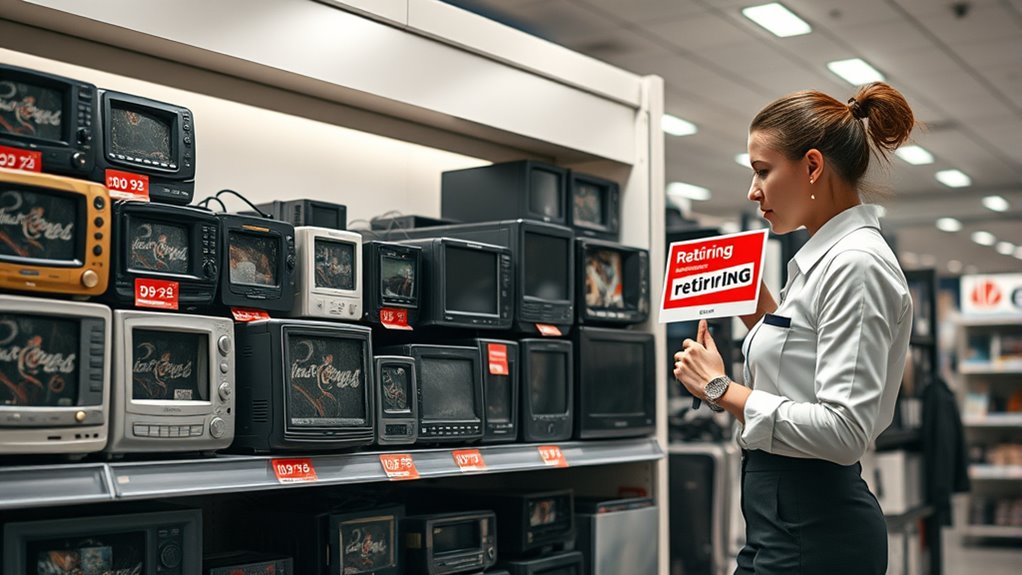

To decide when to drop or discount slow sellers, monitor their sales over three to six months. If they still don’t move despite targeted promotions or price adjustments, it’s time to retire or discount them. Set clear inventory thresholds to avoid overstocking and evaluate if discounts boost movement enough to justify keeping the product. Continuing to explore these strategies can help you free up space and improve overall profitability.

Get business pricing on office and shipping supplies
- Business-only prices and quantity discounts
- Tax-exempt purchasing
- Multiple users, one account, clear invoices
Key Takeaways
- Analyze sales over 3-6 months to determine if discounts can boost movement before retiring products.
- Set clear inventory thresholds and duration limits to decide when to discount or phase out slow-moving items.
- Use targeted discounts or bundles to improve sales; if ineffective, consider discontinuation.
- Regularly review product performance and market trends to identify underperformers early.
- Prioritize retiring products that consistently underperform despite marketing efforts to optimize profitability.

Retiring underperforming products is a essential step in maintaining a healthy and profitable business. When a product consistently underdelivers, it can drain resources and clutter your inventory, making it harder to focus on your best sellers. Deciding when to drop or discount slow-moving items requires a strategic approach, especially around pricing strategies and inventory management. You want to balance clearing out stagnant stock without sacrificing profit margins or alienating customers.
Start by analyzing your sales data carefully. Look for products with low sales volume over a sustained period, say three to six months. If these items aren’t gaining traction despite marketing efforts and adjustments, it’s time to think about retiring them. Before making a final decision, evaluate whether your pricing strategies could be improved. Sometimes, a simple discount or bundle deal can breathe new life into slow sellers. If the product is priced too high compared to competitors or perceived value, lowering the price might boost sales enough to justify keeping it longer. Conversely, if it’s priced too low, reducing margins might not be worth the effort, signaling a better case for discontinuation.
Analyze sales data and consider pricing strategies before retiring slow-moving products.
Effective inventory management is essential during this process. Overstocked items tie up cash flow and occupy valuable shelf or warehouse space that could be better used for more popular products. Conduct regular inventory audits to identify slow movers, and set clear thresholds for how long an item should stay before being retired or discounted. Implementing a just-in-time inventory approach can help prevent overstocking in the first place, but for existing slow sellers, a proactive markdown strategy can clear out excess stock efficiently. Additionally, exploring the variety of popular juice brands and their health-centric options can inspire new product lines that better meet customer needs.
When you decide to discount a slow seller, do it strategically. Use targeted promotions, limited-time offers, or bundling to create urgency and attract buyers. This can help you recover some costs while reducing inventory clutter. If discounts don’t generate sufficient movement after a set period, it’s wise to phase out the product altogether. This allows you to reallocate resources—both financial and physical—to products with higher demand. Remember, retiring underperforming products isn’t about abandonment; it’s about optimizing your product portfolio for better overall profitability and customer satisfaction.
As an affiliate, we earn on qualifying purchases.
Frequently Asked Questions
How Can I Predict Future Product Performance Accurately?
You can predict future product performance accurately by leveraging sales forecasting and trend analysis. Use historical sales data to identify patterns and seasonality, then apply predictive models to project future demand. Keep an eye on market trends, customer preferences, and competitor activity to refine your forecasts. Regularly update your data and models to adapt to changing conditions, ensuring you make informed decisions about dropping or discounting products before they underperform.
What Legal Considerations Exist When Retiring a Product?
When retiring a product, you need to consider legal aspects like intellectual property rights and contractual obligations. Make sure you have clear rights to discontinue or modify the product without infringing on patents, trademarks, or copyrights. Review existing contracts with suppliers, distributors, and partners to avoid breach of obligations. Consulting legal counsel helps you navigate these issues, preventing costly disputes and ensuring a smooth retirement process.
How Do I Communicate Product Discontinuation to Customers Effectively?
To effectively communicate product discontinuation, you should craft clear, empathetic marketing messaging that highlights your reasons and future plans. Use customer feedback to address concerns and reassure buyers. Be transparent about the timeline and offer alternatives or discounts. Keep your tone friendly and informative, making customers feel valued. This approach helps maintain trust, encourages loyalty, and turns a tough decision into a positive brand story.
What Impact Does Retiring a Product Have on Brand Reputation?
Retiring a product can positively or negatively impact your brand perception, depending on how you handle it. If you communicate transparently and provide alternatives, you build customer trust and show you prioritize quality over obsolescence. However, abrupt discontinuation without explanation might damage your reputation, making customers feel uncertain. You should manage the shift carefully to maintain a strong brand image and foster long-term loyalty.
How Should I Handle Inventory Liquidation After Discontinuation?
You should conduct an inventory assessment to determine the best liquidation strategy. Consider running clearance sales to quickly move slow-moving stock and free up space. Set clear discount levels to attract buyers without undervaluing your products. Timing is key—coordinate your clearance events to maximize impact, and communicate clearly with customers about the reason for discounts to maintain brand trust during the liquidation process.
discounting underperforming products
As an affiliate, we earn on qualifying purchases.
As an affiliate, we earn on qualifying purchases.
Conclusion
Deciding when to drop or discount slow-selling products can be tough, but staying proactive helps you optimize your inventory. By regularly reviewing sales data and listening to customer feedback, you make smarter choices that boost profitability. Remember, holding onto underperformers might cost you more in the long run. Isn’t it time you took decisive action to clear out the clutter and focus on your best sellers? Your bottom line will thank you.
product bundle deals for slow sellers
As an affiliate, we earn on qualifying purchases.
As an affiliate, we earn on qualifying purchases.
inventory threshold management tools
As an affiliate, we earn on qualifying purchases.
As an affiliate, we earn on qualifying purchases.
Halloween Picks
halloween
As an affiliate, we earn on qualifying purchases.