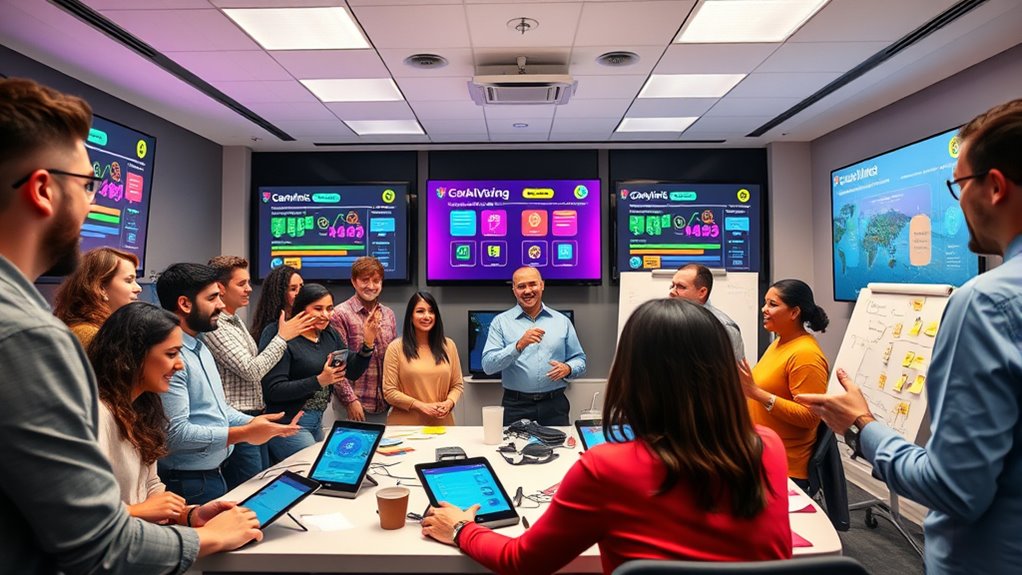

Gamifying your team training makes learning fun and impactful by turning sessions into engaging challenges that boost motivation and retention. Incorporate rewards like badges, points, or leaderboards to recognize progress and effort. Track individual and team advancement visibly to foster friendly competition and camaraderie. This approach encourages continuous improvement, enhances confidence, and integrates learning into daily routines. Keep exploring to discover more ways gamification can transform your team’s development experience.
Key Takeaways
- Incorporate reward systems like badges and leaderboards to motivate and recognize progress.
- Use progress tracking tools to visualize achievements and foster healthy competition.
- Turn training sessions into engaging challenges with clear goals to boost participation.
- Promote a culture of continuous improvement through consistent gamified learning experiences.
- Balance resource allocation to maximize engagement and ensure sustainable, effective training programs.
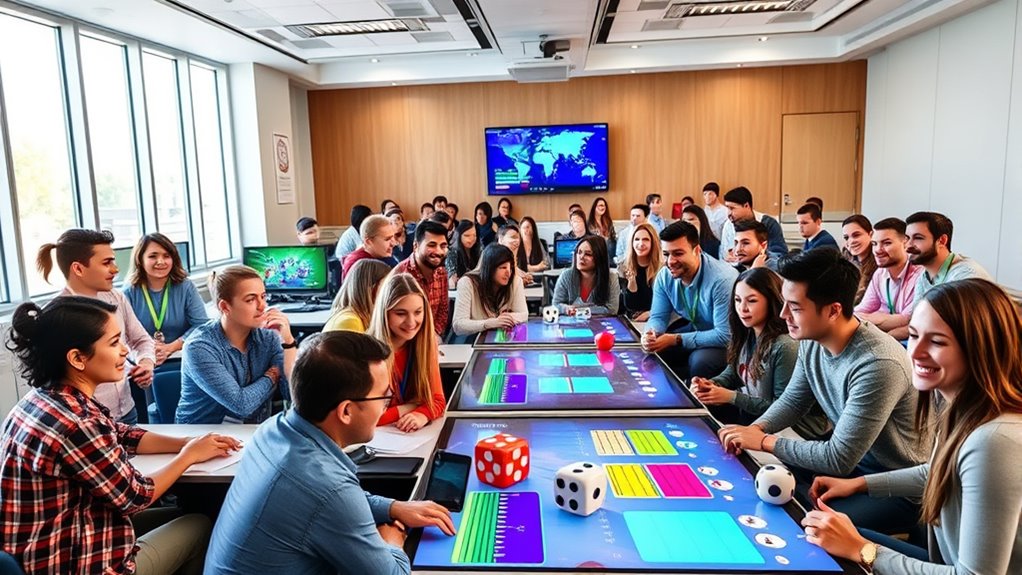
Gamifying team training transforms traditional learning into an engaging experience that motivates participants and boosts retention. When you incorporate reward systems into your training programs, you create a sense of achievement that encourages ongoing participation. Rewards can take many forms—badges, points, leaderboards, or tangible incentives—each designed to recognize effort and progress. By establishing clear criteria for earning these rewards, you give your team concrete goals to strive for, making the learning process feel more like a game than a chore. This approach taps into your team members’ natural desire for recognition and accomplishment, turning routine training sessions into exciting challenges.
Progress tracking is another vital component that enhances gamification. When you implement systems that monitor individual and team advancement, you provide visible evidence of how far everyone has come. This transparency fosters a healthy sense of competition and camaraderie, motivating your team to improve continually. Progress tracking also allows you to identify areas where team members might need additional support, ensuring that no one gets left behind. By visualizing progress through dashboards or leaderboards, you keep the momentum going and make learning a dynamic, measurable journey. Your team will appreciate knowing their efforts are recognized and that their growth is tangible, which can significantly boost engagement and confidence.
In practice, reward systems paired with progress tracking create a feedback loop that keeps your team motivated. As they accumulate points or badges, they see their efforts translating into real recognition, fueling their desire to keep learning. When progress is tracked visibly, it encourages friendly competition and peer encouragement, which often leads to higher participation levels. You can also use these tools to set personalized goals, making the training more relevant and motivating for each individual. Additionally, understanding the cost and budgeting aspects related to training investments can help you allocate resources effectively and maximize your program’s impact. Over time, this gamified approach can foster a culture of continuous improvement, where learning becomes an integral part of your team’s daily routine.

in Training Badge Buddy – Heavy Duty Horizontal Badge Buddies for Trainees – Spill & Tear Proof Cards – 2 Sided USA Printed Quick Role Identifier ID Tag Backer by Specialist ID
PRINTED IN THE USA!! – HEAVY DUTY & DURABLE CARD – Waterproof, Spill Proof and tear Resistant Laminated…
As an affiliate, we earn on qualifying purchases.
As an affiliate, we earn on qualifying purchases.
Frequently Asked Questions
How Do I Measure the Success of Gamified Training Programs?
You measure the success of your gamified training programs by analyzing performance metrics and engagement analytics. Track improvements in skill levels, completion rates, and quiz scores to gauge learning outcomes. Additionally, monitor participant engagement through activity participation, time spent on modules, and interaction levels. These insights help you determine if your gamification strategies boost motivation, retention, and overall training effectiveness, allowing you to make data-driven adjustments for better results.
What Are Common Pitfalls to Avoid in Gamifying Team Learning?
You should avoid over gamification, which can overwhelm or distract your team from learning goals, and neglecting feedback, which prevents you from adjusting the program for better engagement. Keep the balance by integrating meaningful game elements and actively seeking participant input. This way, your training remains effective, engaging, and aligned with your team’s needs, ensuring that gamification enhances learning rather than hindering it.
How Can Gamification Be Tailored for Remote or Hybrid Teams?
You can tailor gamification for remote or hybrid teams by emphasizing virtual collaboration and adaptive challenges. Use online platforms to create engaging, interactive experiences that encourage teamwork across distances. Incorporate leaderboards, badges, and real-time feedback to motivate participation. Design challenges that adapt to individual skill levels, fostering a sense of achievement. By doing so, you turn virtual spaces into dynamic learning environments, making team training both fun and effective regardless of location.
What Budget Considerations Are Involved in Implementing Gamified Training?
You should start with a cost analysis to understand your budget limits for gamified training. Consider equipment investment, such as software licenses, online platforms, and necessary devices for remote or hybrid teams. Keep in mind ongoing costs like updates and support. Balancing these expenses guarantees your gamification efforts stay effective without overspending, making the training engaging and budget-friendly for your team.
How Do I Ensure All Team Members Stay Motivated Over Time?
You might believe motivation wanes over time, but research shows reward systems and recognition strategies boost ongoing engagement. To keep your team motivated, regularly update challenges, celebrate achievements publicly, and tailor rewards to individual preferences. Incorporate leaderboards or badges to foster friendly competition, and guarantee recognition feels genuine. By actively reinforcing progress and acknowledging effort, you create a motivating environment where team members stay invested and excited to learn.

Dry Erase Goal Tracking Thermometer 46"x12" – Corporate Sales Board with Progress Ribbon for Team Motivation
Industrial-Strength Ribbon: Dual-layer nylon with reinforced ends withstands daily ribbon-pulling in high-traffic areas
As an affiliate, we earn on qualifying purchases.
As an affiliate, we earn on qualifying purchases.
Conclusion
Imagine your team energized, faces lit with excitement as they navigate a game-filled training session. By gamifying learning, you turn routine tasks into thrilling challenges, sparks of competition ignite collaboration, and knowledge becomes a shared adventure. When training feels like play, retention skyrockets, and your team evolves into a dynamic, motivated force. Embrace gamification, and watch your workplace transform into a lively arena where growth, fun, and success collide effortlessly.
training challenge leaderboards
As an affiliate, we earn on qualifying purchases.
As an affiliate, we earn on qualifying purchases.

Lyrow 50 Pcs Outstanding Employee of The Month Lapel Pin Excellence Plated Enamel Reward Pin Team Gifts for Employees (Multicolor)
Abundant Quantity: reward your hardworking employees with a generous supply of 50 cheer pins made of quality metal;…
As an affiliate, we earn on qualifying purchases.
As an affiliate, we earn on qualifying purchases.