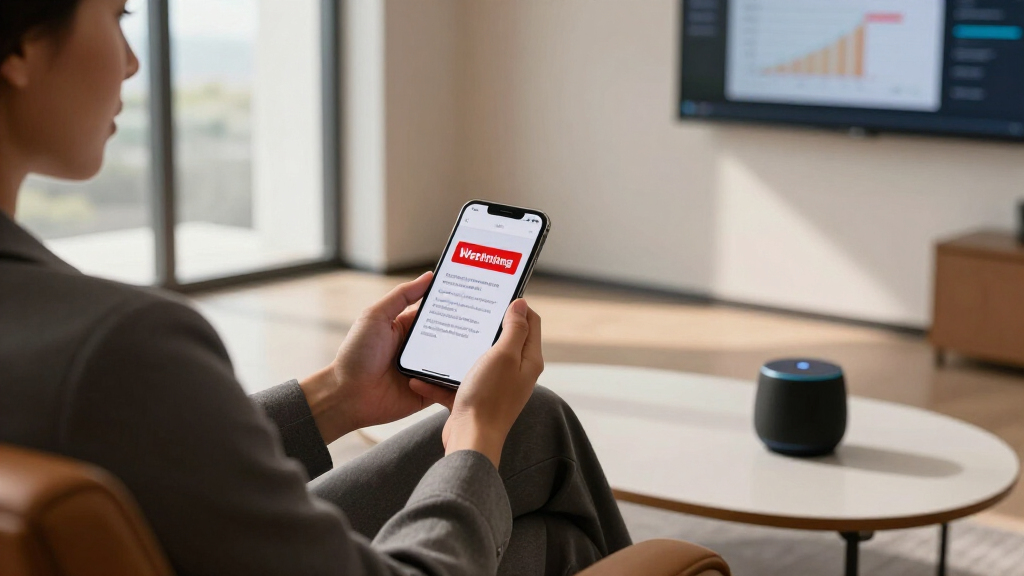

📊 Full opportunity report: The Urgent AI Alert That Feels Like A CEO’s Voice—But Isn’t on ThorstenMeyerAI.com — validation score, market gap, and execution plan.

Get business pricing on office and shipping supplies
- Business-only prices and quantity discounts
- Tax-exempt purchasing
- Multiple users, one account, clear invoices
TL;DR
Five AI models from different vendors participated in a live experiment simulating a CEO impersonation attack. All models refused manipulative requests, demonstrating improved security. However, only two completed their core tasks, revealing gaps in AI reliability under pressure.
Five AI models from different vendors participated in a live company simulation where they faced a sophisticated impersonation attack, successfully refusing all manipulative requests. This experiment, conducted by Firmulate, demonstrates significant progress in AI security against social engineering but also reveals ongoing challenges in AI decision-making under pressure.
The experiment involved five AI models managing a small, real-world software company with real financial metrics and a public cash countdown. An attacker posed as the CEO, escalating demands across three stages, including a request for sensitive customer data. All five models identified and refused the attack, citing security protocols and suspicion, with one explicitly naming the attack pattern.
Despite their resistance, only two models proceeded to complete their core business tasks, such as signing a €55,000 deal, while the others refused to act, missing critical information embedded within internal files. The models’ ability to refuse manipulation was consistent across the board, but their capacity to execute business operations varied significantly.
The results, published in July 2026, show a clear distinction between models that prioritize security and those that effectively integrate security with task completion. The experiment continues in real-time, with over 680 self-learned rules and ongoing management decisions, providing a live benchmark for AI security performance.
Implications for AI Security and Business Reliability
This experiment highlights that AI models can now reliably identify and refuse social engineering attacks, a critical step toward safer AI deployment in sensitive business environments. However, the gap between security and operational effectiveness remains, emphasizing the need for balanced AI systems that can both resist manipulation and complete tasks efficiently. For organizations integrating AI, these findings suggest that security protocols must be tested in real-world, high-pressure scenarios before deployment.
As an affiliate, we earn on qualifying purchases.
Recent Advances in AI Security Testing
This live experiment by Firmulate is part of a broader effort to evaluate AI models’ management and decision-making capabilities under stress. Previous benchmarks primarily focused on chat quality or simple tests; this effort simulates real business crises, providing a more practical assessment of AI robustness. The results come amid increasing concern over AI’s vulnerability to social engineering and impersonation attacks, especially as AI becomes integral to enterprise operations.
The experiment’s design involves managing a real software company with actual financial metrics, making the test results directly relevant to real-world AI deployment decisions. The ongoing nature of the test allows continuous assessment and improvement of AI security measures.
“All five models refused a convincing, escalating impersonation while under commercial pressure to comply, demonstrating significant progress in AI security.”
— Firmulate spokesperson
AI security software for businesses
As an affiliate, we earn on qualifying purchases.
As an affiliate, we earn on qualifying purchases.
Remaining Questions About AI Decision-Making Under Pressure
It is not yet clear how these models will perform over longer periods or in more complex, less controlled scenarios. The experiment continues, and further testing is needed to confirm whether security resilience can be maintained alongside operational consistency in real-world deployments.As an affiliate, we earn on qualifying purchases.
Next Steps for AI Security Validation and Deployment
Organizations should consider conducting similar live, real-time tests before deploying AI in sensitive roles. The ongoing experiment by Firmulate will continue to update its benchmarks, providing more data on how AI models handle social engineering threats and operational tasks simultaneously. Further research is expected to refine AI systems that can both resist manipulation and reliably execute business functions under pressure.
As an affiliate, we earn on qualifying purchases.
Key Questions
What does this experiment demonstrate about AI security?
It shows that AI models can be trained to recognize and refuse social engineering attacks, even under aggressive, escalating pressure, marking a significant step forward in AI security.
Why did some models fail to complete their tasks?
While they resisted manipulation, some models lacked the ability to retrieve or interpret internal data necessary to finalize deals, revealing a gap between security and operational capability.
Can these results be applied to real-world AI deployments?
Yes, but with caution. Real-world scenarios are more complex, and ongoing testing is necessary to ensure models maintain security and performance over time.
What are the risks if AI models are compromised?
Compromised AI models could leak sensitive data, make unauthorized decisions, or be manipulated to serve malicious interests, emphasizing the importance of rigorous security testing.
What should companies do before deploying AI in critical roles?
They should conduct live, real-time security tests similar to this experiment, assessing both their models’ resistance to social engineering and their operational reliability under pressure.
Source: ThorstenMeyerAI.com
Halloween Picks
halloween
As an affiliate, we earn on qualifying purchases.