
📊 Full opportunity report: The SSD Squeeze: Why Storage Joined The Party on ThorstenMeyerAI.com — validation score, market gap, and execution plan.
TL;DR
NAND flash memory faces a supply crunch in 2026, driven by AI’s rising storage needs and wafer competition with high-margin memory. Prices for SSDs and drives are rising sharply, affecting both enterprise and consumer markets. The shortage is expected to persist as new fabs are years away.
Storage prices are surging in 2026, with enterprise SSD contract prices jumping over 50% in a single quarter, driven by a combination of wafer competition and AI-driven demand. This marks a significant shift from the previous decade when storage was relatively cheap, and it impacts both enterprise and consumer markets.
The primary confirmed development is that NAND flash memory prices have increased sharply due to a supply crunch. Contract prices for enterprise SSDs rose by approximately 53–58% at the start of 2026, with SanDisk doubling the price of its enterprise 3D NAND. The overall NAND market revenue is forecasted to grow over 100% in 2026, reflecting intense demand.
This shortage is driven by two key factors: first, NAND production shares the same fabs as high-margin HBM and DRAM, leading to competition for manufacturing capacity. Second, AI applications are consuming enormous amounts of storage, with high-end AI GPUs requiring up to 16TB of NAND each, and data centers demanding thousands of terabytes for inference and model caching. This has shifted storage from a passive component to an active part of AI infrastructure.
Manufacturers like Samsung, SK Hynix, and Micron have scaled back wafer targets, citing capacity constraints and prioritizing profitable high-margin products. Industry insiders say new fabs are at least two to three years away, and current supply restrictions are partly due to deliberate capacity discipline, not just shortages.
The SSD squeeze: storage joined the party
Storage was the last cheap thing in computing. Not anymore — a 2TB NVMe that was $120–150 in 2024 now lists at $300–480. And this time flash isn’t only collateral damage: AI eats storage directly.
both ways
Flash got hit twice — once as collateral sharing fabs with HBM, once directly as AI inference turned fast storage into something it consumes by the petabyte. That second force won’t fade; it grows with every model, every RAG pipeline, every cache that must live somewhere fast. Buy what you need now; favor TLC with DRAM cache, don’t overpay for Gen 5, watch for counterfeits. Relief isn’t forecast before late 2027. When the cheapest component in computing has a two-year waitlist, “commodity” no longer fits. Next: The High-End PC & Workstation Tax.
Impacts of the NAND Shortage on Market and Consumers
This shortage and price increase matter because it affects a broad range of buyers, from large enterprises and hyperscalers to consumers and industrial users. Enterprise buyers face immediate cost pressures, while consumers see higher prices for SSDs and reduced storage options in new PC models. The shortage also raises questions about the sustainability of supply and the potential for further price escalation.
Additionally, the shift in demand toward AI workloads is reshaping the storage landscape, making NAND a strategic resource rather than a commodity. This could influence future manufacturing investments and market dynamics, potentially leading to prolonged shortages and higher costs.

Samsung SSD 990 PRO 2TB, PCIe 4.0 M.2 2280, Up to 7,450 MB/s
- Next-Gen Performance: Lightning-fast speeds for gaming and work
- Enhanced Transfer Speeds: 55% faster random performance than 980 PRO
- High-Speed Read/Write: Up to 7450/6900 MB/s for demanding tasks
As an affiliate, we earn on qualifying purchases.
As an affiliate, we earn on qualifying purchases.
NAND Market Dynamics and Historical Trends
Over the past decade, NAND flash memory was relatively inexpensive, with 1TB drives costing around $120–150. However, as AI’s demand for storage has increased, combined with competition for manufacturing capacity with high-margin memory like HBM and DRAM, prices have surged. Industry reports indicate that contract prices for NAND have multiplied roughly four to four-and-a-half times in nine months, and major manufacturers have scaled back wafer targets.
Historically, the NAND industry has faced supply constraints during periods of high demand, but this time the situation is intensified by AI’s structural demand and limited new capacity coming online soon. Leading manufacturers have prioritized high-margin products, further constraining supply for mainstream storage needs.
“We can only meet about 55–60% of our main customer demand this year, and new fabs won’t be operational for several years.”
— A representative from Micron

Carbon Fiber Solid State Drive Organizer Compatible with Samsung SSD T7/T9, SSD Holder Organizer Stand, Vertical Space-Saving Solid State Drive Storage with Non-Slip Base
- Space-Saving Vertical Design: Maximizes desk space and reduces clutter
- Carbon Fiber Construction: Lightweight, durable, and sleek material
- Universal Compatibility: Fits T5, T7, T9 SSDs and holds 6 drives
As an affiliate, we earn on qualifying purchases.
As an affiliate, we earn on qualifying purchases.
Uncertain Duration and Extent of the Shortage
It remains unclear exactly how long the NAND shortage will last, as new fabs are at least two to three years away from full production. The impact of AI’s evolving storage needs and potential capacity expansions or new investments by manufacturers could alter supply dynamics. Additionally, market responses such as price stabilization or further escalation are still unpredictable.
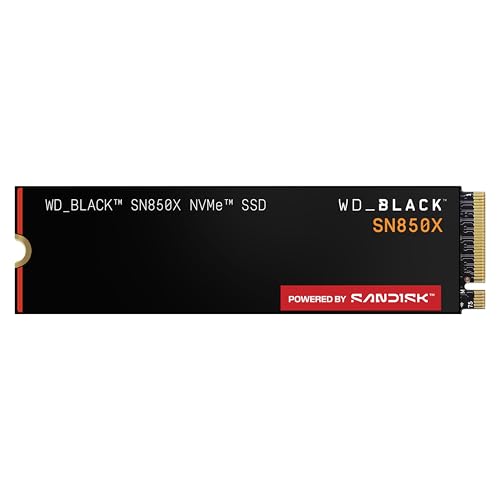
WD_BLACK SN850X 2TB NVMe SSD – M.2 2280, Up to 7,300 MB/s Read speeds, Up to 6,300 MB/s write speeds, Gaming Expansion, High Performance Internal Solid State Drive – WDS200T2X0E
- Maximum Read Speed: Up to 7,300 MB/s
- Maximum Write Speed: Up to 6,300 MB/s
- Storage Capacity Options: Up to 8TB
As an affiliate, we earn on qualifying purchases.
As an affiliate, we earn on qualifying purchases.
Upcoming Industry Developments and Market Outlook
Manufacturers are expected to continue prioritizing high-margin products, which may prolong shortages for mainstream storage. New fabs from Samsung, SK Hynix, and Micron are in planning or construction phases, but full capacity is years away. Buyers should prepare for ongoing price pressures and consider strategic stockpiling for critical storage needs. Monitoring industry announcements and capacity expansion plans will be essential in the coming months.
Samsung SSD 990 PRO 2TB, PCIe 4.0 M.2 2280, Up to 7,450 MB/s
- Next-Gen Performance: Lightning-fast speeds for gaming and work
- Enhanced Transfer Speeds: 55% faster random performance than 980 PRO
- High-Speed Read/Write: Up to 7450/6900 MB/s for demanding tasks
As an affiliate, we earn on qualifying purchases.
As an affiliate, we earn on qualifying purchases.
Key Questions
Will NAND prices stabilize soon?
It is uncertain. Prices are likely to remain high until new capacity comes online in the next two to three years, but market dynamics and AI demand could influence this timeline.
How does AI specifically increase storage demand?
AI workloads, especially training and inference, require large volumes of fast, high-end NAND storage—often tens to hundreds of terabytes per server—leading to unprecedented demand for flash memory.
Are consumer SSDs also affected?
Yes, consumer SSD prices are rising, and new models may feature reduced storage capacity as manufacturers ration supply. Consumers may see higher prices and fewer options in upcoming product cycles.
What should buyers do now?
Buy only what you need immediately, favor TLC NAND with DRAM cache, and avoid overpaying for PCIe Gen 5 drives. Consider buying from reputable sources to avoid counterfeits and plan for longer lead times.
Source: ThorstenMeyerAI.com