To go paperless, use cloud storage services like Google Drive, Dropbox, or OneDrive to securely store your contacts, notes, and documents online. Pair these with note-taking apps such as Evernote, OneNote, or Notion for streamlined organization, tagging, and quick searches. These tools make it easy to access your information from any device and collaborate without printing or mailing. Keep exploring to discover how combining these digital solutions can boost your productivity and reduce clutter.
Key Takeaways
- Use cloud storage platforms like Google Drive, Dropbox, or OneDrive to securely store and access contacts, notes, and documents from any device.
- Implement note-taking apps such as Evernote, OneNote, or Notion to organize, search, and integrate multimedia notes efficiently.
- Link notes directly within cloud services to streamline workflow, facilitate collaboration, and keep information centralized.
- Transition to digital tools to reduce paper waste, declutter workspaces, and support environmentally sustainable practices.
- Leverage synchronization and sharing features to enhance productivity and ensure up-to-date information across all devices.

In today’s fast-paced world, shifting to a paperless office is more achievable than ever thanks to a variety of digital tools. You no longer need stacks of paper or filing cabinets to organize your contacts, notes, and documents. Instead, cloud storage services like Google Drive, Dropbox, or OneDrive allow you to store everything securely online, accessible from any device with an internet connection. These platforms make it easy to upload, organize, and share files without the clutter of physical paperwork. Plus, their synchronization features ensure your files are always up-to-date across all your devices, reducing the risk of lost or outdated information.
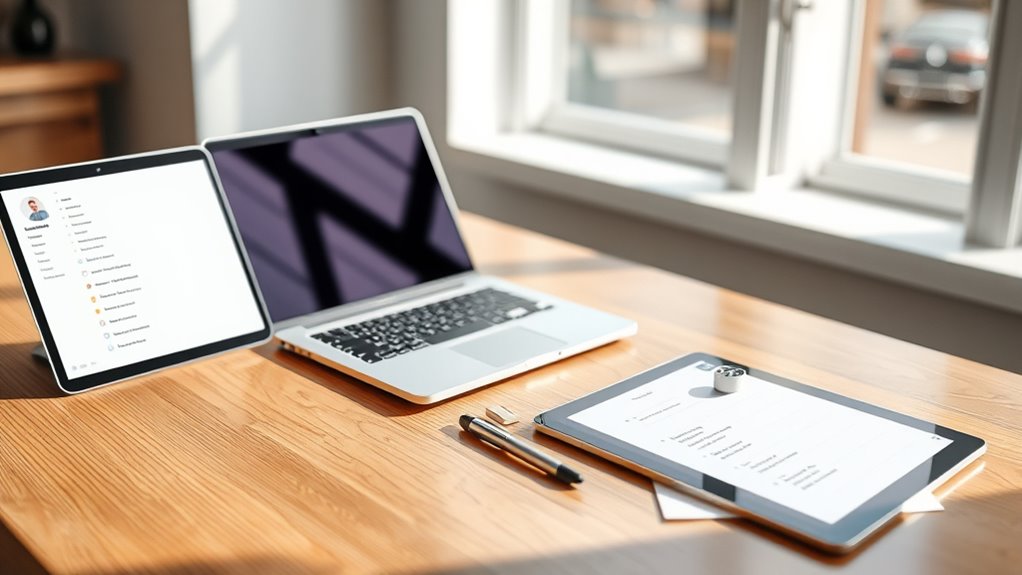
Switch to cloud storage like Google Drive or Dropbox for secure, accessible document management.
When it comes to capturing and managing your notes, note-taking apps become invaluable. Apps like Evernote, OneNote, or Notion provide a streamlined way to jot down ideas, meeting minutes, or important reminders. They often come with features like tagging, search functions, and multimedia integration, making it simple to find specific notes quickly. Instead of scribbling on paper or keeping scattered documents, you can create a centralized digital notebook that’s easy to edit and update. Many note-taking apps also support handwriting recognition and voice notes, giving you versatile options to record information in whatever format suits you best.
Using these digital tools together offers a seamless experience. For instance, you can store your notes within a cloud storage service or link them directly from your note-taking app. This integration ensures that your important contacts, project ideas, and documents are all stored securely in one place, ready for access whenever you need them. Additionally, most cloud storage platforms include sharing options, so you can collaborate with colleagues or clients without printing or mailing physical copies. This not only saves time but also reduces paper waste, aligning with your goal of a greener, more efficient workspace.
Transitioning to a paperless environment might seem intimidating at first, but with the right combination of cloud storage and note-taking apps, you’ll find it straightforward. These tools help you declutter your workspace, improve organization, and boost productivity. By digitizing your contacts, notes, and documents, you gain immediate access and better control over your information. Plus, you contribute to a more sustainable environment by reducing paper consumption. Embracing these digital solutions transforms your workflow into a more agile and eco-friendly process, making going paperless not just a trend but a practical, long-term choice. Additionally, battery technologies are evolving to support more sustainable and energy-efficient digital devices, further enhancing your paperless experience.
Frequently Asked Questions
How Secure Are Digital Contact and Document Storage Solutions?
Digital contact and document storage solutions are generally secure if they use strong encryption protocols and have strict privacy policies. You should choose services that encrypt data both in transit and at rest, ensuring your information stays protected from unauthorized access. Always review the privacy policies to understand how your data is handled, and consider enabling two-factor authentication for added security. Staying informed helps you keep your digital info safe.
Can Digital Tools Integrate With Existing Office Software?
You’ll find digital tools seamlessly integrate with your existing office software, making your workflow smoother. While traditional paper feels tangible, digital solutions offer cloud synchronization and cross-platform compatibility, connecting your contacts, notes, and documents effortlessly. This blend of familiarity and innovation saves time and reduces errors, transforming your office into a streamlined hub where everything works together, empowering you to focus on what truly matters instead of juggling scattered information.
What Are the Costs Associated With Going Paperless?
The costs of going paperless vary based on your chosen digital tools, with a cost comparison revealing initial setup fees, subscription plans, and hardware investments. While you might face some upfront expenses, you’ll save money long-term on paper, printing, and storage. Plus, going paperless markedly reduces your environmental impact, helping you contribute to sustainability. Overall, the investment pays off both financially and eco-consciously.
How Do I Back up My Digital Files Effectively?
You might think backing up your files is complicated, but it’s straightforward. Use cloud backup services with strong encryption methods to protect your data. Regularly update your backups and verify their integrity by restoring a few files periodically. This way, you guarantee your digital files stay safe from loss or theft, giving you peace of mind knowing your contacts, notes, and documents are securely stored and accessible whenever needed.
Are There Accessibility Options for Users With Disabilities?
Yes, digital tools often include accessibility options for users with disabilities. You can utilize screen reader compatibility to have text read aloud, making content more accessible. Keyboard navigation lets you move through menus and documents without a mouse, guaranteeing easier control. These features help you stay productive and engaged, regardless of your abilities. Always check the specific application’s accessibility settings to customize your experience and ensure ideal usability.
Conclusion
By embracing digital tools, you’ll stay organized and save trees, making your life more efficient. Think of it as upgrading from a rotary phone to a smartphone—you can access everything at your fingertips, anytime, anywhere. Going paperless isn’t just a trend; it’s the future. So, don’t be left in the dust like a floppy disk in a cloud era. Take the leap today and enjoy the seamless, eco-friendly convenience that technology offers.