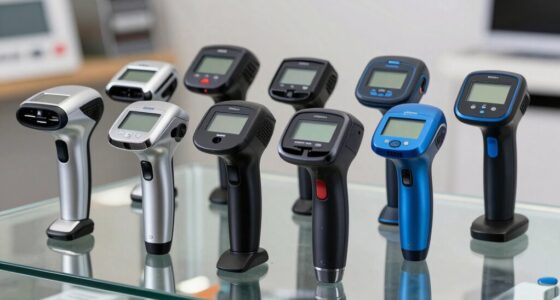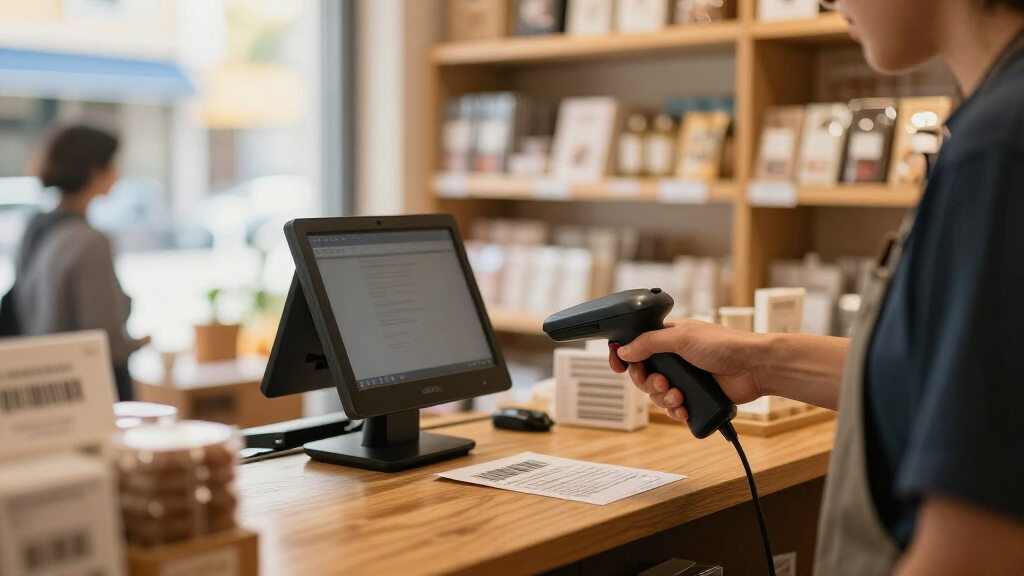

For most small businesses, I’d start with the Inateck 2D Wireless Scanner: its display and long battery life suit teams that scan throughout a shift. The NETUM Bluetooth 2D Scanner is a flexible alternative with several connection modes, while the WoneNice USB Laser Scanner keeps a simple wired checkout setup straightforward. The main tradeoffs are 1D versus 2D barcode support, wireless freedom versus dependable wired use, and a compact design versus a desktop-friendly form. I ranked these options around practical fit for small-business workflows, not feature count alone. Read on for the full breakdown and help matching a scanner to your devices and daily tasks.

Get business pricing on office and shipping supplies
- Business-only prices and quantity discounts
- Tax-exempt purchasing
- Multiple users, one account, clear invoices
Key Takeaways
- The Inateck 2D Wireless Scanner leads for mixed daily work: its display and stated long battery life offer advantages over the simpler mini Bluetooth models.
- Connection flexibility separates the strongest all-round alternatives: the Symcode and NETUM 3-in-1 models offer more ways to connect than single-mode wired readers.
- Wireless range matters most across a workspace: NADAMOO’s stated 328-foot transmission distance is a distinctive fit for scanning away from a checkout counter, though actual range depends on conditions.
- 2D support opens up more barcode types: QR, Data Matrix, and PDF417 support make the 2D models more adaptable than 1D-only laser and CCD options.
- Not every small business needs wireless: the WoneNice and NetumScan wired readers avoid battery upkeep, while the NetumScan desktop model suits stationary scanning better than mobile stock checks.
| Eyoyo Portable Mini 1D Bluetooth Barcode Scanner – Pink |  | Best Compact Pick | Connection modes: Bluetooth, 2.4G wireless, USB wired | Wireless transmission distance: Up to 30 m (2.4G) and 50 m (Bluetooth) | Barcode types: UPC/EAN, Code 39, Interleaved 2 of 5, Code 93, Code 128, Codabar, Industry 25, Matrix 25 | VIEW LATEST PRICE | See Our Full Breakdown |
| Symcode Bluetooth Barcode Scanner, 2.4G Wireless & Bluetooth & Wired |  | Best for Mixed Barcode Work | Connection modes: 2.4G wireless, Bluetooth, USB wired | Wireless range: Up to 30 m (2.4G) and 50 m (Bluetooth) | Barcode storage: Up to 150,000 barcodes | VIEW LATEST PRICE | See Our Full Breakdown |
| 1D 2D QR Barcode Scanner Wireless Handheld Cordless Bar Code Reader |  | Best for Long Scanning Sessions | Barcode support: 1D and 2D, including QR, Data Matrix, and PDF417 | Connectivity: USB cable and wireless | Battery capacity: 2,000 mAh | VIEW LATEST PRICE | See Our Full Breakdown |
| Inateck 2D Barcode Scanner Wireless with Display and Long Battery Life |  | Best for Frequent Inventory Work | Model: BCST-47-BK | Display: 1.4 in | Battery capacity: 2,600 mAh | VIEW LATEST PRICE | See Our Full Breakdown |
| NADAMOO Wireless Barcode Scanner with 328 Feet Transmission Distance |  | Best for Large Stockrooms | Transmission distance: Up to 400 m open air / 100 m indoors | Battery capacity: 2,600 mAh | Connectivity: Wireless | VIEW LATEST PRICE | See Our Full Breakdown |
| Eyoyo Mini 1D Bluetooth Barcode Scanner |  | Best Compact Pick | Weight: 35 g (1.2 oz) | Connection modes: Bluetooth, 2.4G wireless, USB wired | Wireless range: Up to 30 m (98 ft) in 2.4G mode; up to 50 m (164 ft) in Bluetooth mode | VIEW LATEST PRICE | See Our Full Breakdown |
| WoneNice USB Laser Barcode Scanner Wired Handheld Bar Code Reader Black |  | Best Simple Wired Pick | Connectivity: USB cable | Scan rate: 200 scans per second | Scanning light source: Visible laser, 650–670 nm | VIEW LATEST PRICE | See Our Full Breakdown |
| Tera Wireless 1D Laser Barcode Scanner with Battery Level Indicator, 2-in-1 2.4GHz Wireless and USB Wired |  | Best for Long-Range 1D Scanning | Connectivity: 2.4G wireless, USB cable | Wireless range: Up to 328 feet | Scan rate: 300 scans per second | VIEW LATEST PRICE | See Our Full Breakdown |
| Bluetooth 1D&2D Barcode Scanner, 3-in-1 Bluetooth & USB Wired & 2.4G Wireless QR Barcode Reader, PDF417 Data Matrix Handheld Bar Code Scanner for Windows, Android, iOS |  | Best for Mixed 1D and 2D Work | Barcode formats: 1D and 2D, including QR, DataMatrix, and PDF417 | Connectivity: 2.4 GHz wireless, Bluetooth, USB cable | Compatible devices: Laptop, desktop, tablet, smartphone, POS | VIEW LATEST PRICE | See Our Full Breakdown |
| Eyoyo Portable Mini 2D QR Bluetooth Barcode Scanner with Clip |  | Best Mini 2D Scanner | Scanning technology: 2D CMOS image sensor | Supported barcodes: 1D and 2D, including QR, Data Matrix, PDF417, UPC, EAN, Code 39, and Code 128 | Connection types: Bluetooth, 2.4G wireless, USB wired | VIEW LATEST PRICE | See Our Full Breakdown |
| Eyoyo Portable Mini Bluetooth 2D & 1D Barcode Scanner Wireless |  | Best Compact Wireless Pick | Barcode types: 1D and 2D | Connectivity: 2.4G wireless, Bluetooth, USB wired | Dimensions: 3.5 x 1.18 x 0.78 inches | VIEW LATEST PRICE | See Our Full Breakdown |
| NETUM Bluetooth 2D Barcode Scanner, 3-in-1 Portable QR Bar Code Reader |  | Best for Bluetooth-First Shops | Model: E800 | Barcode types: 1D and 2D; GS1 not supported | Connectivity: Bluetooth | VIEW LATEST PRICE | See Our Full Breakdown |
| NetumScan USB 1D Barcode Scanner, Handheld Wired CCD Barcode Reader |  | Best Basic 1D Wired Scanner | Model: L3 | Barcode types: 1D | Scanning technology: CCD | VIEW LATEST PRICE | See Our Full Breakdown |
| Eyoyo EYH2 Handheld USB Wired 2D and 1D Barcode Scanner for POS and Mobile Payments |  | Best Wired 1D/2D Counter Scanner | Barcode types: 1D and 2D | Connectivity: USB cable | Compatible devices: Desktop, laptop, POS | VIEW LATEST PRICE | See Our Full Breakdown |
| NetumScan Desktop Barcode Scanner, USB QR Code Reader |  | Best Hands-Free Counter Scanner | Barcode types: 1D, 2D, QR | Scanning style: Omnidirectional, hands-free | Real angle of view: 180 degrees | VIEW LATEST PRICE | See Our Full Breakdown |
| barcode scanners for small business | Dimensions | Connectivity | Power source |
|---|---|---|---|
| Eyoyo Portable Mini 1D Bluetoo | 3 × 1.5 × 0.4 in | — | — |
| Symcode Bluetooth Barcode Scan | 4 × 2.5 × 1 in | — | Lithium-polymer battery |
| 1D 2D QR Barcode Scanner Wirel | — | USB cable and wireless | Battery powered |
| Inateck 2D Barcode Scanner Wir | — | — | — |
| NADAMOO Wireless Barcode Scann | — | Wireless | Battery powered |
| Eyoyo Mini 1D Bluetooth Barcod | 3 x 1.5 x 0.4 inches | — | — |
| WoneNice USB Laser Barcode Sca | 3.6 x 2.6 x 6.1 inches | USB cable | Corded electric |
| Tera Wireless 1D Laser Barcode | 2.5 x 3.9 x 6.6 inches | 2.4G wireless, USB cable | Battery powered |
| Bluetooth 1D&2D Barcode Scanne | — | 2.4 GHz wireless, Bluetooth, USB cable | Battery powered |
| Eyoyo Portable Mini 2D QR Blue | 4.1 x 1.6 x 0.47 inches | — | — |
| Eyoyo Portable Mini Bluetooth | 3.5 x 1.18 x 0.78 inches | 2.4G wireless, Bluetooth, USB wired | — |
| NETUM Bluetooth 2D Barcode Sca | 0.57 x 2.09 x 3.43 inches | Bluetooth | — |
| NetumScan USB 1D Barcode Scann | — | USB wired | Corded electric |
| Eyoyo EYH2 Handheld USB Wired | 3.7 x 2.7 x 6.2 inches | USB cable | Corded electric |
| NetumScan Desktop Barcode Scan | 4.13 x 3.7 x 5.45 inches | USB cable | USB |
More Details on Our Top Picks
Eyoyo Portable Mini 1D Bluetooth Barcode Scanner – Pink
The Eyoyo Mini is the most pocketable choice here, suited to a small shop owner who scans 1D product labels while moving between a counter, stockroom, and packing area. Its Bluetooth, 2.4G wireless, and USB wired modes give it more connection flexibility than a basic wired reader, and its small 3-inch body takes little space at a checkout. It can also read damaged or distorted 1D codes, which may help when labels are worn. Unlike the Symcode Bluetooth Barcode Scanner, it does not handle 2D codes such as QR or Data Matrix, so it is a narrower fit for businesses that use digital or newer-format labels. The main tradeoff is endurance: up to five hours of battery life makes it better for short shifts or intermittent scanning than all-day use, and recharging takes about two hours.
Pros:- Compact 3-inch body is easy to carry and store
- Bluetooth, 2.4G wireless, and USB wired connection options
- Supports a range of common 1D formats, including UPC/EAN and Code 128
- Can read damaged or distorted 1D barcodes
Cons:- Scans 1D barcodes only, unlike the Symcode and Inateck 2D models
- Stated battery life is limited to up to five hours
- Full charging takes about two hours
Best for: Bookstore owners, online sellers, and pop-up retailers who need a lightweight 1D scanner for short scanning sessions and limited counter space.
Not ideal for: Businesses scanning QR codes or needing a scanner to last through a full day of continuous work; it supports 1D only and its stated battery life is about five hours.
- Connection modes:Bluetooth, 2.4G wireless, USB wired
- Wireless transmission distance:Up to 30 m (2.4G) and 50 m (Bluetooth)
- Barcode types:UPC/EAN, Code 39, Interleaved 2 of 5, Code 93, Code 128, Codabar, Industry 25, Matrix 25
- Battery capacity:650 mAh
- Battery life:Up to 5 hours
- Compatibility:Windows XP/7/8/10, Mac OS, Linux, Windows Mobile, iOS, Android
- Dimensions:3 × 1.5 × 0.4 in
- Charging time:About 2 hours
Our verdict“Choose the Eyoyo Mini if compact size and flexible connections matter more than 2D scanning or all-day battery life.”
Symcode Bluetooth Barcode Scanner, 2.4G Wireless & Bluetooth & Wired
The Symcode is a stronger match than the Eyoyo Mini for shops whose inventory mixes conventional product labels with QR codes or other 2D formats. It supports 1D and 2D scanning and offers Bluetooth, 2.4G wireless, and wired connections, so a small business can use it at a workstation or away from the computer. Its standout capability is offline storage for up to 150,000 barcodes, useful for collecting stock data where a live connection is unavailable and uploading it later. That storage also makes it more suited to inventory rounds than the compact Eyoyo. The tradeoff is that the supplied details do not state battery life, and setup may take more effort than a simple plug-and-play reader. There is also no stated IP rating, so I would not choose it for dusty or wet work areas.
Pros:- Reads both 1D and 2D formats, including QR, PDF417, Data Matrix, Aztec, and MaxiCode
- Stores up to 150,000 barcodes for offline collection
- Offers 2.4G wireless, Bluetooth, and USB wired connections
- Compatible with a range of operating systems and devices
Cons:- Battery life is not specified, making shift planning harder
- Setup may be more involved than with a basic plug-and-play scanner
- No IP rating is provided for businesses with demanding work environments
Best for: Small retailers and inventory teams that scan both standard product codes and 2D labels, including during stock counts away from a computer.
Not ideal for: Owners seeking a simple, low-setup checkout reader or a scanner for rough, dusty, or wet work areas; battery runtime and ingress protection are not specified.
- Connection modes:2.4G wireless, Bluetooth, USB wired
- Wireless range:Up to 30 m (2.4G) and 50 m (Bluetooth)
- Barcode storage:Up to 150,000 barcodes
- Supported code types:1D, 2D, QR, PDF417, Data Matrix, Aztec, MaxiCode
- Scan resolution:640 × 480 pixels
- Power source:Lithium-polymer battery
- Operating voltage:3.7 V
- Dimensions:4 × 2.5 × 1 in
Our verdict“Pick the Symcode when broad code support and large offline inventory capacity matter more than a clearly stated battery runtime.”
1D 2D QR Barcode Scanner Wireless Handheld Cordless Bar Code Reader
For a small business that wants wireless 1D and 2D scanning without stepping up to the Inateck’s display and customization features, this handheld model keeps the setup simpler. It supports QR, Data Matrix, and PDF417 as well as 1D codes, and its wired and wireless options let it serve at a fixed POS or during inventory work. The reported 2,000mAh battery and up to 72 hours of continuous use are the clearest advantage over the Eyoyo Mini, whose listed runtime is five hours. The tradeoff is a thinner spec picture: the connection details do not identify wireless range, and the description gives no durability rating. It is described as plug-and-play, but buyers who need feedback on the scanner itself may prefer the Inateck BCST-47, which has a small display.
Pros:- Reads 1D and 2D formats, including QR, Data Matrix, and PDF417
- Described as supporting up to 72 hours of continuous use on a 2,000mAh battery
- Can connect by USB cable or wirelessly
- Plug-and-play compatibility is intended to simplify setup across devices and applications
Cons:- Wireless range and wireless connection details are not specified
- No IP rating or other durability information is provided
- The available specifications offer less device feedback detail than the Inateck’s display-equipped design
Best for: Small retailers and stockroom staff who need 1D and 2D scanning for extended sessions and want both wireless and USB use.
Not ideal for: Businesses needing a specified wireless range, a built-in display, or documented resistance to harsh work conditions.
- Barcode support:1D and 2D, including QR, Data Matrix, and PDF417
- Connectivity:USB cable and wireless
- Battery capacity:2,000 mAh
- Stated battery runtime:Up to 72 hours of continuous use
- Compatible devices:Desktop, laptop, POS
- Power source:Battery powered
- Operating voltage:5 V
- Field of view:360 degrees
Our verdict“Choose this model for long-running 1D and 2D scanning if you can work without a stated wireless range or built-in display.”
Inateck 2D Barcode Scanner Wireless with Display and Long Battery Life
The Inateck BCST-47 is the most self-contained choice in this group for a small business that scans throughout the week. Its 1.4-inch display provides real-time feedback, while the 2,600mAh battery is listed for up to a week of use; that combination can make stockroom rounds less dependent on a nearby computer or frequent recharging. It handles 1D and 2D codes, including labels shown on screens, and supports Bluetooth, 2.4G, and wired connections. Compared with the Symcode, its offline storage capacity is not stated, so I would not assume it suits large disconnected batch counts. It also costs more setup attention in time rather than money: customization through an app or SDK may be unnecessary work for a shop that only needs basic scanning, and the small display is not a full workstation interface.
Pros:- 1.4-inch display provides real-time scanning feedback
- 2,600mAh battery is listed for up to a week of use
- Supports Bluetooth, 2.4G, and wired connections
- Reads 1D and 2D codes, including QR codes from paper and screens
Cons:- Full customization may require an app or SDK
- The 1.4-inch display is small for reviewing information
- Battery runtime may vary with intensive use, and no offline storage capacity is stated
Best for: Independent retailers and warehouse teams that scan regularly across devices and want on-scanner feedback plus fewer charging interruptions.
Not ideal for: Businesses needing a stated high-capacity offline scan buffer or a no-customization setup for occasional basic checkout scanning.
- Model:BCST-47-BK
- Display:1.4 in
- Battery capacity:2,600 mAh
- Stated battery life:Up to one week
- Connection modes:Bluetooth, 2.4G, wired
- Supported devices:Windows, macOS, Linux, Android, iOS
- Barcode types:1D, 2D, QR, PDF-417, Data Matrix, Aztec, Maxi Code, Han Xin
- Weight:3.68 oz
Our verdict“Choose the Inateck for frequent inventory work where on-device feedback and extended stated battery life are more useful than a large offline buffer.”
NADAMOO Wireless Barcode Scanner with 328 Feet Transmission Distance
The NADAMOO is built around a different small-business problem than the compact Eyoyo: collecting scans well away from the host computer. Its stated range reaches up to 400 meters in open air and 100 meters indoors, and its 2,600mAh battery and storage for up to 100,000 barcodes support longer inventory rounds without a live connection. For a warehouse or large shop floor, those capabilities can be more useful than the Inateck’s display and app-based customization. The compromise is versatility at the workstation: this product is listed as wireless only, with compatibility described for desktop, laptop, and PC, while the other picks offer wired connections or broader device compatibility. Setup across instant-upload and storage modes may also take some learning. Choose it for distance and batch collection, not as the most adaptable counter scanner.
Pros:- Long stated transmission distance: up to 400 m open air and 100 m indoors
- Stores up to 100,000 barcodes for offline collection
- 2,600mAh battery supports extended work periods
- Offers instant-upload and storage scanning modes
Cons:- Listed as wireless, without the wired fallback offered by the Eyoyo and Inateck
- Compatibility details are limited to desktop, laptop, and PC
- Multiple modes may make setup and operation less straightforward
Best for: Small warehouses, supermarkets, and retailers with large stockrooms that collect batches of scans away from a desktop or laptop.
Not ideal for: Mobile-first businesses or checkout counters that need Bluetooth, wired fallback, or stated compatibility with phones and tablets.
- Transmission distance:Up to 400 m open air / 100 m indoors
- Battery capacity:2,600 mAh
- Connectivity:Wireless
- Scanning modes:Instant upload / storage
- Offline storage:Up to 100,000 barcodes
- Compatible devices:Desktop, laptop, PC
- Power source:Battery powered
- Battery type:Lithium-ion
Our verdict“Pick the NADAMOO when long-distance scanning and offline batch storage matter more than broad device compatibility or a wired connection.”
Eyoyo Mini 1D Bluetooth Barcode Scanner
For a small business that needs a scanner to move between shelves, stockrooms, and checkout, the 35 g body is the main advantage: it takes little space and is easy to carry. I’d choose it over the WoneNice USB Laser Scanner when staff need wireless freedom or a device that works with phones and tablets, since the Eyoyo offers Bluetooth, 2.4G wireless, and USB. Its listed battery life—up to 8 hours of continuous use—suits many inventory shifts, while standby can stretch to 10 days. The tradeoff is a firm format limit: it reads printed 1D barcodes only, not QR codes, other 2D formats, or codes displayed on screens. Businesses handling digital coupons or 2D product labels should pick a broader scanner instead.
Pros:- Very light 35 g design is convenient for carrying during stock counts.
- Bluetooth, 2.4G wireless, and USB provide several connection options.
- Listed compatibility includes Windows, Mac OS, Linux, Android, and iOS.
- Up to 8 hours of continuous use and up to 10 days of standby.
Cons:- Reads printed 1D barcodes only, so it cannot handle QR codes or other 2D formats.
- Does not scan barcodes from screens or digital displays.
- An 8-hour continuous-use limit may not suit longer scanning shifts without charging.
Best for: Small retailers or mobile stocktaking teams that scan printed 1D labels across multiple work areas and value a very light scanner.
Not ideal for: Businesses that scan QR codes, 2D labels, or barcodes shown on phone screens.
- Weight:35 g (1.2 oz)
- Connection modes:Bluetooth, 2.4G wireless, USB wired
- Wireless range:Up to 30 m (98 ft) in 2.4G mode; up to 50 m (164 ft) in Bluetooth mode
- Battery capacity:650 mAh
- Battery life:Up to 8 hours continuous use; up to 10 days standby
- Supported barcode types:1D formats including UPC/EAN, Code 39, Code 128, Codabar, and Interleaved 2 of 5
- Compatibility:Windows XP/7/8/10/11, Mac OS, Linux, Android, iOS
- Dimensions:3 x 1.5 x 0.4 inches
Our verdict“Choose this Eyoyo for highly portable, printed-1D scanning; choose a 2D model if your business needs QR or screen scanning.”
WoneNice USB Laser Barcode Scanner Wired Handheld Bar Code Reader Black
The WoneNice is a straightforward choice for a fixed counter or packing station where a cable is not a problem. Its USB plug-and-play connection avoids battery charging and wireless pairing, which can simplify setup for a small team using a laptop. The stated 200 scans per second and broad barcode-format support make it more capable for routine 1D checkout and stock tasks than a basic scanner with narrow format support. Compared with the Tera Wireless 1D Laser Scanner, though, it gives up cordless movement and Tera’s stated long-range wireless operation. Its 0.1 kg weight is manageable, but the handheld body is less compact than the Eyoyo Mini. This is a practical low-fuss option for a dedicated workstation, not for staff who need to scan across aisles or carry a reader all day.
Pros:- USB wired connection supports simple plug-and-play setup.
- Stated scan rate of 200 scans per second suits repeated routine scanning.
- Compatible with Windows, Mac, and Linux systems.
- Drop resistance is listed at 1.5 m onto concrete.
Cons:- Corded operation limits movement around a shop or stockroom.
- The handheld design may feel bulky compared with compact portable scanners.
- The listed compatible device is a laptop, so broader POS or mobile compatibility is not specified.
Best for: Small shops, back offices, and packing desks that want a corded scanner for one Windows, Mac, or Linux workstation.
Not ideal for: Mobile inventory teams or businesses that need cordless movement, phone connectivity, or scanning away from a fixed computer.
- Connectivity:USB cable
- Scan rate:200 scans per second
- Scanning light source:Visible laser, 650–670 nm
- Weight:0.1 kg
- Dimensions:3.6 x 2.6 x 6.1 inches
- Drop resistance:1.5 m onto concrete
- Compatible systems:Windows, Mac, Linux
- Power source:Corded electric
Our verdict“Pick the WoneNice for a fixed computer station where simple wired operation matters more than mobility.”
Tera Wireless 1D Laser Barcode Scanner with Battery Level Indicator, 2-in-1 2.4GHz Wireless and USB Wired
When stock is spread across a large shop or warehouse, the Tera’s stated 328-foot wireless range is its clearest advantage. It can also connect by USB, giving a small business a wired fallback at a workstation. The scanner is built around routine 1D work, with a 300 scans-per-second rate and support for damaged or fuzzy barcodes—useful when labels are worn or printing is imperfect. Its anti-shock cover and IP54 dust resistance give it a more worksite-oriented profile than the compact Eyoyo Mini 1D, but the Tera is larger and its wireless setup may take more effort than the WoneNice’s direct USB connection. Battery life can vary with use, and this remains a 1D-only choice; teams scanning QR codes or screen-based codes need a 2D model.
Pros:- Stated wireless range reaches up to 328 feet.
- Supports both 2.4G wireless and USB wired connections.
- Anti-shock silicone cover and IP54 dust resistance suit busier work areas.
- Can read damaged or fuzzy 1D barcodes.
Cons:- Wireless setup may be more involved than the WoneNice’s USB plug-and-play connection.
- Battery life varies with usage, making runtime less predictable.
- 1D scanning does not cover QR codes or other 2D formats.
Best for: Small warehouses and retailers with spread-out stock areas that scan printed 1D labels and need cordless reach.
Not ideal for: Businesses that need QR or other 2D scanning, a pocket-size reader, or the simplest possible plug-in setup.
- Connectivity:2.4G wireless, USB cable
- Wireless range:Up to 328 feet
- Scan rate:300 scans per second
- Power source:Battery powered
- Battery:One included lithium-polymer battery
- Dimensions:2.5 x 3.9 x 6.6 inches
- Protection:IP54 dust resistance; anti-shock silicone cover
- Warranty:1 year
Our verdict“Choose the Tera for long-range wireless 1D scanning in a larger workspace, not for 2D labels or pocket portability.”
Bluetooth 1D&2D Barcode Scanner, 3-in-1 Bluetooth & USB Wired & 2.4G Wireless QR Barcode Reader, PDF417 Data Matrix Handheld Bar Code Scanner for Windows, Android, iOS
This scanner earns its place for small businesses whose labels and workflows mix traditional product codes with QR, DataMatrix, or PDF417. That range makes it more flexible than the 1D-only WoneNice USB Laser Scanner and Tera Wireless Scanner, especially for businesses that handle mobile tickets, shipping labels, or 2D inventory tags. The three connection modes—Bluetooth, 2.4G wireless, and USB—also let a team pair it with a computer, tablet, or smartphone. Its listed offline capacity of up to 130,000 barcodes may help when a workflow needs stored scans before transfer. The tradeoffs are setup complexity and a specific compatibility gap: it is not compatible with Square POS. Since the supplied specifications do not state scan rate, range, or dimensions, buyers should not assume it matches the Tera’s reach or a compact mini scanner’s portability.
Pros:- Reads both 1D and 2D formats, including QR, DataMatrix, and PDF417.
- Bluetooth, 2.4G wireless, and USB cover several connection setups.
- Compatible device list includes laptops, desktops, tablets, smartphones, and POS systems.
- Listed offline storage capacity is up to 130,000 barcodes.
Cons:- Not compatible with Square POS.
- Setup may be complex for owners seeking a simple plug-and-play scanner.
- Provided specifications do not state wireless range, scan rate, or dimensions.
Best for: Small businesses that scan both standard product labels and QR, DataMatrix, or PDF417 codes across computers and mobile devices.
Not ideal for: Square POS users, or buyers who need confirmed wireless range, scan-rate, or size specifications before choosing.
- Barcode formats:1D and 2D, including QR, DataMatrix, and PDF417
- Connectivity:2.4 GHz wireless, Bluetooth, USB cable
- Compatible devices:Laptop, desktop, tablet, smartphone, POS
- Power source:Battery powered
- Battery:One included lithium-ion battery
- Offline storage:Up to 130,000 barcodes
- Continuous use:Over 9 hours, according to product details
- POS limitation:Not compatible with Square POS
Our verdict“Choose this model for broad 1D and 2D format support across devices, provided your POS is not Square.”
Eyoyo Portable Mini 2D QR Bluetooth Barcode Scanner with Clip
The Eyoyo Portable Mini 2D is the better fit than the Eyoyo Mini 1D for a small business that needs a pocketable scanner but cannot give up QR and other 2D codes. Its 2D CMOS sensor handles formats such as QR, Data Matrix, and PDF417 alongside common 1D labels, while Bluetooth, 2.4G wireless, and USB provide options for mobile or desk work. The 2000 mAh battery is listed for up to 20 hours of continuous scanning, making it a stronger choice for extended inventory sessions than the 1D Eyoyo’s stated 8-hour limit. It also has a clip for carry. The compromises are limited ruggedness information—no IP or water-resistance rating is provided—and sparse software compatibility details. For broader format needs and a small form, it stands out; for rough environments, seek a scanner with stated protection.
Pros:- Reads 1D and 2D formats, including QR, Data Matrix, and PDF417.
- Bluetooth, 2.4G wireless, and USB allow mobile and workstation use.
- 2000 mAh battery is listed for up to 20 hours of continuous scanning.
- Compact body and clip support carrying between work areas.
Cons:- No IP or water-resistance rating is provided for rugged workplaces.
- Software and app compatibility details are limited.
- Battery indicator may be hard to see in bright lighting.
Best for: Mobile retailers and small inventory teams that need a compact scanner for both printed 1D labels and 2D codes during long shifts.
Not ideal for: Businesses working in dusty or wet environments that require a stated protection rating, or buyers who need detailed app compatibility information.
- Scanning technology:2D CMOS image sensor
- Supported barcodes:1D and 2D, including QR, Data Matrix, PDF417, UPC, EAN, Code 39, and Code 128
- Connection types:Bluetooth, 2.4G wireless, USB wired
- Battery capacity:2000 mAh
- Continuous-use battery life:Up to 20 hours
- Dimensions:4.1 x 1.6 x 0.47 inches
- Compatibility:Desktop, laptop, POS, smartphone, tablet
- Operating voltage:5 V
Our verdict“Pick this Eyoyo when you want a compact 2D-capable scanner with extended stated runtime, but not a rated rugged device.”
Eyoyo Portable Mini Bluetooth 2D & 1D Barcode Scanner Wireless
For a small shop that needs a scanner to move between checkout, stock shelves, and occasional off-site work, this Eyoyo’s 1.5-ounce body and three connection options are its main advantages. It reads 1D and 2D codes and can connect over Bluetooth, 2.4G wireless, or USB, giving it more setup flexibility than the Bluetooth-only NETUM E800. Its stated 150,000-barcode storage capacity can also help when scans need to be collected away from a computer. The tradeoff is a listed eight-hour continuous-use limit, so it is less suited to long shifts without charging than a fixed USB model such as the Eyoyo EYH2. Multiple connection modes add versatility, but may take more setup than a straightforward wired scanner. I’d choose it for portability, not for a permanently stationed checkout lane.
Pros:- Very light 1.5-ounce design is easy to carry between work areas.
- Reads both 1D and 2D barcodes.
- Bluetooth, 2.4G wireless, and USB offer several connection choices.
- Stores up to 150,000 barcodes for workflows away from a connected device.
Cons:- Eight hours of continuous battery life may not cover a long operating day.
- Wireless use requires charging and connection setup.
- Multiple connection modes can complicate setup for buyers who want plug-and-scan operation.
Best for: Small retailers and market sellers who need a lightweight 1D/2D scanner that can move between a counter, stockroom, and mobile work.
Not ideal for: Businesses scanning continuously through long shifts or buyers who want the simplest fixed checkout setup without charging or wireless pairing.
- Barcode types:1D and 2D
- Connectivity:2.4G wireless, Bluetooth, USB wired
- Dimensions:3.5 x 1.18 x 0.78 inches
- Weight:1.5 oz
- Battery life:8 hours
- Storage capacity:150,000 barcodes
- Operating voltage:5 volts
- View angle:25 degrees
Our verdict“Choose this Eyoyo for lightweight, flexible scanning across several work areas, but pick the wired Eyoyo EYH2 for a stationary lane that runs all day.”
NETUM Bluetooth 2D Barcode Scanner, 3-in-1 Portable QR Bar Code Reader
The NETUM E800 suits a small business that already runs checkout or inventory tasks on phones, tablets, or computers and wants a Bluetooth-only workflow. It reads 1D and 2D codes, supports manual-trigger and continuous modes, and lists over eight hours of scanning. Compared with the Eyoyo Portable Mini, it is less flexible at the connection level: the Eyoyo also offers 2.4G and USB, while the E800’s stated connection is Bluetooth. That simpler connection profile may suit device-to-device use, but gives a shop fewer fallback options if pairing is inconvenient. The product data also says it does not support GS1 barcodes, a meaningful limit for businesses whose inventory or supply-chain labels use that format. With no stated dust or water rating, I’d keep it in a clean, dry setting rather than a rough stockroom.
Pros:- Works with smartphones, tablets, notebooks, and desktop computers.
- Supports both manual-trigger and continuous scanning modes.
- Listed battery life exceeds eight hours of continuous scanning.
- Compact dimensions suit mobile inventory tasks.
Cons:- Does not support GS1 barcodes.
- Bluetooth is the only listed connection, unlike the Eyoyo Portable Mini’s multiple connection options.
- No water- or dust-resistance rating is provided.
Best for: Small retailers or mobile service businesses that scan 1D and 2D codes directly into Bluetooth-connected phones, tablets, or computers.
Not ideal for: Businesses that rely on GS1 barcodes, need a wired fallback, or scan in dusty or wet work areas.
- Model:E800
- Barcode types:1D and 2D; GS1 not supported
- Connectivity:Bluetooth
- Compatible devices:Smartphones, tablets, notebooks, desktop computers
- Battery capacity:1200 mAh
- Battery life:Over 8 hours of continuous scanning
- Dimensions:0.57 x 2.09 x 3.43 inches
- Weight:200 g
Our verdict“Pick the E800 if Bluetooth is your preferred connection and your labels do not use GS1; choose the Eyoyo Portable Mini if you want more connection options.”
NetumScan USB 1D Barcode Scanner, Handheld Wired CCD Barcode Reader
For a small business whose labels are all traditional 1D barcodes, the NetumScan L3 keeps the setup simple: USB plug-and-play connects it to a desktop or laptop, with no battery or wireless pairing to manage. Its CCD imaging is described as reading 1D codes from paper and screens, and the two-meter drop resistance gives it an advantage over the more delicate-feeling use case of a portable wireless scanner such as the NETUM E800. The limitation is clear: unlike the Eyoyo EYH2, it cannot read 2D codes, so QR labels or other 2D formats would require another scanner. The wired connection also anchors it to a computer, which is less convenient for shelf counts. I’d favor the L3 for a fixed, simple checkout or desk task where 1D scanning covers the workload.
Pros:- USB plug-and-play connection avoids wireless pairing and battery management.
- CCD technology reads 1D barcodes from paper and screens.
- Drop resistance is specified up to 2 meters.
- Auto-sensing and continuous scanning modes support different counter workflows.
Cons:- Reads 1D barcodes only, unlike the Eyoyo EYH2’s 1D and 2D support.
- Corded connection limits movement away from the connected computer.
- Auto-sensing may require contacting support if it is inactive.
Best for: Small shops, libraries, and offices that scan 1D product or inventory labels at a computer and value a cable-powered setup.
Not ideal for: Businesses using QR codes or other 2D labels, or teams that need to scan while moving around a stockroom.
- Model:L3
- Barcode types:1D
- Scanning technology:CCD
- Connectivity:USB wired
- Compatible devices:Desktop, laptop
- Power source:Corded electric
- Drop resistance:Up to 2 meters
- Operating voltage:5 volts
Our verdict“Choose the NetumScan L3 for a durable, computer-based 1D scanning station, but select the Eyoyo EYH2 if your business uses QR or other 2D codes.”
Eyoyo EYH2 Handheld USB Wired 2D and 1D Barcode Scanner for POS and Mobile Payments
The EYH2 is a practical fit for a small business that wants 1D and 2D scanning at a fixed workstation without charging or wireless pairing. Its USB connection and plug-and-play setup make it more direct than the wireless NETUM E800, while its ability to read codes from screens covers uses such as mobile payments and digital coupons. The tradeoff for that straightforward connection is no wireless option: it is less convenient than the Eyoyo Portable Mini when staff need to carry a scanner around the shop. Screen scanning also has conditions—the display may need maximum brightness—and small or blurry PDF417 codes may not read reliably. The anti-shock construction is useful for a shared counter or stock area, but the stated limits on difficult codes make it a better everyday generalist than a specialist for poor-quality labels.
Pros:- Reads both 1D and 2D barcodes, including codes displayed on screens.
- USB plug-and-play setup works with desktop, laptop, and POS devices.
- Anti-shock design suits shared retail or warehouse work areas.
- Customizable settings can adapt scanning to different workflows.
Cons:- Wired-only operation restricts movement around the shop.
- Some small or blurry PDF417 codes may not scan reliably.
- Screen barcodes may require the display to be at maximum brightness.
Best for: Independent retailers that need a durable USB scanner for a POS computer, including occasional QR or screen-based barcode scans.
Not ideal for: Mobile inventory teams that need cordless movement, or businesses that depend on small or blurry PDF417 labels scanning consistently.
- Barcode types:1D and 2D
- Connectivity:USB cable
- Compatible devices:Desktop, laptop, POS
- Power source:Corded electric
- Operating voltage:5 volts
- Dimensions:3.7 x 2.7 x 6.2 inches
- Certifications:CE, FCC, RoHS
- Maximum storage temperature:50 °C
Our verdict“Choose the EYH2 for a durable fixed counter that needs both 1D and 2D scanning, and choose the Eyoyo Portable Mini when cordless movement matters more.”
NetumScan Desktop Barcode Scanner, USB QR Code Reader
The NetumScan desktop unit is the most counter-focused option here: its 180-degree omnidirectional view and automatic sensing let staff present a barcode without picking up a handheld scanner. It supports 1D, 2D, and QR codes, making it broader than the 1D-only NetumScan L3, and the anti-slip base helps keep it planted during busy transactions. The tradeoff is less flexibility away from the till. This is a USB-connected desktop scanner, not a portable tool for shelf checks, and the product data specifically says it is not compatible with Square, Clover, or Shopify. That platform restriction makes checking POS compatibility a must before buying. It also offers less stated customization than a handheld such as the Eyoyo EYH2. I’d choose it for a supported, fixed checkout station where hands-free presentation speeds routine scanning.
Pros:- Omnidirectional 180-degree view supports hands-free barcode presentation.
- Reads 1D, 2D, and QR codes.
- Automatic sensing reduces the need to trigger each scan manually.
- Anti-slip base helps keep the scanner stable on a busy counter.
Cons:- Not compatible with Square, Clover, or Shopify according to the product data.
- USB connection confines use to a connected workstation.
- Advanced customization may be limited compared with handheld options such as the Eyoyo EYH2.
Best for: Small retailers with a fixed, compatible checkout computer who want staff to scan items hands-free at the counter.
Not ideal for: Businesses using Square, Clover, or Shopify, or teams needing a handheld scanner for inventory counts away from the checkout.
- Barcode types:1D, 2D, QR
- Scanning style:Omnidirectional, hands-free
- Real angle of view:180 degrees
- Connectivity:USB cable
- Compatible devices:Desktop PC, laptop, Mac
- Power source:USB
- Dimensions:4.13 x 3.7 x 5.45 inches
- Maximum storage temperature:70 °C
Our verdict“Choose this NetumScan for hands-free scanning at a compatible fixed checkout, but skip it if your POS platform is unsupported or staff need mobility.”
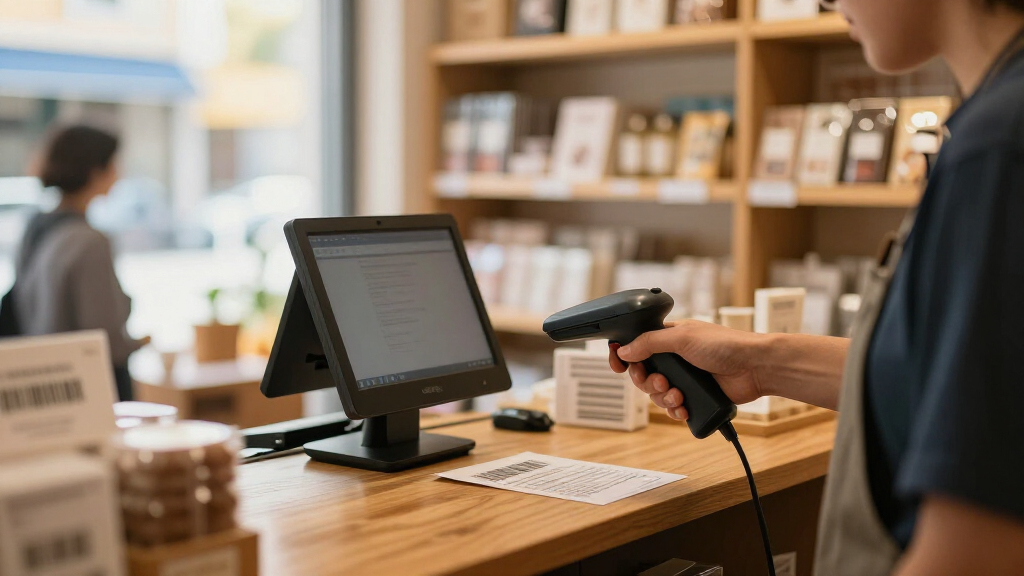
How We Picked
I compared the 15 scanners against small-business jobs: checkout, receiving, stock counts, and scanning from a counter or mobile device. The main criteria were barcode coverage (1D versus 2D), connection choices (USB, Bluetooth, and 2.4GHz wireless where specified), portability, battery-related features, and whether the form makes sense for handheld or fixed use. I also treated compatibility claims and listed specifications as things buyers should confirm against their own POS, phone, tablet, or computer before purchasing.
The ranking favors models that cover more everyday situations without adding unnecessary setup or maintenance. That puts the Inateck 2D wireless model ahead for its display and battery-life focus, while versatile multi-connection scanners rank well for businesses using varied devices. Simple wired choices remain strong for fixed stations, but rank lower for teams that need mobility or broader barcode support. Compact mini scanners have a clear place for occasional or mobile use, yet are less compelling as a sole scanner for a busy checkout or shared inventory workflow.
| barcode scanners for small business | Power source |
|---|---|
| Eyoyo Portable Mini 1D Bluetoo | — |
| Symcode Bluetooth Barcode Scan | Lithium-polymer battery |
| 1D 2D QR Barcode Scanner Wirel | Battery powered |
| Inateck 2D Barcode Scanner Wir | — |
| NADAMOO Wireless Barcode Scann | Battery powered |
| Eyoyo Mini 1D Bluetooth Barcod | — |
| WoneNice USB Laser Barcode Sca | Corded electric |
| Tera Wireless 1D Laser Barcode | Battery powered |
| Bluetooth 1D&2D Barcode Scanne | Battery powered |
| Eyoyo Portable Mini 2D QR Blue | — |
| Eyoyo Portable Mini Bluetooth | — |
| NETUM Bluetooth 2D Barcode Sca | — |
| NetumScan USB 1D Barcode Scann | Corded electric |
| Eyoyo EYH2 Handheld USB Wired | Corded electric |
| NetumScan Desktop Barcode Scan | USB |
Factors to Consider When Choosing Barcode Scanners For Small Business
Before choosing a scanner, I’d map the work it must do and the devices it must connect to. A scanner that reads every barcode type may still be a poor fit if it cannot pair reliably with your POS, while a basic wired model can be the better choice at a fixed till. These broader checks help prevent buying extra features you won’t use—or missing a capability your workflow depends on.
Match Barcode Support to What You Actually Scan
Start by listing the barcode formats on your products, shipping labels, membership cards, and screens. A 1D scanner can suit traditional linear product codes, but it will not cover the same range as a model listed for QR, Data Matrix, or PDF417. That wider support can help a business handle supplier labels or digital codes without keeping a second reader on hand. Do not assume every 2D model reads every code equally well; confirm support for the formats in your workflow. Buying only for today’s shelf labels may leave a gap if you later accept mobile coupons or scan parcel codes. If all your tasks use 1D codes, paying for 2D capability may add little practical benefit.
Choose a Connection Around Your POS Setup
Check the scanner against the exact operating system and POS software you use, rather than relying on a broad compatibility label. USB wired models make sense at a fixed checkout and avoid pairing steps, but they tie the scanner to a cable and nearby port. Bluetooth can suit phones and tablets or staff moving around a store, while 2.4GHz wireless may depend on a receiver and available ports. Multi-mode designs offer options, but those options are only useful if you understand how each mode connects to your equipment. Confirm whether the scanner sends data as keyboard input or needs a particular app or configuration. A short compatibility check before purchase can prevent a reader that scans correctly but cannot send the result where you need it.
Decide How Much Mobility Your Work Needs
Think about where staff scan: at one till, across sales-floor shelves, in a stockroom, or at receiving bays. A corded handheld reader can be efficient for repeated scans at a counter, while a wireless unit reduces cable reach limits during stock checks. Mini scanners are easy to carry, but their compact form can be less comfortable for long, high-volume sessions than a full handheld reader. A desktop scanner can make sense when products pass across a fixed station, yet it is not a substitute for a portable reader during shelf counts. Check the stated wireless distance as a guide, not a guarantee; walls, interference, and layout can affect real performance. Choose for the furthest routine scan location, not an exceptional distance you are unlikely to use.
Plan for Battery Use and Shared Shifts
Wireless convenience brings a charging routine, so estimate how many shifts and scans the device must cover between charging opportunities. A battery indicator or display can help staff spot a low charge before it interrupts a checkout or stock count. For a shared scanner, agree on where it is stored and charged; otherwise, portability can turn into a device that is often unavailable. A wired reader avoids battery management but may restrict where it can be used. Ask whether your workflow can tolerate charging breaks or whether a fixed wired station is safer. Do not treat a long-battery-life claim as a substitute for checking how the scanner will be used across your actual shifts.
Buy for Scan Volume and Operator Comfort
Scan volume changes what feels like a sensible design. For occasional stock checks, a small portable model may be easier to keep with a tablet; for all-day checkout, grip, trigger access, and comfortable handling deserve more weight. Compactness is not the same as comfort, especially when staff repeat the same motion for hours. Consider whether more than one employee will use the scanner and whether it must work for different hand sizes or workstations. A desktop reader can reduce repetitive aiming at a busy counter, but takes up fixed space and may not suit varied package sizes or mobile tasks. Match the form factor to the physical routine, not just the scanner’s feature list.
Account for Setup, Maintenance, and Future Changes
Small businesses often benefit more from a scanner that is easy to set up and share than from one with features no one will configure. Check whether the device offers the connection modes you need and whether switching between them requires steps staff can follow. Wired simplicity can reduce pairing and charging tasks, whereas wireless flexibility can support changing stations or mobile work. Consider how you will replace or share the scanner if the business adds a register, changes tablets, or expands inventory duties. Keep a note of any setup instructions, supported barcode types, and pairing details so a reset does not stall operations. Choose enough flexibility for likely changes, but avoid paying in complexity for scenarios your business does not face.
Frequently Asked Questions
Should a small business choose a 1D or 2D barcode scanner?
Choose based on the codes your business must scan, not on the assumption that newer is always better. A 1D model can handle conventional linear product labels, while a 2D scanner is the safer choice if you also need QR, Data Matrix, or PDF417 codes. Check supplier labels, customer-facing digital codes, and shipping paperwork before deciding. If your workflow may add new code types, 2D support can reduce the chance of needing another scanner later. If your use is limited to familiar 1D inventory labels, a simpler reader may be enough.
Will a wireless scanner work with my POS, tablet, or phone?
Compatibility depends on the scanner’s connection mode and your specific device and software. Check whether the model supports the operating system you use and whether it connects by Bluetooth, USB, or a wireless receiver. A product’s broad device compatibility claim does not confirm that it works with every POS app or register. Ask your POS provider about supported scanners or test the connection before deploying the device across staff. Also check how scanned data appears in your software, since successful pairing alone does not guarantee a smooth workflow.
Is a wired scanner a better choice for a small shop than a wireless one?
A wired scanner can be the better fit when scanning happens at one counter and you want to avoid charging or pairing. It also removes battery upkeep from a shared checkout routine. Wireless is more useful when staff scan shelves, receiving areas, or products away from the register. Some multi-mode models offer both approaches, though setup and compatibility still need checking. Choose the connection that matches your normal work location rather than treating wireless as an automatic upgrade.
Do I need a long-range scanner for inventory checks?
Only if staff regularly scan far from the receiver or workstation in your actual layout. A long stated transmission distance can be useful in a large stockroom, but walls, shelving, and wireless interference may reduce the working range. For a compact shop or close-range shelf counts, portability and comfortable handling may matter more. Map the furthest routine scan point and check whether the scanner uses a receiver or Bluetooth connection. Treat range figures as specifications to verify in your space, not as a promise of performance everywhere.
What should I check before buying a scanner for shared staff use?
Confirm that the scanner works with every device or register the team needs to use, and decide how staff will switch connection modes if needed. For a wireless model, set a clear charging and storage routine so it is ready for the next shift. Consider whether its size and grip suit repeated scanning, not just occasional use by one person. A simple wired model may reduce handoff issues at a fixed station, while a versatile wireless unit can serve different work areas. Keep setup instructions accessible so a new employee can reconnect or configure the scanner without disrupting the team.
Conclusion
For a single flexible scanner covering varied small-business tasks, my best overall pick is the Inateck 2D Wireless Scanner, thanks to its display and battery-life focus. The best value for straightforward checkout is the WoneNice USB laser model if your work is limited to 1D codes at a fixed station; for a wider choice of connections, compare the Symcode and NETUM 3-in-1 options. I’d name the best premium-style choice the Inateck, especially for teams that will make use of its display and wireless design. For beginners, a simple wired USB reader such as the WoneNice or NetumScan 1D avoids battery and pairing routines. For specific needs, choose NADAMOO when stated long wireless range is useful, an Eyoyo mini for compact mobile use, or the NetumScan desktop model for a stationary scan point. Match the scanner to your barcode types, POS compatibility, and daily scan location before choosing.
Halloween Picks
halloween
As an affiliate, we earn on qualifying purchases.