

🔍 Read the full analysis: 10 Best Mesh Wi-Fi Systems For Full-Home Coverage In 2027 on ThorstenMeyerAI.com

Get business pricing on office and shipping supplies
- Business-only prices and quantity discounts
- Tax-exempt purchasing
- Multiple users, one account, clear invoices
TL;DR
ThorstenMeyerAI.com’s 2027 buyer-focused ranking names the TP-Link Deco X55 its most balanced pick, while identifying separate options for Wi-Fi 7, tri-band backhaul and basic coverage needs. The source does not provide independent test results, current prices or verified coverage measurements, so its rankings are recommendations rather than proof of performance in every home.
ThorstenMeyerAI.com has published its 2027 guide to 10 mesh Wi-Fi systems, ranking the TP-Link Deco X55 as its most balanced starting point and pointing buyers seeking newer features toward options such as the Orbi 770 and Deco 7 Pro. The recommendations matter to households choosing between coverage, wireless backhaul capacity and cost, but the source frames them as buying advice, not as results from a disclosed comparative test.
The guide favors the Deco X55 for its Wi-Fi 6 platform and three-node kit, describing it as a practical general-purpose choice rather than requiring buyers to pay for Wi-Fi 7. It presents the Deco XE75 as an alternative for homes that may benefit from a dedicated 6 GHz band, and the Orbi 770 as a more capable Wi-Fi 7 option. The Deco 7 Pro is also described as a performance-focused Wi-Fi 7 system, while the Deco 7 BE5000 offers Wi-Fi 7 in a simpler dual-band design.
The other systems in the 10-product comparison are the TP-Link Deco S4, Amazon Eero 6+, TP-Link Deco 7 Pro, TP-Link Deco 7 BE5000, Netgear Orbi 770, TP-Link Deco XE75, and three additional products: the Asus ZenWiFi XD5, Google Nest Wifi Pro, and Linksys Velop Pro 7. The source names the Eero 6+ as a straightforward, guided-setup option and says the older Wi-Fi 5 Deco S4 two-pack may suit smaller homes. It does not give model-by-model test data or detailed rankings for every system.
Across the list, the guide says buyers should weigh Wi-Fi generation, band configuration, kit size, setup and management against their home and broadband plan. It warns that a newer wireless standard cannot add features to devices that do not support it, and that a faster mesh system cannot compensate for a slow internet connection. Coverage estimates should also be treated as planning guides: walls, floors, interference and node placement affect results.
The 10 picks
- 1
 NETGEAR Orbi 770 Series WiFi 7 Mesh System, 3-PackView on Amazon →
- 2
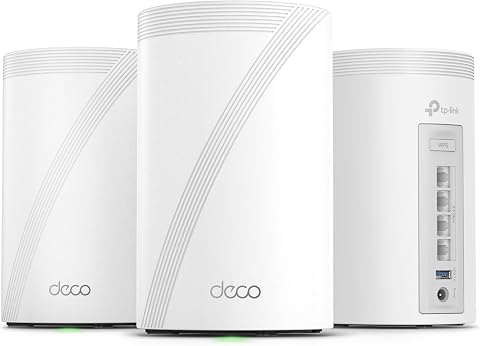 TP-Link Deco 7 Pro BE10000 Tri-Band Wi-Fi 7 Whole-Home Mesh System, 3-PackView on Amazon →
- 3
 Amazon eero 6+ Wi-Fi 6 Mesh System, 3-PackView on Amazon →
- 4
 NETGEAR Orbi 370 Series WiFi 7 Mesh System for Home (RBE373) – Wireless Route…View on Amazon →
- 5
 TP-Link Deco 7 BE5000 Dual-Band Wi-Fi 7 Mesh SystemView on Amazon →
- 6
 TP-Link Deco XE75 AXE5400 Tri-Band Wi-Fi 6E Mesh System, 3-PackView on Amazon →
- 7
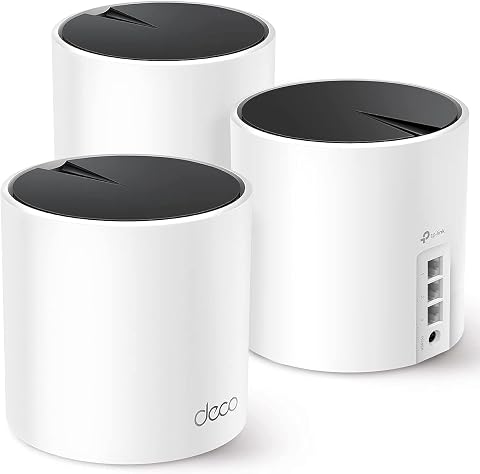 TP-Link Deco X55 AX3000 Wi-Fi 6 Mesh System, 3-PackView on Amazon →
- 8
 TP-Link Deco S4 AC1900 Mesh Wi-Fi System, 3-PackView on Amazon →
- 9
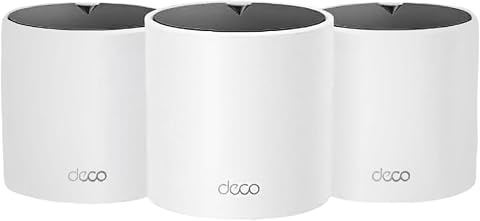 TP-Link Deco X15 AX1500 Dual-Band Wi-Fi 6 Mesh System, 3-PackView on Amazon →
- 10
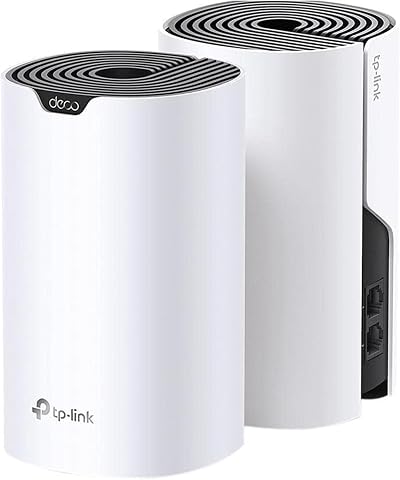 TP-Link Deco S4 Whole Home Mesh WiFi System (2-Pack)View on Amazon →
Choosing Between Coverage and Capacity
The list addresses a common purchasing problem: mesh systems differ in more than their advertised Wi-Fi generation. A household with older devices and a modest broadband plan may not benefit much from a premium Wi-Fi 7 kit. Conversely, busy networks with compatible devices or faster internet may have reason to look at newer systems, provided the rest of the home network can use their capacity.
Backhaul—the connection carrying traffic between mesh nodes—can shape performance when satellites connect wirelessly. The guide says tri-band systems such as the Deco XE75 and Deco 7 Pro add radio capacity that may help with node-to-node traffic, but this does not guarantee better results in every layout. Wired Ethernet backhaul can change the calculation, while poor node placement can undermine even a higher-specification kit. Matching equipment to the actual constraint may matter more than buying the newest standard.
Node count also needs to match the layout, not just a headline coverage figure. A two-pack may be sufficient in a compact home; a larger or divided space may require more nodes, better placement or wired links. The guide’s central consumer takeaway is to plan around devices, layout and backhaul before paying for added capacity.
Products Worth Considering

Canon SELPHY CP1500 Compact Photo Printer (White)

Canon imagePROGRAF PRO-1100 17-Inch Professional Wireless Inkjet Photo Printer

Apple Mac mini (2026) with M5 Pro chip and AppleCare+ (3‑year)
As an affiliate, we earn on qualifying purchases.
How the Guide Ranks Mesh Kits
ThorstenMeyerAI.com says its ranking weighs Wi-Fi generation, band configuration, wireless-backhaul potential, kit size and setup. It gives more weight to balanced capability than to the newest standard alone. That approach puts the Wi-Fi 6 Deco X55 first, while treating the Orbi 770 and Deco 7 Pro as premium-minded alternatives rather than universal winners.
The comparison also retains older or simpler systems for buyers with more modest requirements. The guide contrasts the Wi-Fi 5 Deco S4 with newer Wi-Fi 6 and Wi-Fi 7 options, and describes the Eero 6+ as suited to shoppers who value guided setup. It cautions that coverage claims are estimates and that actual results depend on home construction, interference and where nodes are placed.
The source’s selection advice is to check whether frequently used phones, computers and other devices support the features being purchased; identify equipment that needs wired ports; and decide whether nodes can connect by Ethernet. Those checks help distinguish a real need for more capacity from features that may go unused.
“The Deco X55 is the most balanced starting point.”
— ThorstenMeyerAI.com guide
What the Comparison Does Not Establish
The source does not provide a publication date, prices, laboratory measurements or a detailed testing method. It does not report standardized throughput, latency, range or reliability results for all 10 systems, so readers cannot use the ranking alone to determine which kit performs best in a particular home. The available material also gives limited product-by-product detail for several systems named in the list.
It is also unclear how the recommendations would change with local pricing, software updates, regional product configurations or newer devices released during 2027. The guide’s descriptions of potential advantages—such as additional backhaul capacity or Wi-Fi 7 performance—are buying considerations, not guarantees of improvement. Actual results depend on compatible devices, broadband service, node spacing, interference and whether backhaul is wireless or wired.
Check Your Home Before Buying
Before choosing from the list, shoppers should map the rooms where service is weak, identify the devices that use the network most and check whether any equipment needs Ethernet. They can then compare two- and three-node kits against the home’s layout and decide whether wired backhaul is possible. The guide provides no upcoming test date or product launch timeline; any later revision, price comparison or measured performance assessment remains unannounced in the supplied material.
Key Questions
Which mesh system does the guide rank first?
It names the TP-Link Deco X55 as its most balanced starting point, citing Wi-Fi 6 and a three-node kit. That is the guide’s recommendation, not a guarantee of the best results for every home.
Does Wi-Fi 7 automatically improve home coverage?
No. The guide says newer standards may help networks with compatible devices and suitable broadband, but they do not fix weak node placement, home construction problems or a slow internet plan.
When might a tri-band mesh system be useful?
A tri-band system such as the Deco XE75 or Deco 7 Pro may offer additional radio capacity for traffic between wirelessly connected nodes. The benefit depends on the system, layout and connection conditions; Ethernet backhaul may address the same constraint differently.
Is a three-node kit necessary for every home?
No. The guide says a two-pack such as the Deco S4 may suit a compact layout, while larger, multi-floor or obstructed homes may need more nodes or wired backhaul. Floor area alone does not determine coverage.
Are these rankings based on published performance tests?
The supplied source describes selection criteria but does not provide standardized performance measurements, detailed test results or current prices for all 10 products. Treat its list as buying guidance, not a verified comparative benchmark.
Source: ThorstenMeyerAI.com