
To succeed with social media advertising as a direct seller, focus on authentic influencer collaborations and precise ad targeting. Avoid over-promoting or bombarding followers with ads, and always maintain transparency about partnerships. Engage your audience with valuable content and respond to their needs. Continuously optimize your campaigns through testing and data analysis. Stick to these do’s and don’ts, and you’ll discover more strategies to grow your business effectively.
Key Takeaways
- Do partner with authentic influencers whose audiences match your target market.
- Don’t oversell; balance promotional content with engaging, valuable posts to build trust.
- Do use precise ad targeting based on demographics, interests, and behaviors for better results.
- Don’t neglect transparency; disclose influencer collaborations clearly to maintain credibility.
- Do continually test and optimize creatives and audiences based on performance data.
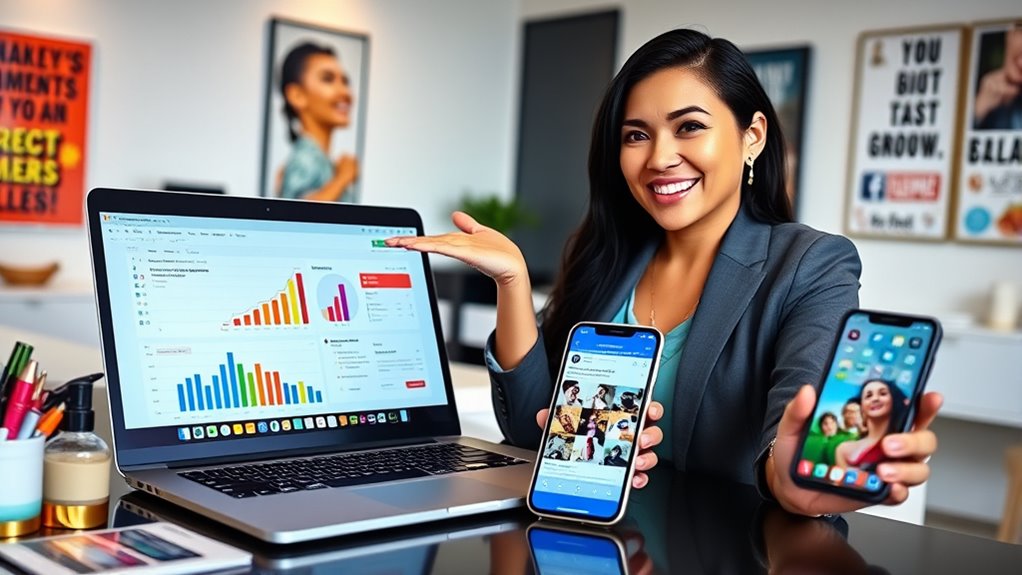
Are you looking for a powerful way to grow your direct selling business? Social media advertising offers incredible opportunities to reach new customers and build your brand, but it’s essential to approach it strategically. One of the most effective tactics involves leveraging influencer collaborations. Partnering with influencers who align with your niche can dramatically expand your reach and lend credibility to your products. When choosing influencers, look for those whose audiences match your target market. Collaborate with them to create authentic content that showcases your products naturally. This not only increases visibility but also builds trust, as followers see real people genuinely endorsing what you sell.
Partner with authentic influencers to boost credibility and expand your direct selling reach naturally.
Alongside influencer collaborations, developing solid ad targeting strategies is vital. Social media platforms provide detailed tools to narrow down your audience based on demographics, interests, behaviors, and even past interactions. Use these ad targeting strategies to ensure your ads reach the right people — those most likely to become loyal customers. For example, if you sell skincare products, target users interested in beauty and wellness. Narrowing your audience helps improve your ad performance and maximizes your return on investment. Be specific with your targeting parameters, and continuously refine them based on performance data.
However, avoid the temptation to cast a wide net without focus. Overly broad campaigns waste your budget on uninterested viewers. Additionally, don’t ignore the importance of testing different ad creatives and audiences. Splitting your ads into variations allows you to see what resonates best with your audience, giving you insights to optimize future campaigns. Remember, social media advertising isn’t about one-size-fits-all; it’s about precision and adaptation.
Another key do is engaging your audience genuinely. Don’t just push sales; foster relationships through valuable content and responsive communication. When you use influencer collaborations, encourage influencers to share stories and experiences rather than just product promos. Authenticity resonates more than scripted pitches. Similarly, craft your ads to speak directly to your audience’s needs and desires, rather than generic messages.
On the flip side, avoid common pitfalls like over-promoting or neglecting transparency. Always disclose influencer partnerships clearly to maintain trust and comply with regulations. Don’t bombard your followers with endless ads — balance promotional content with informative and engaging posts. Additionally, understanding the importance of safe sleep environments can help you tailor your messaging and build trust with your audience. By combining strategic influencer collaborations with targeted ad strategies, you set yourself up for social media success that’s sustainable and impactful.

AI UGC AND INFLUENCER MARKETING FOR SMALL BRANDS: Create Authentic UGC Content, Run Smarter Campaigns, and Scale ROI With AI Automation (AI Toolkit For Online Marketers Book 13)
As an affiliate, we earn on qualifying purchases.
As an affiliate, we earn on qualifying purchases.
Frequently Asked Questions
How Can I Measure the ROI of My Social Media Ads?
You can measure the ROI of your social media ads by analyzing engagement metrics like likes, shares, and comments to see how your audience interacts. Additionally, use conversion tracking to monitor how many viewers take desired actions, such as making a purchase or signing up. Combining these insights helps you understand your ad performance, optimize strategies, and determine whether your investment is paying off effectively.
What Budget Should I Allocate for Social Media Advertising?
Think of your budget as planting seeds in a garden; start small with your ad spend strategies and gradually increase as you see growth. For social media advertising, allocate around 10-20% of your overall marketing budget, but adjust based on your goals and ROI. Proper budget planning helps you nurture campaigns, ensuring your investment blooms into leads and sales without overextending your resources.
Which Social Media Platforms Are Best for Direct Selling?
You should focus on platforms like Instagram, Facebook, and TikTok, which are ideal for direct selling. Leverage influencer collaborations to expand your reach and build credibility. Consistently schedule content to stay top of mind with your audience, using content scheduling tools to maintain a steady flow of engaging posts. These strategies help you connect with potential customers and boost your sales effectively across the most popular social media channels.
How Do I Target the Right Audience Effectively?
Did you know that targeted ads are 2.5 times more likely to generate engagement? To target the right audience effectively, focus on audience segmentation by analyzing interests, behaviors, and demographics. Use precise targeting strategies like custom audiences and lookalike audiences to reach potential customers. Regularly refine your approach based on performance data, ensuring your messaging resonates with those most likely to convert, maximizing your social media advertising success.
What Legal Considerations Should I Be Aware of in Social Media Ads?
When creating social media ads, you need to follow disclosure requirements to avoid legal issues and maintain transparency with your audience. Always clearly state your relationship if you’re promoting products or earning commissions. Be mindful of intellectual property; don’t use copyrighted images or content without permission. Staying compliant with these legal considerations helps protect your reputation, prevents legal disputes, and builds trust with your followers.

Social Media Stand with NFC & QR Code Sign – Easy and Fast Access to Social Media Page for Customers – Gain More Followers, Simple Setup, No Monthly Fees, For All Businesses, Compatible with Instagram
【Elegant Design】The sign adopts a standing design, which is easy to move and place. The size reaches 3.9*5.5…
As an affiliate, we earn on qualifying purchases.
As an affiliate, we earn on qualifying purchases.
Conclusion
By following these do’s and don’ts, you’re well on your way to mastering social media advertising. Remember, authenticity and consistency build trust, while avoiding overpromising keeps your credibility intact. Are you ready to turn your social media presence into a powerful tool for your direct selling success? Stay genuine, be strategic, and watch your business grow. With the right approach, social media can become your most valuable asset—so start implementing these tips today!

Social Media Analytics Tools Standard Requirements
As an affiliate, we earn on qualifying purchases.
As an affiliate, we earn on qualifying purchases.
disclosure compliance tools for influencer marketing
As an affiliate, we earn on qualifying purchases.
As an affiliate, we earn on qualifying purchases.