
📊 Full opportunity report: Seoul Recognizes Memory As The Main Hurdle In AI Development on ThorstenMeyerAI.com — validation score, market gap, and execution plan.
TL;DR
Seoul’s government and industry leaders acknowledge that memory shortages, particularly high-bandwidth memory (HBM), are the primary bottleneck for AI development. Demand is surging, but supply remains limited, raising geopolitical and economic concerns.
South Korea’s government and industry leaders have officially acknowledged that memory shortages, especially high-bandwidth memory (HBM), are the main obstacle to advancing AI technology. This recognition comes amid rising demand for AI memory and limited supply capacity, raising economic and geopolitical concerns. The development underscores the critical role of memory infrastructure in AI progress and the potential for international tensions over access.
During a recent press briefing at the Korea Chamber of Commerce and Industry’s Jeju Forum, Chey Tae-won, chairman of SK Group, highlighted that customers are requesting 60 to 100 percent more AI memory in 2027 than they are currently receiving. He estimated overall demand growth at a minimum of 50–60 percent, driven by AI now accounting for more than half of total semiconductor consumption.
Chey emphasized that no significant new capacity is expected to come online in 2026, creating a looming supply shortfall. He described the current situation as ‘near-chaotic lobbying,’ with governments increasingly viewing memory access as a matter of economic security. SK hynix has responded by accelerating investments, including moving forward the Yongin mega-cluster’s first clean room to February 2027 and committing over $14.5 billion in new capacity. Despite these efforts, the capacity gap is already locked in for 2026, with supply expected to remain constrained into 2027.
Industry data shows SK hynix held 58 percent of global HBM revenue in Q1 2026, with Samsung and Micron each holding about 21 percent, creating a tight oligopoly. The demand for high-bandwidth memory has outpaced guidance for two consecutive years, intensifying supply pressures and pricing abnormalities. Chey warned that sustained high memory prices could lead to ‘chipflation,’ affecting broader electronics markets and attracting geopolitical retaliation. SK hynix’s response includes plans for new fab sites and converting existing plants to HBM production, but these will not be operational before 2027, leaving a capacity shortfall for 2026.
Models get the headlines.
Memory is the chokepoint.
SK Group’s chairman at the Jeju Forum, per The Korea Herald: customers want 60–100% more AI memory in 2027, governments now treat memory access as economic security — and no company has meaningful new capacity arriving next year.
The gap, in his own numbers
customer requests to SK hynix vs this year. AI already consumes over half of all semiconductors; total demand growth floored at 50–60%.
“No company has meaningful new capacity coming online next year.” The gap year is already locked in — fabs don’t move faster than physics.
Result, per Chey: near-chaotic lobbying — no longer just from companies. Foreign governments are intervening for domestic industries; next, governments pressure governments.
Tighter than the chokepoints you worry about
SK hynix’s race against its own warning
Company figures and projections as announced — none of it lands in 2026.
Half true: unified-memory Apple Silicon doesn’t queue for HBM — a fleet you own is insulated from allocation politics, and owned hardware converts supply-chain risk into sunk cost.
The other half: LPDDR and HBM share DRAM wafer economics — chipflation reaches workstation memory too, and training compute stays fully hostage. Local inference changes who feels the shortage, not whether it exists.
Week tie-in: if memory demand grows into capacity that doesn’t exist, doing the job in 3B parameters on memory you already own isn’t aesthetics — it’s engineering under constraint.
High Bandwidth Memory (HBM) modules
As an affiliate, we earn on qualifying purchases.
As an affiliate, we earn on qualifying purchases.
Implications of Memory Shortages for AI and Geopolitics
This recognition by Seoul officials underscores the central role of memory infrastructure in AI development, highlighting a potential bottleneck that could slow innovation and deployment. The supply-demand imbalance raises risks of increased prices, ‘chipflation,’ and geopolitical tensions, as access to critical memory components becomes a strategic security issue. For AI developers and consumers, this could mean higher costs and delayed adoption of advanced AI systems, especially as demand continues to outpace supply.

Timetec 64GB KIT (2x32GB) DDR5 5600MHz (PC5-5600) PC5-44800 SODIMM Laptop RAM – 262-Pin 1.1V CL46 Non-ECC Unbuffered Memory Module for Laptop, Notebook, Mini PC, All-in-One
Capacity – 64GB RAM KIT (2 x 32GB Modules), Speed up to 5600MHz, Non-ECC Unbuffered 262-Pin 1.1V SODIMM.
As an affiliate, we earn on qualifying purchases.
As an affiliate, we earn on qualifying purchases.
Rising Demand and Limited Capacity in AI Memory
Recent industry reports and statements from SK hynix indicate that AI now accounts for over 50% of semiconductor consumption, with demand expected to grow by at least 50–60% in 2027. Despite this, no meaningful new capacity is expected to come online in 2026, creating a looming shortfall. SK hynix’s market share in high-bandwidth memory (HBM) remains dominant, and the demand has outstripped guidance for two years, leading to abnormal pricing and supply pressures. The geopolitical dimension is heightened by governments increasingly viewing memory access as a matter of economic security, with potential for international conflict over critical supply chains.
“No company has meaningful new capacity coming online next year.”
— Chey Tae-won, SK Group Chairman

EEPROM Memory chip IC Assortment SMD SOP8, 256B, 512B, 1MB, 2MB, 4MB, 8MB, 24C02, 24C04, 24C08, 24C16, 24C32, 24C64, 60 pcs
EEPROM Memory Chip Assortment
As an affiliate, we earn on qualifying purchases.
As an affiliate, we earn on qualifying purchases.
Unconfirmed Details About Future Capacity and Geopolitical Actions
While SK hynix and other firms have announced plans to expand capacity, it is not yet clear whether these will be sufficient or timely enough to prevent shortages in 2026 and 2027. The extent of future geopolitical interventions, such as export restrictions or tariffs, remains uncertain, as does the impact of potential new entrants or technological breakthroughs that could alter demand or supply dynamics.
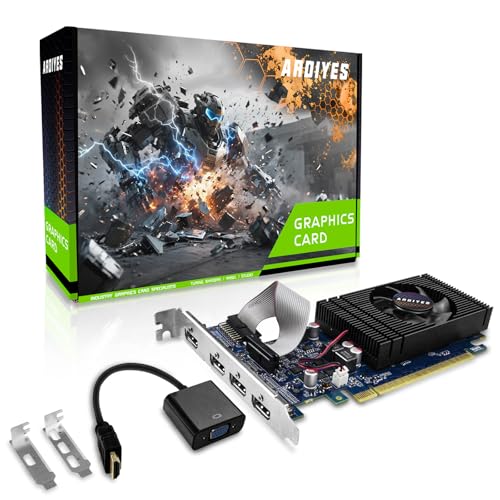
ARDIYES GT 740 4GB GDDR5 Low Profile GPU Graphics Card, 4X HDMI Ports for Quad Multi-Monitor Setup, PCI Express 3.0 x16, Silent Cooling, Ideal for Office and Home Theater
Robust 4GB Memory & Quad Display Ready: Equipped with 4GB of fast GDDR5 memory to smoothly handle daily…
As an affiliate, we earn on qualifying purchases.
As an affiliate, we earn on qualifying purchases.
Expected Developments in Memory Capacity and Policy Responses
Industry leaders and governments are likely to prioritize expanding memory capacity and securing supply chains in the coming months. SK hynix and other manufacturers may accelerate infrastructure projects, while policymakers may introduce measures to safeguard critical memory components. Monitoring these developments will be essential to understanding how the supply-demand imbalance will evolve and influence global AI deployment and geopolitical stability.
Key Questions
Why is memory shortage a critical issue for AI development?
Memory, especially high-bandwidth memory (HBM), is essential for training and running advanced AI models. Shortages limit the capacity to develop and deploy AI systems at scale, creating bottlenecks in innovation and operational efficiency.
How are governments involved in addressing memory shortages?
Governments are increasingly viewing memory access as an economic security issue, intervening through export controls, subsidies, and strategic investments to secure supply chains and prevent geopolitical conflicts over critical components.
When will new memory capacity become available?
While SK hynix and others have announced capacity expansions, these are not expected to be operational before 2027, leaving a short-term supply gap in 2026.
Could technological innovations alleviate the memory bottleneck?
Potential breakthroughs in memory technology or alternative architectures could mitigate shortages, but as of now, no such solutions are imminent or confirmed to be sufficient for the growing demand.
Source: ThorstenMeyerAI.com