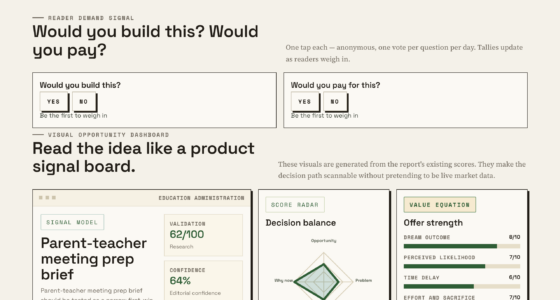
📊 Full opportunity report: Attention-Burden Scores As A Benchmark For Better K-12 Edtech Choices on IdeaNavigator AI — validation score, market gap, and execution plan.

Get business pricing on office and shipping supplies
- Business-only prices and quantity discounts
- Tax-exempt purchasing
- Multiple users, one account, clear invoices
TL;DR
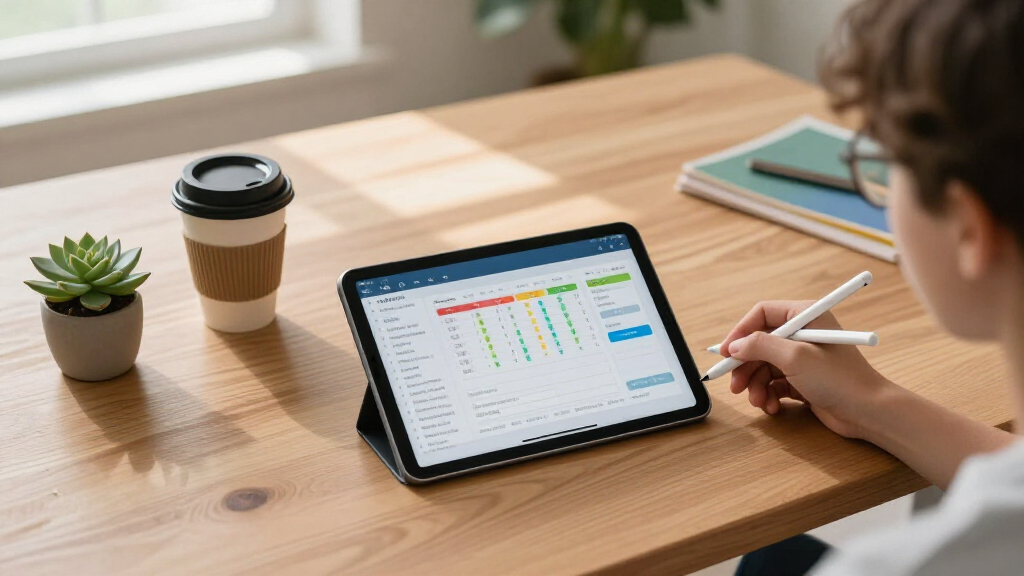
A new scoring method called attention-burden scores is being developed to evaluate the cumulative impact of school software on student attention. It aims to guide district decisions and improve edtech procurement by considering the total attention load across multiple apps.
IdeaNavigator AI has announced the development of a new metric, attention-burden scores, designed to evaluate the total attention load of school software portfolios. This approach aims to help district administrators make more informed procurement decisions by quantifying how multiple apps collectively impact student attention over a school day. The scoring system considers not just individual app ratings but the compounded effects of autoplay, streaks, notifications, and variable rewards, which are currently unmeasured at the portfolio level.
The proposed attention-burden score ingests a district’s entire app portfolio, pulls per-app attention ratings, and layers a model of engagement mechanics—such as autoplay and notifications—to generate a single, comprehensive score. This score aims to serve as a board-ready report and a procurement gate for new software purchases, emphasizing the total attention impact rather than isolated app ratings.
This development responds to recent pressures like phone bans and screen-time lawsuits, which have pushed student attention onto school agendas. District administrators are increasingly seeking defensible, portfolio-level metrics to evaluate edtech effectiveness and safety. The system is designed to be scalable, with an annual subscription fee based on district size and additional charges for procurement reviews.
Validation plans include scoring three districts’ existing software portfolios, presenting findings to their boards, and measuring whether the report influences procurement decisions within two quarters. The goal is to establish this as a practical, actionable tool for district-level decision-making, aligning with broader efforts to improve student well-being and engagement in digital learning environments.
Potential Impact on District Edtech Procurement
This scoring system could transform how districts evaluate and select educational technology by providing a measurable, portfolio-wide view of student attention load. It addresses a critical gap in current evaluation methods, which typically focus on individual app ratings without considering cumulative effects. If successful, it may lead to more responsible procurement practices, reducing the risk of overloading students with distracting or manipulative apps. This could improve student engagement, well-being, and educational outcomes, making it a significant step toward more accountable edtech use in schools.
student attention monitoring software
As an affiliate, we earn on qualifying purchases.
As an affiliate, we earn on qualifying purchases.
Rising Concern Over Student Attention and Edtech Evaluation
Recent years have seen increased scrutiny of digital tools used in classrooms, driven by concerns over screen time, distraction, and student mental health. Lawsuits and policies banning phones have heightened awareness of the importance of managing student attention. Currently, district decision-makers rely on app-specific ratings or anecdotal evidence, which fail to account for the cumulative attention load created by multiple apps used throughout the school day.
Developers and researchers have called for more comprehensive metrics to evaluate how multiple apps interact and impact student focus. The idea of a portfolio-level score, which captures the combined effect of all software, is gaining traction as a practical solution to this challenge. The attention-burden score aims to fill this gap, offering a scalable, data-driven approach to better inform procurement and policy decisions.
As an affiliate, we earn on qualifying purchases.
Uncertainties Around Implementation and Effectiveness
It is not yet clear how accurately the attention-burden score will reflect real student experiences or how well it will influence procurement decisions in practice. The scoring model is still in development, and validation relies on pilot testing in a limited number of districts. The long-term impact on student engagement and well-being remains to be seen, and there may be challenges in standardizing ratings across diverse app portfolios.
classroom engagement analytics tools
As an affiliate, we earn on qualifying purchases.
As an affiliate, we earn on qualifying purchases.
Next Steps for Pilot Testing and Validation
IdeaNavigator AI plans to pilot the attention-burden scoring system in three districts over the coming year. The process will involve scoring existing software portfolios, presenting findings to district boards, and assessing whether the scores influence procurement decisions within two quarters. Success in these pilots could lead to broader adoption and refinement of the metric, with the goal of establishing it as a standard evaluation tool for edtech procurement.
digital learning platform with attention tracking
As an affiliate, we earn on qualifying purchases.
As an affiliate, we earn on qualifying purchases.
Key Questions
How will the attention-burden score be calculated?
The score will combine per-app attention ratings with a model of engagement mechanics like autoplay, streaks, notifications, and variable rewards to produce a cumulative attention impact measure for the entire software portfolio.
Will this scoring system be available for all districts?
Initially, the system will be pilot-tested in select districts, with plans to expand based on feedback and effectiveness. It will be offered as a subscription service scaled by district size.
Could this score replace existing app ratings?
It is intended to complement existing ratings by providing a portfolio-level view, not replace individual app evaluations. Its goal is to inform procurement decisions more holistically.
What are the limitations of the current model?
The model is still in development, and its accuracy in reflecting actual student attention and engagement is unproven. Further validation and refinement are needed before widespread adoption.
How might this impact students’ learning experiences?
If effective, the score could lead districts to choose less distracting or manipulative apps, potentially improving student focus, well-being, and learning outcomes.
Source: IdeaNavigator AI
Fall Picks
fall essentials
As an affiliate, we earn on qualifying purchases.