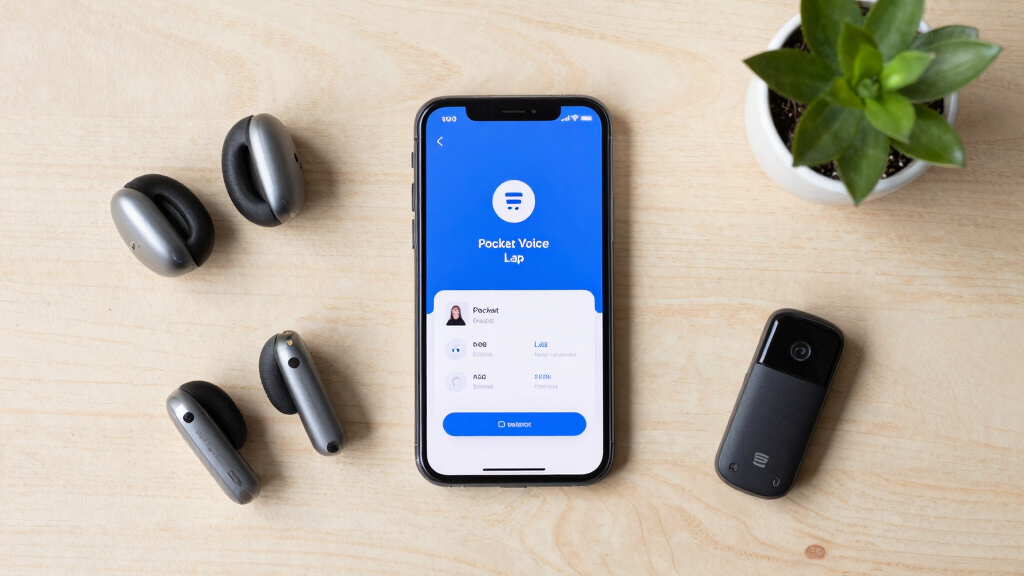

📊 Full opportunity report: How Pocket Voice Lab Is Changing The Landscape Of Voice & Gender-Affirming Apps on IdeaNavigator AI — validation score, market gap, and execution plan.

Get business pricing on office and shipping supplies
- Business-only prices and quantity discounts
- Tax-exempt purchasing
- Multiple users, one account, clear invoices
TL;DR
Pocket Voice Lab has introduced a mobile app that offers real-time visual biofeedback for voice training, targeting transgender and gender-nonconforming individuals. This development aims to make voice modification more accessible outside clinical settings, potentially transforming gender-affirming care.
Pocket Voice Lab has launched a mobile app prototype that delivers real-time visual feedback on pitch and resonance, specifically designed for individuals seeking gender-affirming voice training. This development addresses a critical gap in accessible, objective voice coaching outside clinical settings, potentially transforming the landscape of gender-affirming care and voice health.
The app, still in pilot testing, records short voice samples and provides immediate feedback on fundamental pitch, resonance, and strain indicators. It is aimed primarily at transgender and gender-nonconforming individuals who lack easy access to in-person speech-language pathologists (SLPs) or vocal coaches. The app offers guided exercises, progress tracking, and shareable reports that can be used with clinicians, addressing the longstanding challenge of intermittent, expensive, and geographically limited voice training.
This initiative leverages recent advances in smartphone microphone technology and acoustic analysis, which now enable real-time feedback without lab hardware. The science underpinning this approach has matured, with peer-reviewed work treating voice parameters as clinical biomarkers. Several free prototypes and commercial apps have demonstrated consumer demand for voice feedback tools, with over 4 million downloads for similar apps like Vocal Image. The Pocket Voice Lab team aims to validate the product through a 4-week pilot, measuring user engagement and willingness to pay, with plans to expand features based on feedback.
Impact on Accessibility and Gender-Affirming Care
This development could significantly improve access to effective voice training for transgender and gender-nonconforming individuals, especially those in regions lacking specialized clinicians. By providing objective, real-time feedback, the app may accelerate progress, enhance motivation, and enable more consistent practice outside clinical sessions. It also opens avenues for integrating technology into formal gender-affirming healthcare, potentially reducing costs and increasing scalability of voice modification services.
voice training app for gender affirmation
As an affiliate, we earn on qualifying purchases.
As an affiliate, we earn on qualifying purchases.
Growing Demand for Accessible Voice-Training Tools
The gender-affirming voice care gap is well-documented, with many individuals unable to access regular, high-quality coaching due to cost, location, or availability of specialists. Existing solutions often rely on intermittent sessions with limited objective feedback, which can hinder progress and motivation. Recent technological advancements in acoustic analysis and AI-driven coaching apps have shown consumer appetite for accessible voice training tools, with apps like Vocal Image reaching millions of users. The current effort by Pocket Voice Lab builds on this momentum, aiming to deliver a specialized, user-friendly solution tailored to the needs of transgender and gender-nonconforming populations.
“Real-time visual biofeedback on pitch and resonance can empower users to practice more effectively outside clinical settings.”
— an anonymous researcher
As an affiliate, we earn on qualifying purchases.
Uncertainties Around Adoption and Efficacy
It is not yet clear how widely the app will be adopted among target users or how effective it will be in producing measurable voice changes compared to traditional coaching. The pilot phase will provide initial data, but broader validation and clinical trials are still needed to confirm efficacy and long-term benefits. Additionally, questions remain about user engagement, data privacy, and integration with existing healthcare services.
gender-affirming voice coaching app
As an affiliate, we earn on qualifying purchases.
As an affiliate, we earn on qualifying purchases.
Next Steps for Validation and Expansion
The Pocket Voice Lab team plans to complete the pilot testing phase within the next few months, collecting user feedback and engagement metrics. Based on results, they aim to refine the app, expand features, and prepare for a wider launch. Future developments may include multi-persona support, integration with telehealth platforms, and partnerships with gender clinics and speech therapy practices to scale adoption.
voice resonance and pitch training tool
As an affiliate, we earn on qualifying purchases.
As an affiliate, we earn on qualifying purchases.
Key Questions
How does the app provide feedback on voice training?
The app records short voice samples and uses acoustic analysis to display real-time visual feedback on pitch, resonance, and strain indicators, guiding users toward their target voice parameters.
Who is the primary target audience for this app?
The app is designed mainly for transgender and gender-nonconforming individuals seeking gender-affirming voice modifications, as well as public speakers and singers looking for ongoing voice coaching outside clinical settings.
Will this replace in-person speech therapy or coaching?
No, the app is intended as a supplement to professional therapy, providing objective practice tools and progress tracking that can enhance clinical outcomes.
When will the app be available to the public?
The app is currently in pilot testing; a broader release is planned once validation is complete, likely within the next several months.
What are the main challenges facing this technology?
Key challenges include ensuring user engagement, validating long-term efficacy, addressing privacy concerns, and integrating with healthcare services for comprehensive support.
Source: IdeaNavigator AI
Halloween Picks
halloween
As an affiliate, we earn on qualifying purchases.