
📊 Full opportunity report: Apple Is Reaching for Chinese Memory. Europe Doesn’t Even Have That Option. on ThorstenMeyerAI.com — validation score, market gap, and execution plan.

Get business pricing on office and shipping supplies
- Business-only prices and quantity discounts
- Tax-exempt purchasing
- Multiple users, one account, clear invoices
TL;DR
Apple is attempting to secure memory chips from Chinese manufacturer CXMT, bypassing US restrictions. Europe, lacking domestic memory production, faces greater vulnerability in supply chain disruptions. This exposes Europe’s reliance on external suppliers and highlights strategic dependencies.
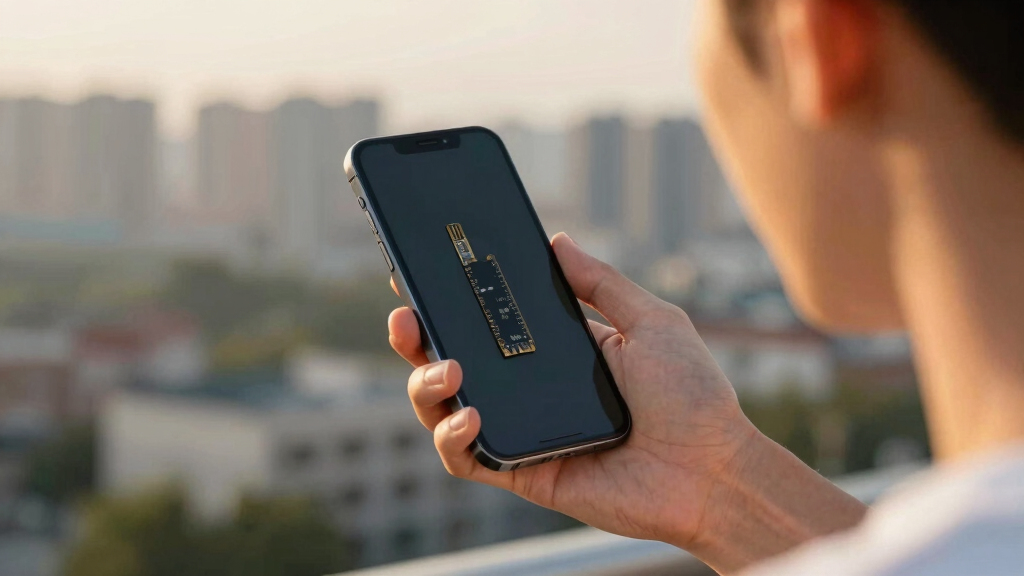
Apple is actively lobbying Washington to approve the purchase of memory chips from Chinese manufacturer CXMT, a move that underscores the company’s efforts to navigate US export restrictions. This development comes shortly after Apple raised prices on Macs and iPads, citing a global memory shortage, and highlights the company’s reliance on a Chinese supplier on the Pentagon’s blacklist.
According to sources familiar with the matter, Apple’s lobbying aims to gain approval for importing chips from CXMT, a Chinese company on the US Pentagon’s blacklist. The move would allow Apple to mitigate supply chain issues and control costs amid rising memory prices, which have increased roughly fourfold over the past three quarters.
In contrast, Europe lacks the capacity or political leverage to pursue similar options. The EU manufactures less than 10 percent of the world’s semiconductors by value, with no significant domestic memory manufacturers. The few remaining DRAM producers—Samsung, SK Hynix, Micron—are based in Asia or the US, making Europe heavily dependent on imports and vulnerable to supply disruptions.
Apple is reaching for Chinese memory. Europe doesn’t even have that option.
The shortage exposes America’s dependence — and Europe’s far more brutally. Apple has a domestic supplier, political weight, and the China option. Europe has no memory of its own, no seat at the table, no leverage on what counts.
- EU makes < 10% of the world’s semiconductors
- Effectively no DRAM, no HBM from Europe
- 3–4 memory makers worldwide — none European
- Pure price-taker: memory ~4× in 3 quarters
- ASML: EUV monopoly — no leading-edge chip without it
- Zeiss: precision optics, unrivalled worldwide
- imec · CEA-Leti · Fraunhofer: world-class research
- Infineon, NXP, STMicro: automotive · power · SiC
The shortage is a sovereignty test — Europe fails on supply but still holds the leverage in its hand. If even Apple can’t buy its way out, Europe’s answer isn’t to buy its way in, but to run two tracks: press the unique chokepoints as real leverage — and cut dependence wherever it can without Brussels: local-first, open weights, quantization, right-sized hardware. Bury the 20% dream, defend what’s yours, need less.
Implications of Europe’s Lack of Memory Manufacturing
This situation exposes Europe’s strategic vulnerability in the global semiconductor supply chain. Without domestic memory production or leverage to influence supply, Europe remains a price-taker, paying higher costs and risking shortages. Apple’s move reveals how dependence on external suppliers can impact even the most financially robust companies, emphasizing the need for strategic resilience in Europe’s tech industry.
Chinese memory chips for computers
As an affiliate, we earn on qualifying purchases.
As an affiliate, we earn on qualifying purchases.
Europe’s Semiconductor Industry and Strategic Dependencies
Europe accounts for less than 10 percent of global semiconductor manufacturing by value, with almost no presence in memory chip production. The number of meaningful DRAM makers has shrunk from over twenty in the 1990s to only a handful today, none of which are European. High-performance memory like HBM is almost entirely produced outside Europe, with fabrication in East Asia and design in the US. The EU’s efforts to boost local capacity have faced delays and funding shortfalls, making autarky unfeasible in the near term.
Meanwhile, key European players like ASML dominate critical upstream manufacturing processes, such as EUV lithography, which are indispensable for advanced chip production. However, the continent’s inability to produce its own memory chips leaves it vulnerable to external shocks and supply chain disruptions.
“Europe’s semiconductor industry remains heavily dependent on external sources, and we are aware of the risks this entails.”
— European Commission official (anonymous)
As an affiliate, we earn on qualifying purchases.
Unclear Impact of Apple’s Chinese Memory Strategy
It is not yet clear whether Washington will approve Apple’s lobbying efforts, or how this move will influence global supply chains long-term. The extent to which Europe can develop independent memory manufacturing remains uncertain, given current technological and political constraints.
high-performance RAM for gaming PCs
As an affiliate, we earn on qualifying purchases.
As an affiliate, we earn on qualifying purchases.
Next Steps in US-Apple-China Memory Negotiations
Apple will likely continue lobbying efforts to secure US approval for importing Chinese chips. Meanwhile, Europe’s policymakers face increasing pressure to address supply chain vulnerabilities, potentially accelerating investments in local capacity or strategic chokepoints like ASML. Monitoring developments in US-China trade relations and EU funding initiatives will be crucial in the coming months.
As an affiliate, we earn on qualifying purchases.
Key Questions
Why is Apple seeking Chinese memory chips?
Apple is lobbying to buy chips from CXMT to mitigate supply shortages and rising memory prices, especially amid US export restrictions on Chinese firms.
What does Europe lack that makes it vulnerable?
Europe has almost no domestic memory chip manufacturing capacity, making it dependent on imports from Asia and the US, and vulnerable to supply disruptions and price increases.
Could Europe develop its own memory industry?
While technically possible, building a competitive memory industry would require decades and hundreds of billions of euros, and current efforts face significant delays and funding shortfalls.
What are Europe’s strategic advantages?
Europe controls key upstream manufacturing chokepoints like ASML’s EUV lithography machines and has strong research institutions, which could underpin a strategy of indispensability rather than autarky.
What are the implications for the global supply chain?
Apple’s move highlights the fragility of global memory supply chains and the risks for companies and countries dependent on external sources, especially as US-China tensions escalate.
Source: ThorstenMeyerAI.com
Fall Picks
fall essentials
As an affiliate, we earn on qualifying purchases.