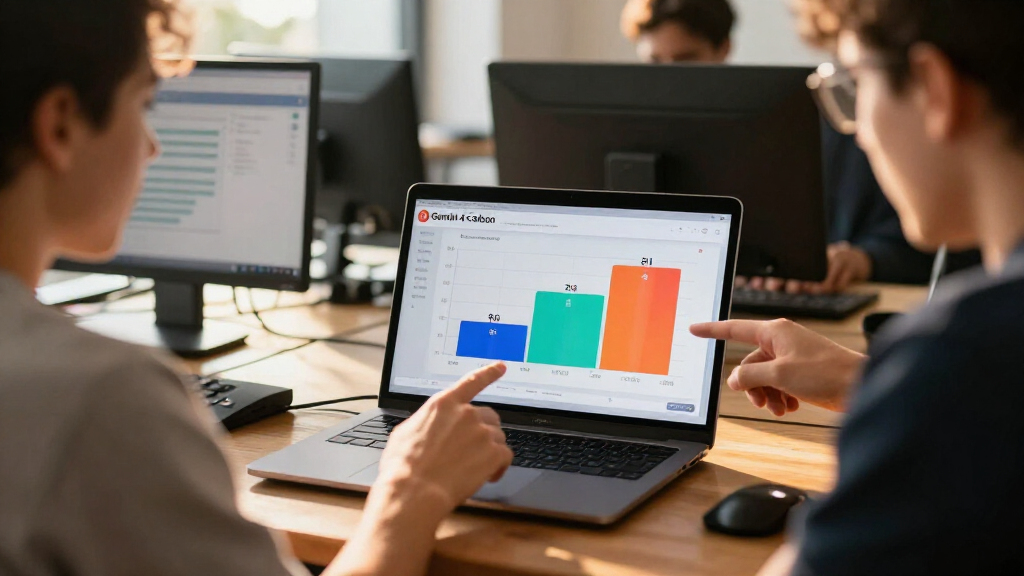

🔍 Read the full analysis: Gemini 4 Carbon Climbs To #1 In The AI Ranking By A Single Point on ThorstenMeyerAI.com

Get business pricing on office and shipping supplies
- Business-only prices and quantity discounts
- Tax-exempt purchasing
- Multiple users, one account, clear invoices
TL;DR
Gemini 4 Carbon scores 59 on Artificial Analysis’ Intelligence Index v5, one point ahead of Claude Opus 5.5 and two ahead of GPT-6 Astra. It places first on four of nine tests, but the ranking reflects a specific benchmark mix, and Carbon is not yet publicly available.
Google’s Gemini 4 Carbon has taken first place on the Artificial Analysis Intelligence Index v5 with 59 points, one point ahead of Claude Opus 5.5 and two ahead of GPT-6 Astra. The result makes Carbon the top-scoring model on this nine-test index, but does not establish it as the best model for every task—and Google has not opened it to the public.
The index assigns Carbon a score of 59, compared with 58 for Claude Opus 5.5 at its maximum reasoning setting and 57 for GPT-6 Astra at maximum. Gemini 4 Argon, Google’s previous model in the comparison, scores 50. Artificial Analysis launched version 5 on October 27; the source report says Carbon moved into first place the following day.
Carbon ranks first on four of the nine tests: HLE-Diamond, Terminal-Bench-Science, AA-Omniscience and AutomationBench-AA. Its reported results include 69% on HLE-Diamond, against 68% for Claude Opus 5.5, and 65% on Terminal-Bench-Science, against 63% for GPT-6 Astra. The report says Carbon also edges its predecessor on the business-workflow test.
It does not lead across the board. Claude models score higher on office-style knowledge work, Claude Opus 5.5 leads the cited real-world coding test, GPT-6 Astra leads on a physics research benchmark, Kimi K3.1 Pro leads on terminal tasks, and Meta’s Muse Wonder Full leads on document reasoning. The index’s overall score combines results across different kinds of work, so its winner depends on the chosen tests and their weights.
Infographic 01 · What the #1 is made of
Number one overall. First in four of nine tests.
The Intelligence Index is a decathlon score: nine tests, one number. Carbon wins on reasoning, science and careful knowledge, and trails on office work and coding.
The nine tests behind the score
Carbon at its highest setting (high) against the best model on each test.
| Test | Weight | Carbon | Leader or runner-up |
|---|---|---|---|
| HLE-Diamond Hard reasoning + knowledge questions | Weight 10% | Carbon 69% | Carbon leads Next: Claude Opus 5.5, 68% |
| Terminal-Bench-Science Science research work in a terminal | Weight 15% | Carbon 65% | Carbon leads Next: GPT-6 Astra, 63% |
| AA-Omniscience v1.1 Knowledge, wrong answers penalized | Weight 15% | Carbon 54 | Carbon leads Next: Claude Opus 5.5, 48 |
| AutomationBench-AA Business workflows across apps | Weight 5% | Carbon 78% | Carbon leads Next: Gemini 4 Argon, 78% |
| AA-Briefcase Office-style knowledge work | Weight 15% | Carbon 1,609 Elo | Behind Claude Sonnet 5.5, 1,812 |
| FrontierCode 2.0 Code a maintainer would merge | Weight 15% | Carbon 41% | Behind Claude Opus 5.5, 46% |
| CritPt v2 (hard) Research-level physics | Weight 10% | Carbon 63% | Behind GPT-6 Astra, 71% |
| Terminal-Bench 4.0 Agentic terminal tasks | Weight 10% | Carbon 65% | Behind Kimi K3.1 Pro, 67% |
| GDP.pdf Reasoning over documents | Weight 5% | Carbon 28% | Behind Muse Wonder Full, 33% |
The surprise in the knowledge test
- Accuracy: Claude Fable 5.1 68%, Claude Opus 5.5 66%, GPT-6.1 Sol and GPT-6 Astra 62%, Carbon 58%
- Hallucination rate: Carbon 11%, Claude Opus 5.5 and GPT-6 Astra about 50%
- Carbon wins because it rarely bluffs, not because it knows the most
Read the weights
- Each of the four blocks counts 25%: knowledge work, coding, science, general
- Carbon trails in two of the four heaviest tests (15% each): office-style work and real-world code
- Hallucination rate = wrong answers among all questions not answered correctly
Source: Artificial Analysis, 28 Oct 2026; Index v5 announcement, 27 Oct 2026; Artificial Analysis model data, retrieved 29 Oct 2026. Scores rounded as in the article; Carbon tested at high, other models at their highest tested setting.
Powered by Thorsten Meyer AI
A Narrow Lead Across Different Tasks
For companies comparing models, the one-point gap is a reason to inspect task-level results rather than treat the overall ranking as a procurement decision. The index gives equal weight to four broad areas, but individual tests have different weights within those areas. A business focused on coding or document analysis may care more about a test Carbon does not lead than about its aggregate score.
Cost also changes the comparison. Artificial Analysis lists an estimated $7.76 per index task for Carbon at standard prices. The source report compares that with $10.04 for Claude Opus 5.5 at maximum reasoning, $6.24 for GPT-6 Astra at maximum, and $1.27 for GPT-6.1 Sol at maximum. Those are benchmark-task estimates, not a universal price for a company’s own workload; actual spending depends on usage and task design.
The result also has little immediate effect on ordinary users: Carbon is not publicly available. Google’s reported rollout begins with a subset of cyber defenders, then trusted partners, followed by developers, businesses and consumers. No dates are provided for those stages, so the ranking does not mean users can switch to the model now.
Products Worth Considering

Apple MacBook Pro (14.2-inch, 2025) – M5 chip, 16GB Unified Memory, 1TB SSD, Space Black

HP Sprocket Photo Booth Machine Instant Color Photo Printer with 10.1 Touchscreen, LED Ring Light, 250+ Frames, 3×4 ZINK Paper, QR Code Shar
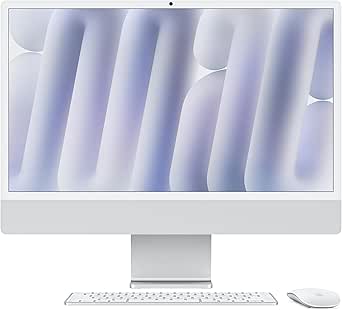
Apple iMac 2024 All-in-One Desktop with M4 Chip, 24‑inch Retina Display, 16GB Unified Memory, 256GB SSD, Silver
As an affiliate, we earn on qualifying purchases.
How Version Five Scores Models
Artificial Analysis describes the Intelligence Index as a combined score from nine tests, grouped into four equally weighted blocks: knowledge work, coding, science and general ability. The source lists AA-Briefcase, AutomationBench-AA and GDP.pdf under knowledge work; FrontierCode 2.0 and Terminal-Bench 4.0 under coding; Terminal-Bench-Science and CritPt v2’s hard subset under science; and AA-Omniscience v1.1 and HLE-Diamond under general ability.
The tests include longer agent-style assignments, such as working in a terminal, preparing reports and changing code. According to the source report, 60% of version 5 uses private test sets or held-out answers, a design intended to reduce the chance that models have memorized test questions. These features make the score a measure of performance on this particular test suite, not a complete measure of general intelligence or usefulness in every setting.
One result illustrates how scoring rules affect rankings. Carbon scores 58% on plain accuracy in AA-Omniscience, below several named models, including Claude Fable 5.1 at 68% and Claude Opus 5.5 at 66%. Yet Carbon leads the test’s reported score with 54 points because the test penalizes incorrect answers and rewards restraint. Artificial Analysis reports an 11% hallucination rate for Carbon on this measure, compared with about 50% for Claude Opus 5.5 and GPT-6 Astra. Those figures describe the benchmark’s metric, not a guarantee about errors in other uses.
“”a subset of cyber defenders””
— Google, in the rollout wording reported by ThorstenMeyerAI.com
Access Dates and Benchmark Limits
The source does not provide a public release date, the size of the initial cyber-defender group, or a schedule for later access. It also does not give full detail on Carbon’s performance across every underlying test in the supplied material; the available account lists several areas where it loses but ends before completing its coding comparison.
The ranking is specific to version 5’s tests, weights and model settings. Different benchmarks or settings could produce a different order. The source also reports introductory API prices of $2 per million input tokens and $10 per million output tokens, later rising to $4 and $20 respectively, but does not specify when those price stages begin or how broadly they apply.
The supplied source contains an incomplete sentence about Google’s coding results and no direct comments from Google or the competing model developers beyond the reported rollout wording. Those details should not be inferred from the partial text.
Google’s Staged Release Ahead
Google’s reported plan is to provide Carbon first to a subset of cyber defenders, then to trusted partners, and later to developers, businesses and consumers. The company has not announced dates for those stages in the source material. Until access expands, users and organizations cannot independently test the model through general public availability.
For buyers, the next useful step is to compare models on representative work and calculate cost per completed task, rather than relying on the index position alone. For readers tracking the ranking, further updates to the benchmark, new task-level results and Google’s access announcements will show whether the one-point lead persists and when Carbon becomes available.
Key Questions
What score did Gemini 4 Carbon receive?
It scored 59 on the Artificial Analysis Intelligence Index v5, one point ahead of Claude Opus 5.5 at 58 and two ahead of GPT-6 Astra at 57.
Does the ranking show that Carbon is best at every task?
No. The source says Carbon ranks first on four of nine tests and trails competitors in areas including office-style knowledge work, coding, physics research, terminal tasks and document reasoning.
Can the public use Gemini 4 Carbon now?
Not according to the source report. Google is reported to be starting with a subset of cyber defenders, then expanding to trusted partners and other groups. No public release date is given.
How much does Carbon cost to run?
Artificial Analysis estimates $7.76 per index task at standard prices. The source also lists introductory API pricing of $2 per million input tokens and $10 per million output tokens, later changing to $4 and $20; timing and scope are not specified.
Why does Carbon lead the Omniscience test if it does not have the highest accuracy?
The test penalizes wrong answers, so abstaining can help. The source reports Carbon at 58% accuracy and an 11% hallucination rate on the metric, while several models have higher accuracy but also higher reported hallucination rates.
Source: ThorstenMeyerAI.com