
📊 Full opportunity report: How AI And CCTV Integration Enhances Near-Miss Detection Capabilities on IdeaNavigator AI — validation score, market gap, and execution plan.

Get business pricing on office and shipping supplies
- Business-only prices and quantity discounts
- Tax-exempt purchasing
- Multiple users, one account, clear invoices
TL;DR
AI systems integrated with existing warehouse CCTV cameras now effectively identify near-misses, such as forklift-pedestrian proximity and rack contact. This development aims to improve safety management and reduce insurance costs. Validation is underway with pilot testing in multiple warehouses.
AI-powered near-miss detection systems integrated with existing CCTV cameras are currently being tested in warehouses to improve safety monitoring. This development offers warehouse safety managers a new tool to identify and address safety hazards more efficiently, potentially reducing injuries and insurance costs.
Warehouse safety managers face the challenge of reviewing hundreds of hours of CCTV footage daily, often missing critical near-misses such as forklift-pedestrian proximity, blind-corner conflicts, and rack contact incidents. Recent advances in computer vision models now enable real-time classification of these unsafe events using commodity CCTV feeds, which previously lacked such capabilities.
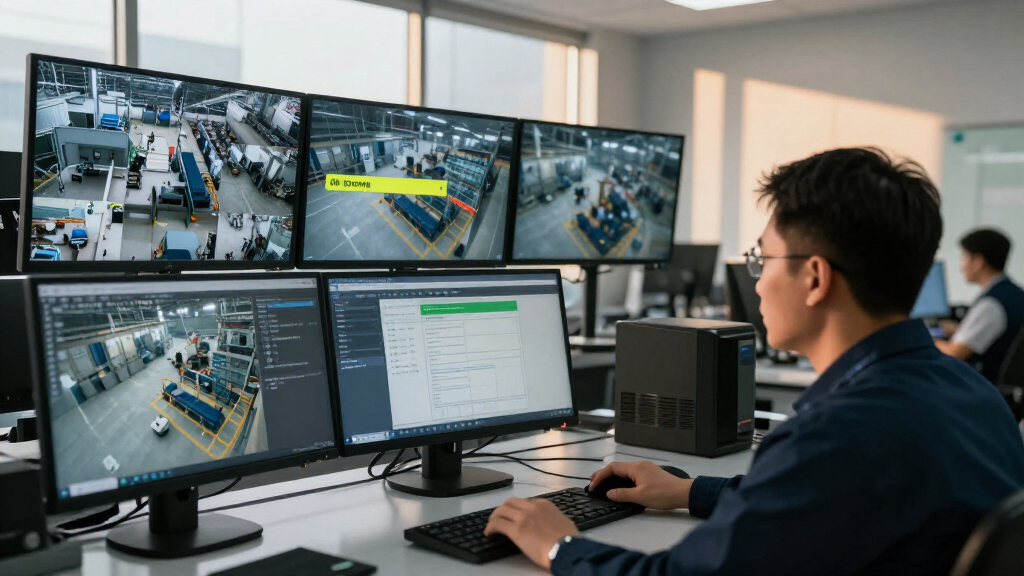
The new system, developed by IdeaNavigator AI, ingests existing RTSP camera streams, automatically flags unsafe proximity and speed violations, and compiles weekly summaries with video clips for safety reviews. This approach is designed as a low-cost, scalable solution that can be deployed across multiple facilities.
Initial testing involves processing archived footage from three mid-market warehouses to assess the system’s accuracy and usability. Safety managers will review the near-miss reels and evaluate the willingness to adopt this technology based on potential reductions in incident rates and insurance premiums.
Enhanced Safety Monitoring and Insurance Cost Reduction
This integration of AI and CCTV technology could transform warehouse safety management by enabling continuous, automated monitoring of unsafe behaviors. By capturing near-misses that often go unreported, companies can proactively address hazards, potentially preventing injuries and reducing insurance claims. Additionally, documented safety improvements may lead to lower insurance premiums, offering a financial incentive for adoption.
CCTV surveillance cameras for warehouses
As an affiliate, we earn on qualifying purchases.
As an affiliate, we earn on qualifying purchases.
Growing Use of AI in Industrial Safety Applications
While warehouses generate extensive CCTV footage, traditional review methods are labor-intensive and often ineffective at capturing all safety-critical incidents. Recent developments in computer vision have made it feasible to automate these reviews, focusing on specific unsafe behaviors like forklift proximity and speed violations. The push for more proactive safety measures is driven by insurers rewarding documented safety programs and by regulatory pressures to reduce workplace accidents.
Previous efforts have focused on manual incident reporting; however, recent AI advancements promise to shift toward continuous, automated safety monitoring. Pilot projects like this reflect a broader trend toward integrating AI into industrial safety workflows.
“The ability to automatically identify near-misses using existing CCTV feeds represents a significant step forward for warehouse safety.”
— an anonymous researcher
AI-powered safety monitoring systems
As an affiliate, we earn on qualifying purchases.
As an affiliate, we earn on qualifying purchases.
Uncertainties Around System Accuracy and Adoption
It is still unclear how accurately the AI system will perform across different warehouse environments and camera setups. The effectiveness of the detection algorithms in complex or cluttered scenes remains to be validated through ongoing pilot tests. Additionally, the willingness of safety managers to adopt and rely on this technology depends on demonstrated reliability and integration ease, which are still being assessed.
warehouse near-miss detection cameras
As an affiliate, we earn on qualifying purchases.
As an affiliate, we earn on qualifying purchases.
Next Steps Include Broader Testing and Validation
Following initial pilot testing, the system will undergo broader deployment across more warehouses to evaluate scalability and accuracy. Data collected from these trials will inform improvements in detection algorithms and user interface. Success metrics include reduction in near-miss incidents, user satisfaction, and potential insurance premium reductions. Results from these pilots will determine whether the technology moves toward commercial rollout.
As an affiliate, we earn on qualifying purchases.
Key Questions
How does the AI system detect near-misses in warehouses?
The system uses computer vision models to analyze existing CCTV camera feeds, identifying unsafe proximity between forklifts and pedestrians, blind-corner conflicts, rack contact, and speed violations, then flags these events automatically.
What are the main benefits of integrating AI with warehouse CCTV?
Benefits include continuous safety monitoring, early hazard detection, comprehensive near-miss documentation, and potential reductions in injuries and insurance costs.
Are there limitations to current AI detection capabilities?
Yes, the accuracy may vary depending on scene complexity, camera quality, and environmental factors. Validation is ongoing to address these uncertainties.
When might this technology become widely available?
If pilot tests are successful, broader deployment could occur within the next year, with commercial offerings expanding as algorithms are refined.
How does this impact warehouse safety management practices?
It shifts safety monitoring from manual review to automated, real-time detection, enabling proactive hazard mitigation and better safety culture.
Source: IdeaNavigator AI
Halloween Picks
halloween
As an affiliate, we earn on qualifying purchases.