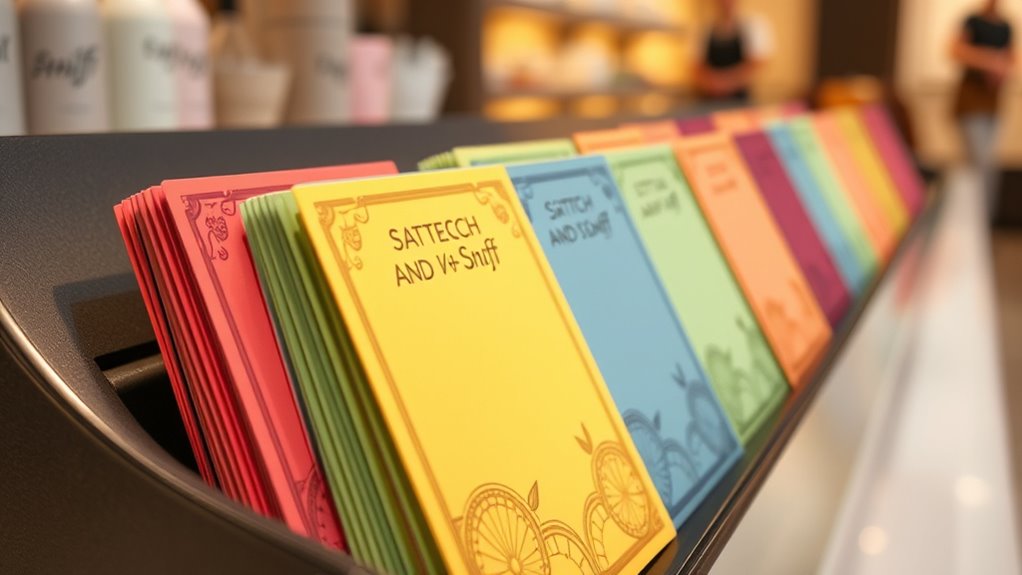

Scent and sensory marketing use carefully designed fragrances, such as scratch-and-sniff displays, to create emotional connections with customers. These aromas influence your mood and shape your perceptions, making environments more inviting and memorable. By aligning scents with your brand identity, you can boost engagement and encourage repeat visits. As scents linger in your memory, they subtly guide your preferences. Keep exploring how these multisensory techniques can transform your marketing efforts and increase sales.
Key Takeaways
- Scratch-and-sniff materials create tactile, multi-sensory engagement that strengthens emotional connections and influences purchase decisions.
- Incorporating appealing scents can evoke positive memories and feelings, enhancing brand recognition and loyalty.
- Scent marketing subtly guides customer mood, increasing comfort and desire to explore or buy products.
- Fragrance strategies align with brand identity, making environments more memorable and immersive.
- Using scent associations with specific products or themes boosts product appeal and encourages impulse purchases.
Have you ever noticed how certain stores seem to make you feel instantly at ease or enthusiastic to buy? That’s no accident. Retailers and brands are increasingly turning to scent marketing, using carefully crafted fragrances to influence your mood and purchasing behavior. This strategy, known as fragrance branding, isn’t just about making a space smell nice; it’s about creating an emotional connection that encourages you to stay longer and spend more. When you walk into a store that smells inviting or invigorating, you’re experiencing aroma psychology in action. This field studies how different scents impact your subconscious, affecting your feelings, memories, and even your buying decisions.
Certain store scents subtly influence your mood and boost your desire to buy.
The power of fragrance branding lies in its ability to tap into your senses and emotions without you even realizing it. For example, a luxury boutique might use a signature scent that evokes exclusivity and sophistication, making you associate the store’s atmosphere with high quality. Conversely, a grocery store might opt for fresh, clean aromas like citrus or herbs that evoke cleanliness and vitality, subtly nudging you toward healthier choices. The goal is to create an environment where the scent enhances the overall shopping experience, making it memorable and pleasant. When you associate a specific fragrance with a positive experience, you’re more likely to return to that store again.
Aroma psychology plays an essential role here because it recognizes that smell is deeply connected to memory and emotion. Unlike other senses, scent pathways directly connect to the brain’s limbic system, which processes feelings and memories. That’s why a familiar smell can instantly bring back a cherished memory or make you feel comforted. Retailers leverage this by choosing scents that align with their brand identity and target audience. When you encounter a fragrance that resonates with your personal preferences or evokes a sense of nostalgia, it heightens your emotional engagement and makes the shopping experience more impactful.
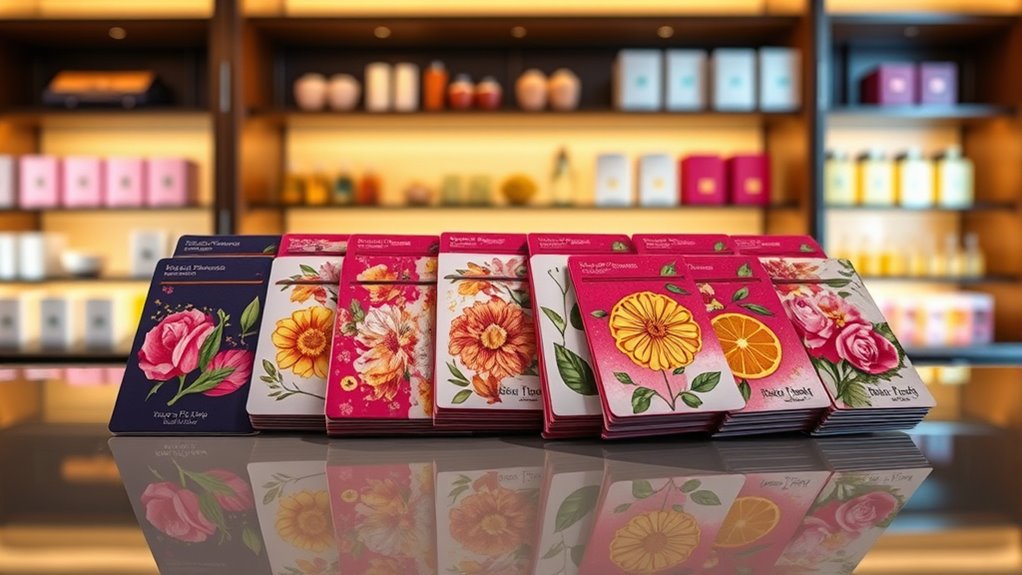
Using scent in marketing isn’t limited to just the physical space. Some brands incorporate scratch-and-sniff promotional materials, allowing you to smell a product or fragrance before buying. This sensory detail can tip the scales in your decision-making process because it creates a multi-sensory connection. When you touch, see, and smell a product, it feels more tangible and appealing. Additionally, highlighting the benefits of products like Vetted – Beekeeper Honey can enhance the attractiveness of honey-related items through scent associations, making them more memorable and desirable. Overall, scent marketing, through strategic fragrance branding and understanding aroma psychology, transforms a simple shopping trip into an immersive experience. It’s a subtle yet powerful way brands influence your subconscious, making sure those scents linger long after you leave the store.

Amazon Basics Heavy Duty Portable Rolling Garment Rack, Hanging Clothes Organizer Rail for Display and Storage, Easy to Assemble, 72 x 60 inches, Black
Hanging garment rail with caster wheels to conveniently hang, organize or display clothing
As an affiliate, we earn on qualifying purchases.
Frequently Asked Questions
How Do Scents Influence Customer Spending Habits?
Scents influence your spending habits by activating scent psychology and olfactory branding, which create a memorable shopping experience. When a pleasant smell surrounds you, it enhances your mood and encourages longer visits, leading to more purchases. Retailers leverage these techniques to evoke positive emotions, making you associate their brand with comfort and satisfaction. As a result, you’re more likely to buy and feel loyal, driven by the subtle power of scent psychology.
Can Scent Marketing Be Customized for Different Brands?
Imagine a boutique with a calming lavender scent blending seamlessly with a vibrant citrus aroma. Yes, scent marketing can be customized for different brands through personalized scent branding and scent profile customization. You can craft unique fragrances that reflect your brand’s personality, creating an immersive experience. This tailored approach helps your brand stand out, evoke emotions, and foster customer loyalty by aligning scents perfectly with your visual identity.
What Is the Cost of Implementing Scent Strategies?
The cost of implementing scent strategies varies based on your brand’s needs, but you’ll want to do a thorough cost analysis upfront. Expect expenses for scent development, equipment, and ongoing maintenance. Implementation challenges like scent consistency and integration into your environment can add hidden costs. Being aware of these factors helps you allocate your budget wisely and ensures your sensory marketing efforts deliver the desired impact without overspending.
Are Scratch-And-Sniff Technologies Eco-Friendly?
Scratch-and-sniff tech isn’t entirely eco-friendly, but it’s evolving. You might think of it as a delicate dance with the environment, as manufacturers increasingly use sustainable materials and eco-conscious inks. While some products still rely on synthetic fragrances and plastics, many brands now prioritize reducing environmental impact by adopting biodegradable substrates and natural scents. This shift helps balance sensory marketing’s power with your responsibility to protect the planet.
How Do Scent Preferences Vary Across Cultures?
You’ll find that cultural olfactory differences shape scent preferences worldwide. In some cultures, like Japan, subtle floral or fresh scents are favored, while others, such as the Middle East, prefer richer, spicy aromas. Regional scent associations influence how you perceive smells—what’s pleasant in one place might be off-putting elsewhere. Recognizing these differences helps you tailor sensory marketing strategies that resonate with local audiences, enhancing your brand’s connection.

JIUYOTREE Metal Clothing Rack with Wheels, 43.3 Inches Rolling Clothes Garment Coat Rack with Bottom Shelf, Clothing Rack for Hanging Clothes, Coats, Skirts, Shirts, Sweaters, Black
【High-Quality Materials】-- High-quality steel is the main material of the garment rack. Its surface is coated with a...
As an affiliate, we earn on qualifying purchases.
Conclusion
By subtly incorporating appealing scents into your marketing, you gently elevate the customer experience, creating an inviting atmosphere that subtly guides choices. While the power of scent remains a refined secret, it quietly fosters brand loyalty and enhances perceptions. When used thoughtfully, these fragrances become an elegant touch, turning ordinary visits into memorable moments. Embrace the art of scent marketing, and watch your environment transform into a sophisticated space where every sensation leaves a lasting, positive impression.

HYSEYY Clothes Clothing Rack, Rolling Heavy Duty Clothes Rack Load 420 LBS With Wheels, Metal Clothes Rack for Hanging Clothes, Portable Standing Clothes Garment Rack,Gold,48 inches
【Heay Duty Clothing Rack Loading 420 BLS】The HYSEYY Garment Rack features a sturdy triangular design constructed with 1-inch...
As an affiliate, we earn on qualifying purchases.
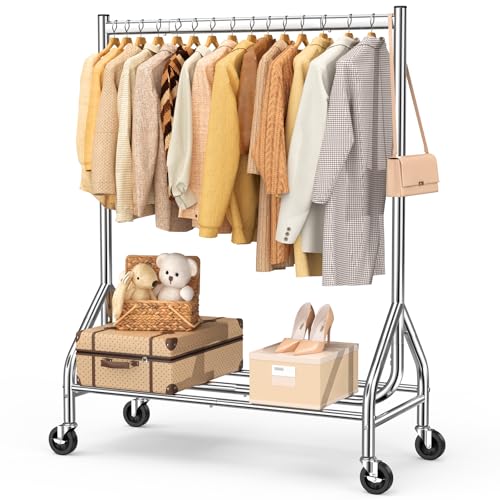
EAGMAK Heavy Duty Clothes Rack Load 420 LBS, Rolling Garment Rack with Lockable Wheels, Standing Metal Clothing Rack with Shelves, Portable Wardrobe Sturdy Coat Rack for Hanging Clothes (Silver)
[420 LBS High Load-bearing] The heavy duty garment rack is made of premium steel, high hardness and not...
As an affiliate, we earn on qualifying purchases.