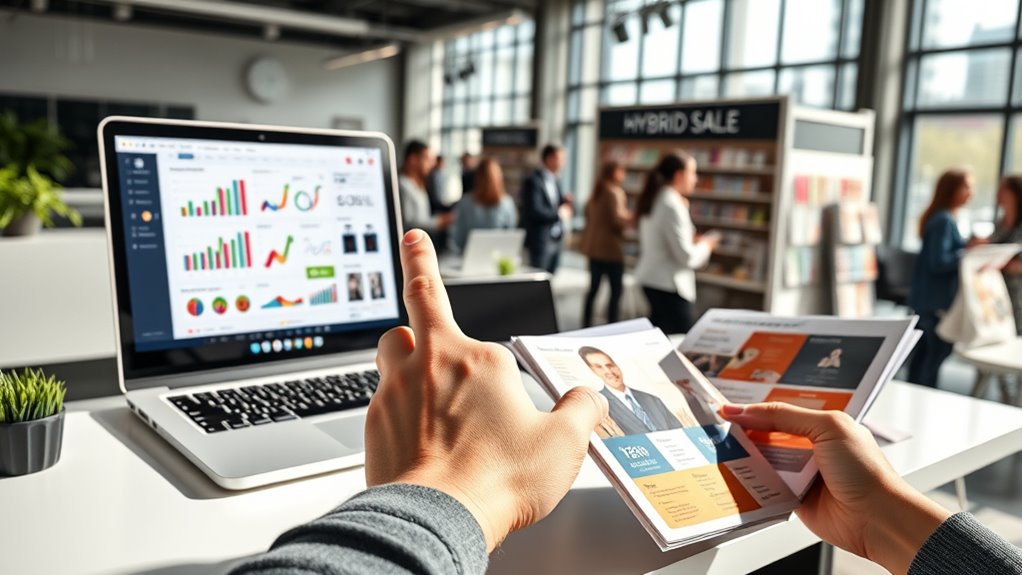

To achieve a successful balance between online marketing and in-person selling, you need to create a seamless customer experience across all touchpoints. Use online channels to attract prospects and build brand awareness, then invite them into your physical location for personalized interactions. Ensuring consistency in branding and messaging helps reinforce loyalty. If you want to discover how to integrate these strategies effectively and foster stronger customer relationships, keep exploring this hybrid approach.
Key Takeaways
- Integrate digital campaigns with in-store experiences to create a seamless and consistent brand journey.
- Use online data insights to personalize and enhance face-to-face customer interactions.
- Maintain brand consistency across digital channels and physical locations to build trust and recognition.
- Leverage digital platforms to attract prospects and invite them into in-person spaces for deeper engagement.
- Collect customer feedback through both online and in-person touchpoints to refine strategies and strengthen loyalty.
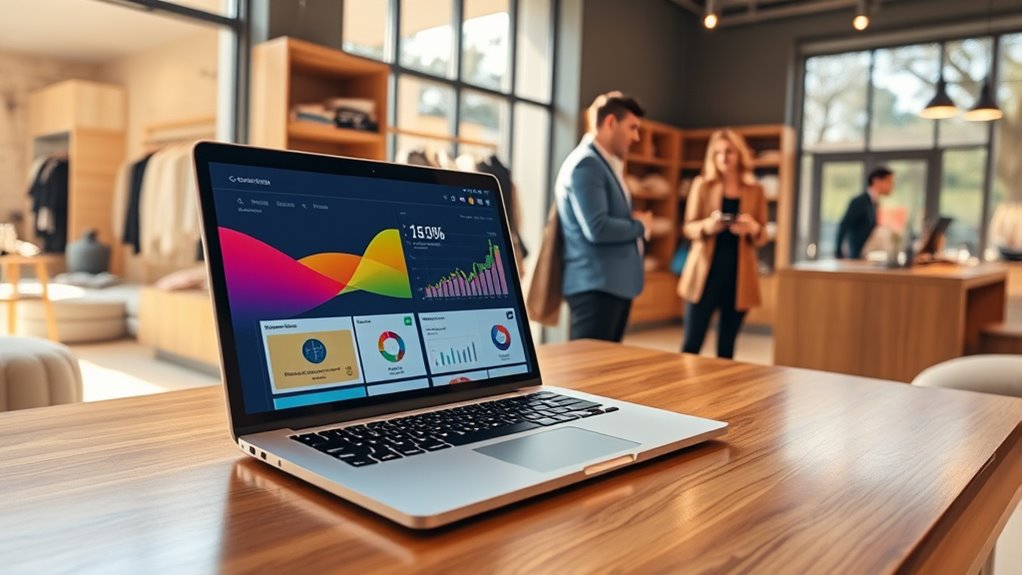
In today’s competitive market, combining online marketing with in-person selling offers a powerful strategy to reach more customers and boost sales. By integrating these approaches, you create a seamless experience that amplifies your brand’s presence and fosters stronger customer relationships. Digital branding plays an essential role here, allowing you to establish a consistent, recognizable identity across all platforms. When your online messaging aligns with your in-person interactions, you reinforce your brand’s values, making it easier for customers to connect with you. The moment someone encounters your digital branding—through social media, your website, or email campaigns—they develop familiarity and trust, which enhances overall customer engagement. That engagement is key because it transforms casual visitors into loyal clients who feel emotionally connected to your business.
Blending online marketing with in-person selling isn’t just about visibility; it’s about creating a cohesive narrative that resonates on every touchpoint. For example, you can leverage digital marketing strategies like targeted ads and content marketing to attract prospects and then invite them into your physical store or event. When customers walk in, your in-person selling techniques—personalized service, expert advice, and friendly interactions—solidify their experience and deepen their engagement. This synergy allows you to gather valuable feedback directly from customers, using their insights to refine your digital branding and in-store approach. As a result, you’re not only increasing sales but also building meaningful relationships that keep customers coming back.
It’s important to remember that online marketing offers data-driven insights, enabling you to track customer behaviors and preferences. You can use this information to tailor your in-person interactions, making each encounter more relevant and impactful. Conversely, face-to-face interactions give you the chance to showcase the human side of your brand, which is often difficult to convey through digital channels alone. Combining these methods creates a balanced approach, where each complements the other. You extend your reach through online channels and deepen your connection through in-person experiences. This holistic strategy ensures your brand remains top-of-mind, whether customers are browsing online or visiting in your store.
Ultimately, a hybrid approach requires consistency and authenticity. When your digital branding reflects your in-store atmosphere and vice versa, you craft a unified identity that appeals to today’s consumers. They want to feel recognized and valued at every step, and by balancing online marketing with in-person selling, you meet this expectation. It’s this integration that transforms a simple transaction into a memorable experience, fostering long-term loyalty and sustained growth.

Amazon Signage Stick – Professional Digital Signage 4K Media Player – Designed for Businesses of All Sizes, Easy Setup with free Mobile App, and CMS Compatibility
Professional digital signage: The Amazon Signage Stick auto-launches your CMS in kiosk mode for seamless, unattended operation.
As an affiliate, we earn on qualifying purchases.
As an affiliate, we earn on qualifying purchases.
Frequently Asked Questions
How Do I Measure Success Across Both Online and In-Person Channels?
You measure success by tracking customer engagement and brand awareness across both channels. Use analytics tools to monitor online metrics like website visits, social media interactions, and conversion rates. For in-person selling, gather feedback, repeat customer rates, and sales data. Comparing these insights helps you see how your hybrid approach boosts brand awareness and customer loyalty, ensuring you’re effectively balancing online marketing with in-person efforts.
What Are Common Challenges in Implementing a Hybrid Marketing Strategy?
Like trying to navigate a ship through a storm, implementing a hybrid marketing strategy can be challenging. You often struggle with resource allocation, ensuring both online and in-person efforts get enough attention. Staff training becomes essential, as your team must adapt to new tools and techniques. Balancing these elements requires careful planning and ongoing adjustments, so your business can thrive in both digital and face-to-face interactions without sinking.
How Can Small Businesses Effectively Integrate Online and Offline Efforts?
To effectively integrate online and offline efforts, focus on building brand loyalty through consistent messaging across channels. Use your online platforms to promote local events and partnerships, encouraging in-person visits. You can also leverage local partnerships to create exclusive offers that drive foot traffic. By aligning your digital campaigns with community engagement, you foster stronger relationships with customers, making your hybrid approach seamless and more impactful.
What Tools Facilitate Seamless Customer Experience Between Digital and Physical Touchpoints?
You can use tools like virtual checkout systems to make online and in-store purchases seamless, allowing customers to buy easily across touchpoints. Loyalty programs that integrate both digital and physical interactions reward repeat business and foster engagement. These tools create a smooth customer experience by linking online browsing with in-person visits, making shopping more convenient and personalized. Embracing such technology helps you build stronger customer relationships and streamline your sales process.
How Does Customer Data Management Differ in Hybrid Marketing Approaches?
Think of customer data management as tending a garden; in hybrid marketing, you must carefully nurture both digital and physical seeds. You use customer segmentation to understand each plant’s unique needs, guaranteeing tailored experiences. At the same time, safeguarding data privacy is like fencing your garden—protecting it from intrusion. This approach ensures you cultivate trust and connection, blending insights from online and in-person interactions for a thriving, loyal customer ecosystem.
in-store customer feedback tablets
As an affiliate, we earn on qualifying purchases.
As an affiliate, we earn on qualifying purchases.
Conclusion
By blending online marketing with in-person selling, you create a powerful, well-rounded strategy. Think of it like a Venn diagram: online reaches broader audiences, while face-to-face builds trust and loyalty. Some might worry it’s too complicated, but imagine juggling—once you get the rhythm, it becomes second nature. This hybrid approach guarantees you’re engaging customers wherever they are, making your business more adaptable and resilient in today’s dynamic market.

Personalized: Customer Strategy in the Age of AI
As an affiliate, we earn on qualifying purchases.
As an affiliate, we earn on qualifying purchases.

Cimpress Custom Folded Leaflets, 8.5"x14", Pack of 50, Tri-Fold Business Brochures with Glossy 250gsm Paper, Double-Sided Printing, Bulk Corporate Marketing Materials for Promotions, Menus, Events
𝗣𝗿𝗼𝗳𝗲𝘀𝘀𝗶𝗼𝗻𝗮𝗹 𝗽𝗿𝗲𝘀𝗲𝗻𝘁𝗮𝘁𝗶𝗼𝗻 𝗺𝗮𝗱𝗲 𝗲𝗮𝘀𝘆: Create folded leaflets with your logo, text or design. Includes 6-panel layout for schedules,…
As an affiliate, we earn on qualifying purchases.
As an affiliate, we earn on qualifying purchases.