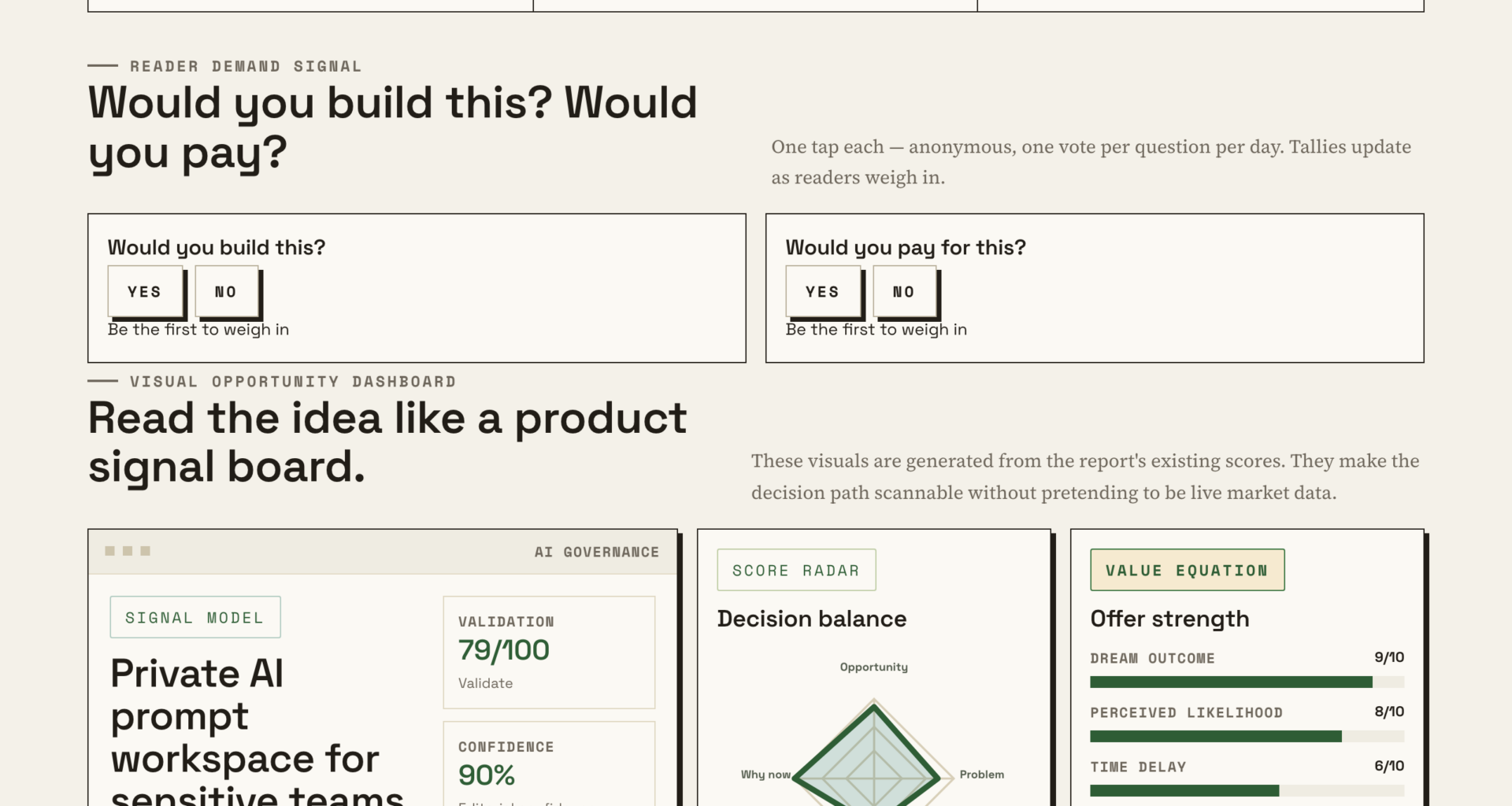

📊 Full opportunity report: Private AI Prompt Workspace For Sensitive Teams on IdeaNavigator AI — validation score, market gap, and execution plan.

Get business pricing on office and shipping supplies
- Business-only prices and quantity discounts
- Tax-exempt purchasing
- Multiple users, one account, clear invoices
TL;DR
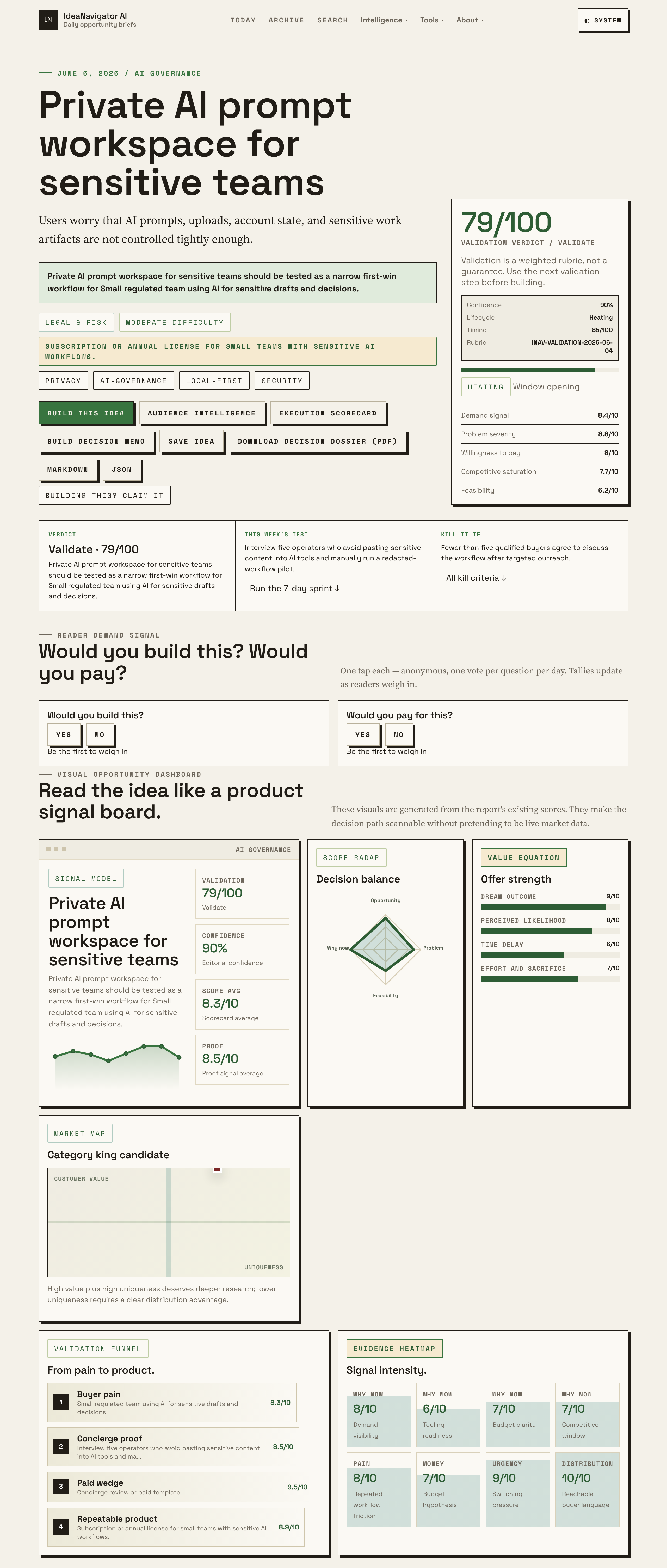
IdeaNavigator AI is testing a private prompt workspace tailored for small, regulated teams to securely manage sensitive AI drafts and decisions. The tool emphasizes local data control, redaction, and audit logs. Its success could influence AI governance practices for sensitive workflows.
IdeaNavigator AI is testing a new private prompt workspace designed specifically for small regulated teams to securely manage sensitive AI drafts and decisions. The tool aims to address concerns over data control, privacy, and auditability, which are increasingly critical as organizations adopt AI for sensitive workflows. This development could influence how regulated teams handle AI interactions in the future.
The new prompt workspace is intended for small teams in regulated industries that use AI for sensitive tasks, such as legal drafting, compliance reporting, or confidential decision-making. It features a local-first architecture, meaning data is stored and processed primarily on local devices rather than cloud servers, reducing exposure to external breaches.
Key features include redaction checklists, source notes, review statuses, and exportable audit logs. These tools are designed to help teams meet compliance standards and maintain control over sensitive information throughout the AI workflow. The MVP (minimum viable product) is currently being tested through a pilot involving five operators who avoid pasting sensitive content into public AI tools, opting instead for this controlled environment.
IdeaNavigator AI plans to monetize the solution via subscription or annual licensing targeted at small teams with strict data governance needs. The initiative aligns with broader trends in AI governance, emphasizing data privacy, security, and auditability in sensitive applications.
Implications for AI Governance in Sensitive Workflows
This development matters because it offers a potential solution for regulated organizations seeking to leverage AI without compromising on data privacy and compliance. As AI adoption grows in sensitive sectors, tools that provide local data control and auditability could become essential. If successful, this approach might set a new standard for secure AI workflows, especially for industries with strict regulatory requirements.
As an affiliate, we earn on qualifying purchases.
Growing Need for Data-Controlled AI Tools in Regulated Sectors
As organizations increasingly adopt AI for sensitive tasks, concerns over data leaks, privacy breaches, and compliance violations have intensified. Currently, many teams manually redact or anonymize data before inputting it into AI systems, which is inefficient and error-prone. The trend toward local-first architectures and audit-ready workflows reflects a broader push for better governance in AI use, especially in regulated industries such as legal, finance, and healthcare.
Previous efforts have focused on cloud-based solutions, but these often face resistance due to security concerns. The pilot from IdeaNavigator AI aims to demonstrate that local processing and controlled environments can address these issues effectively, providing a practical alternative for sensitive workflows.
“The ability to keep sensitive data within a controlled environment while still leveraging AI is a game-changer for regulated teams.”
— an anonymous researcher
privacy-focused AI data redaction tools
As an affiliate, we earn on qualifying purchases.
As an affiliate, we earn on qualifying purchases.
Uncertainties Around Adoption and Effectiveness
It is not yet clear how widely this private workspace will be adopted or whether it will meet all regulatory standards in practice. The pilot is still ongoing, and results from the five operators involved are not publicly available. Additionally, questions remain about integration with existing workflows and scalability beyond small teams.
audit log software for AI workflows
As an affiliate, we earn on qualifying purchases.
As an affiliate, we earn on qualifying purchases.
Next Steps for Validation and Broader Rollout
IdeaNavigator AI plans to evaluate pilot feedback over the coming months, refining features based on user experience. If the pilot proves successful, the company intends to expand testing to more teams and industries. Formal release and broader availability are expected once validation confirms the solution’s security, usability, and compliance effectiveness.
confidential AI decision management
As an affiliate, we earn on qualifying purchases.
As an affiliate, we earn on qualifying purchases.
Key Questions
How does the private prompt workspace differ from existing AI tools?
The workspace is designed to operate primarily on local devices with features like redaction checklists and audit logs, offering greater control over sensitive data compared to cloud-based AI tools.
Who is the target user for this tool?
Small regulated teams in industries such as legal, finance, or healthcare that handle sensitive information and require strict data governance.
Is this solution available for general use now?
Not yet. It is currently in pilot testing with a limited group of users, with broader rollout planned pending successful validation.
What are the main security features of the workspace?
Local data storage, redaction checklists, review statuses, and exportable audit logs designed to meet compliance and security standards.
Could this approach influence AI governance standards?
Yes, if proven effective, it could set a precedent for secure, audit-friendly AI workflows in regulated industries.
Source: IdeaNavigator AI
Halloween Picks
halloween
As an affiliate, we earn on qualifying purchases.