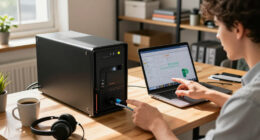
📊 Full opportunity report: The Connection Between SMB Endpoint Security And Remote Work Safety on IdeaNavigator AI — validation score, market gap, and execution plan.

Get business pricing on office and shipping supplies
- Business-only prices and quantity discounts
- Tax-exempt purchasing
- Multiple users, one account, clear invoices
TL;DR

A new lightweight device security checker for remote teams is being tested to address endpoint vulnerabilities on mixed hardware. It aims to help SMBs meet compliance standards without invasive management tools, enhancing remote work security.
A new lightweight device security checker for remote SMB teams with mixed hardware is in the testing phase, aiming to improve endpoint security and compliance verification without invasive management tools. This development addresses a critical gap for companies relying on personal devices for work, especially as regulatory and customer security requirements increase.
The device security checker, developed by an unnamed provider, is designed to be a voluntary, lightweight agent that employees install on their personal devices. It assesses key security parameters such as disk encryption, OS updates, screen lock status, and password manager presence. The tool reports pass/fail status to a centralized dashboard, offering self-remediation instructions without remote control capabilities.
This solution targets SMBs, where traditional Mobile Device Management (MDM) systems are often too invasive for employee-owned devices. It is intended as a first step to verify device posture for compliance with standards like SOC 2 and customer security reviews. The initial deployment involves ten remote startups, with the goal of measuring device enrollment rates and validating acceptance of reports by auditors.
Pricing is expected on a per-device monthly basis, with options for exporting compliance reports for audit purposes. The approach aims to fill a verification gap that has widened as remote work has become more prevalent and security concerns have intensified.
Implications for SMBs’ Remote Security Practices
This development matters because it addresses a growing security challenge for SMBs operating remotely: how to verify device security without invasive management tools. As companies face increasing regulatory scrutiny and customer expectations for security, having a reliable, low-intrusion method to verify endpoint security on employee-owned devices could improve compliance and reduce breach risks. It also aligns with a broader shift towards lightweight, user-friendly security solutions that respect employee privacy while maintaining security standards.
As an affiliate, we earn on qualifying purchases.
Rising Need for Endpoint Verification in Remote Teams
Remote work has expanded rapidly, with many SMBs relying on personal devices for daily operations. Traditional security management tools like MDM are often considered too invasive, especially for employee-owned hardware, creating a verification gap. Meanwhile, regulatory frameworks such as SOC 2 now require documented proof of endpoint security measures, including disk encryption, OS updates, and screen locks. This has increased demand for lightweight, user-initiated security checks that can be easily deployed and accepted by auditors.
Recent efforts have focused on developing solutions that balance security needs with employee privacy, but widespread adoption remains limited. The proposed device security checker aims to serve as a practical first step for SMBs to meet compliance requirements without the complexity of full MDM systems.
employee device security assessment tool
As an affiliate, we earn on qualifying purchases.
As an affiliate, we earn on qualifying purchases.
Uncertainties Around Adoption and Compliance Acceptance
It is not yet clear how widely this device security checker will be adopted by SMBs or whether auditors will accept its reports as sufficient evidence of compliance. The effectiveness of the tool in diverse device environments and its integration with existing security workflows are still under evaluation. Additionally, the long-term security implications of relying on voluntary, lightweight agents remain to be seen.
As an affiliate, we earn on qualifying purchases.
Next Steps for Deployment and Validation
The initial deployment at ten remote startups will provide data on device enrollment rates and audit acceptance. Success in these pilots could lead to broader adoption across SMBs facing similar compliance challenges. Future developments may include enhancing the agent’s capabilities, integrating with other security tools, and expanding reporting features to meet evolving regulatory standards.
remote work device compliance software
As an affiliate, we earn on qualifying purchases.
As an affiliate, we earn on qualifying purchases.
Key Questions
How does this device security checker work?
The tool is a voluntary, lightweight agent installed on employee devices that checks for disk encryption, OS updates, screen lock, and password manager presence. It reports pass/fail status to a dashboard for review and self-remediation instructions.
Will this replace traditional MDM solutions?
No, it is designed as a lightweight verification tool for SMBs that find MDM too invasive or complex for employee-owned devices. It complements existing security practices rather than replacing them.
Is this approach compliant with all regulatory standards?
It aims to support compliance with standards like SOC 2 by providing documented device posture reports. However, acceptance depends on individual auditor requirements and the specific security context of each organization.
What are the limitations of this security checker?
As a lightweight, voluntary tool, it does not provide remote control or enforce security policies. Its effectiveness depends on employee participation and accurate reporting, so it is not a comprehensive security solution.
When will this tool be available for general use?
The current deployment is in pilot testing. Broader availability will depend on pilot results and feedback from early adopters, with no specific timeline announced yet.
Source: IdeaNavigator AI
Halloween Picks
halloween
As an affiliate, we earn on qualifying purchases.