
📊 Full opportunity report: The Memory Squeeze: Why Your RAM Bill Doubled on ThorstenMeyerAI.com — validation score, market gap, and execution plan.
TL;DR
RAM prices have doubled in 2026, driven by a shift in chip manufacturing toward AI applications. Major suppliers prioritize high-margin products, causing shortages and price hikes for consumers. The supply crunch is unlikely to resolve soon.
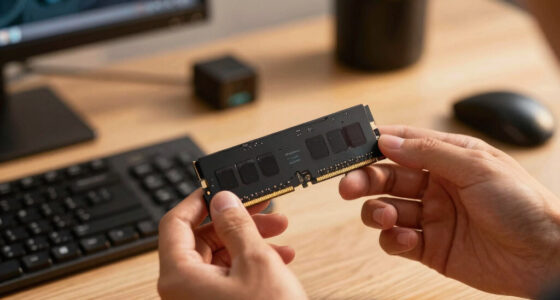
DRAM prices have approximately doubled in 2026, with consumer memory modules now costing three to six times their 2024–2025 lows. This surge is primarily due to a deliberate shift by chip manufacturers toward AI-related memory products, rather than a temporary supply disruption, according to industry sources.
Major producers — Samsung, SK Hynix, and Micron — are reallocating wafer capacity from standard consumer DDR5 memory to high-margin High Bandwidth Memory (HBM) used in AI accelerators. This reallocation has caused consumer RAM prices to spike sharply, with 32GB kits rising from about $80–$120 in 2025 to nearly $375 in June 2026, and 64GB kits exceeding $600.
The shift is driven by economic incentives: HBM modules sell for $60–$100 each, compared to $5–$10 for DDR5, making them far more profitable per wafer. This strategic move reflects the increasing importance of AI memory needs, which is discussed in industry trend analyses. However, HBM’s physical design is inefficient, consuming three to four times the wafer area of standard DDR5, effectively reducing overall consumer RAM supply despite unchanged wafer output. As a result, DRAM wafer output allocated to consumer modules has decreased, with AI memory now accounting for about 20% of total DRAM capacity in 2026.
Unlike past shortages, where increased capacity eventually flooded the market, this one is sustained by strategic choices. Supply growth remains below historical norms, new fabs are years away, and manufacturers are managing scarcity to maintain high margins. For more on the current chip supply situation, see industry trend reports. Major buyers, including hyperscalers, have placed open-ended orders, further constraining supply for consumers. Some companies, like Micron, have shifted focus entirely away from consumer memory, retiring their Crucial brand and reducing availability.
Why your RAM bill doubled
“Doubled” is the polite version — consumer DRAM is running 3–6× its 2024 lows. The boom-bust cycle that always brought cheap RAM back isn’t coming this time, because the factories that make your RAM now make something far more profitable instead.
HBM
This is the quiet tax on the whole AI era. Relief isn’t forecast before 2028, and even then prices may settle 30–50% above pre-crisis levels. Buy what you genuinely need now; don’t panic-buy capacity you won’t use. You can’t out-wait the fab math — but, as this series will show, you can shrink what you need. Next: HBM Ate the Fab.
Why the RAM Price Surge Has Long-Term Implications
This price increase affects a broad range of consumers and industries, from PC builders to enterprise AI deployments. With memory now constituting up to 35% of PC build costs, the surge raises overall hardware prices and could slow consumer upgrades. For manufacturers, prioritizing high-margin AI memory means a prolonged shortage for standard consumer RAM, potentially leading to supply chain disruptions and increased costs across the tech sector.
Moreover, the market’s structural shift toward AI-focused memory indicates a fundamental change in chip manufacturing priorities, making the previous cycle of shortages and gluts unlikely to recur. This could reshape the pricing landscape for years, with consequences for innovation, product availability, and competitive dynamics.

Crucial 32GB DDR5 RAM Kit (2x16GB), 5600MHz (or 5200MHz or 4800MHz) Laptop Memory 262-Pin SODIMM, Compatible with Intel Core and AMD Ryzen 7000, Black – CT2K16G56C46S5
Boosts System Performance: 32GB DDR5 RAM laptop memory kit (2x16GB) that operates at 5600MHz, 5200MHz, or 4800MHz to…
As an affiliate, we earn on qualifying purchases.
As an affiliate, we earn on qualifying purchases.
The 2026 Memory Market Shift Explained
Historically, RAM shortages were resolved through increased capacity, leading to price drops. However, in 2026, the dominant chipmakers — Samsung, SK Hynix, and Micron — are deliberately reallocating wafer capacity toward AI memory modules, which are more profitable but less efficient to produce. This strategic pivot is driven by the booming AI market, which demands high-bandwidth memory solutions like HBM. While this shift benefits the chipmakers’ margins, it constrains supply for consumer-grade RAM, causing prices to surge.
The industry also faces a long lead time for new capacity; fabs built today won’t produce significant volumes until 2027–2028. Meanwhile, existing supply is managed to sustain high margins, with hyperscalers and large OEMs placing large, long-term contracts, further limiting availability for the broader market. Past shortages that resulted in price drops are unlikely to recur because the current supply constraints are driven by strategic choices rather than temporary disruptions.
“Our focus has shifted toward enterprise AI markets, which are more profitable and strategically important.”
— Micron spokesperson

G.SKILL Trident Z5 Neo RGB Series DDR5 RAM (AMD Expo) 64GB (2x32GB) 6000MT/s CL30-40-40-96 1.40V Desktop Computer Memory U-DIMM – Matte Black (F5-6000J3040G32GX2-TZ5NR)
G.SKILL Trident Z5 Neo RGB Series DDR5 U-DIMM Memory Kit, Model: F5-6000J3040G32GX2-TZ5NR
As an affiliate, we earn on qualifying purchases.
As an affiliate, we earn on qualifying purchases.
Unanswered Questions About Market Dynamics
It is still unclear how long manufacturers will maintain their current capacity management strategies and whether new capacity will eventually alleviate the shortage. While some expect fab expansions in 2027–2028, the pace and scale of these developments remain uncertain. Additionally, the extent to which market concentration influences pricing and supply decisions is an open question, especially regarding potential collusion or restraint behaviors.
high bandwidth memory HBM modules
As an affiliate, we earn on qualifying purchases.
As an affiliate, we earn on qualifying purchases.
Upcoming Developments in Memory Capacity and Pricing
Manufacturers are expected to continue prioritizing high-margin AI memory products in the near term, with new fabs coming online in the late 2020s. Consumers and PC builders should prepare for sustained high prices and limited supply of standard RAM. Industry analysts will monitor capacity expansion, pricing trends, and potential regulatory actions related to market concentration. Additionally, some companies may attempt to diversify supply sources or develop alternative memory solutions to mitigate shortages.

CORSAIR Vengeance LPX DDR4 RAM 32GB (2x16GB) Up to 3200MHz CL16-20-20-38 1.35V Intel XMP AMD EXPO Computer Memory – Black (CMK32GX4M2E3200C16)
Disclaimer: Maximum Speed requires overclocking/PC BIOS adjustments. Maximum speed and performance depend on system components, including motherboard and…
As an affiliate, we earn on qualifying purchases.
As an affiliate, we earn on qualifying purchases.
Key Questions
Will RAM prices ever return to previous lows?
It is uncertain. The current shift toward AI memory and capacity management strategies suggest prices may remain elevated for several years, barring significant capacity expansion or market changes.
How long will the memory shortage last?
Most experts expect meaningful capacity increases not before 2027–2028, so shortages and high prices could persist through at least the next two years.
Are there alternatives to DDR5 that can help reduce costs?
Currently, DDR4 is at end-of-life and costs roughly the same as DDR5, with no clear future supply advantage. Alternative memory technologies are still in development and unlikely to provide immediate relief.
What impact does this have on PC and server markets?
High RAM prices increase overall system costs, potentially slowing upgrades and affecting enterprise and consumer device availability. Manufacturers may also prioritize AI applications over consumer markets.
Source: ThorstenMeyerAI.com