
📊 Full opportunity report: Five Ways To Assess Your Advisor’s Inheritance Guidance on IdeaNavigator AI — validation score, market gap, and execution plan.

Get business pricing on office and shipping supplies
- Business-only prices and quantity discounts
- Tax-exempt purchasing
- Multiple users, one account, clear invoices
TL;DR
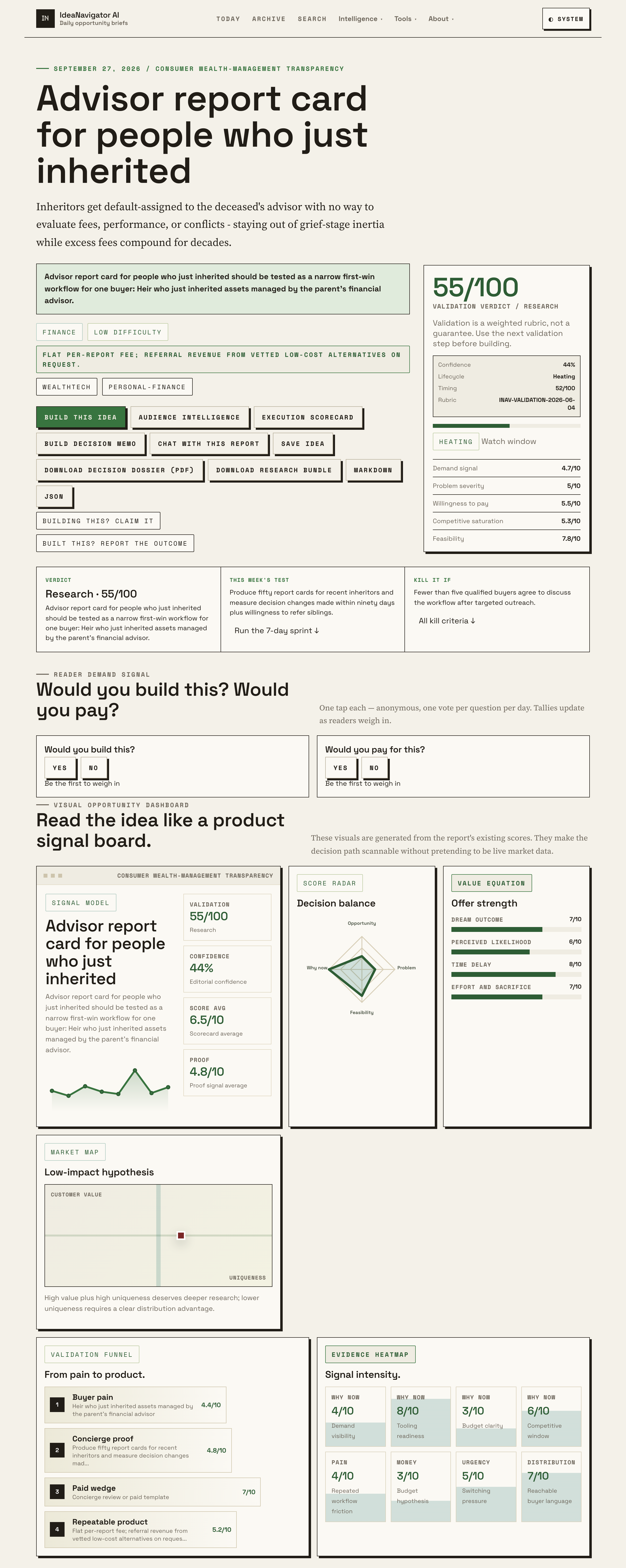
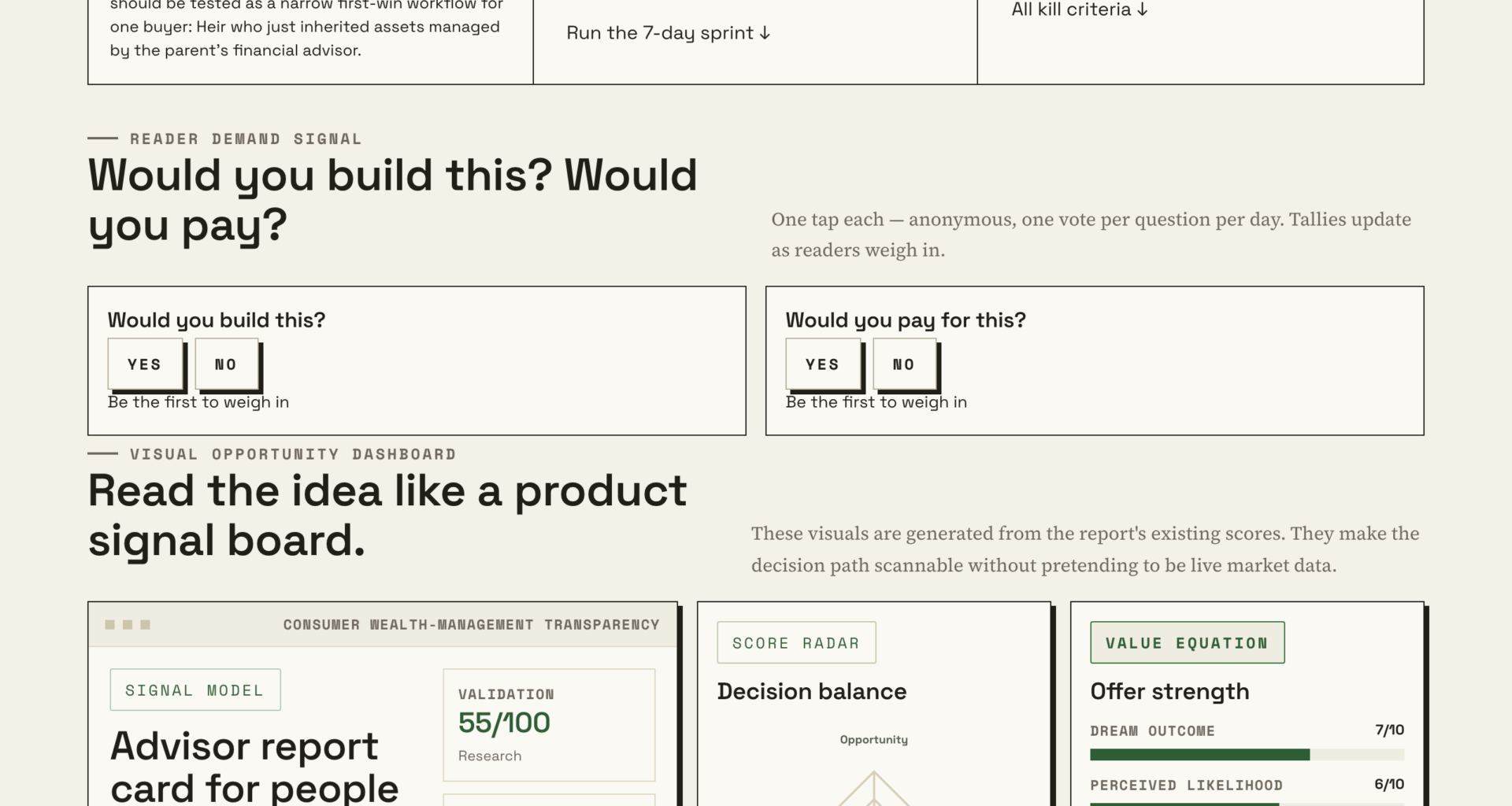
IdeaNavigator AI has proposed an “advisor report card” for people who inherit assets managed by a parent’s financial adviser. The concept would analyze statements and regulatory disclosures, then offer options to stay, negotiate or switch; it is a proposed product, with demand and user outcomes still untested.
The intended customer is narrowly defined: someone who has recently inherited assets that remain with the deceased parent’s adviser. The proposal says inheritors may default to keeping that adviser without a clear way to assess fees, performance or conflicts. It links this inertia to the strain of making financial decisions while grieving, but provides no research findings or measured fee data to establish how often that occurs.
The suggested business model is a flat fee per report, with referral revenue from lower-cost alternatives if a customer requests them. The proposed validation step is to produce 50 reports for recent inheritors, then track decision changes within 90 days and whether users would refer siblings. No results from that test, pricing, launch schedule or named partner firms are included.
A Review at an Inheritance Handoff
The idea focuses on a point when assets may pass to an heir while the existing adviser relationship continues. The proposed tool would present information on costs and disclosures for heirs considering whether to stay, negotiate or compare providers. Its reliability would depend on document extraction, comparison methods and how it explains the limits of its analysis.The outline proposes referral income from vetted, lower-cost alternatives when users request them. It does not explain how providers would be vetted or whether referral payments could affect rankings or guidance. Those details are not specified in the proposal.
The Proposed Heir-Focused Workflow
The proposal frames its timing around a large transfer of wealth to heirs over the coming decade and points to public adviser disclosures, including Form ADV, alongside automated document parsing as inputs for a review. It does not provide a quantified estimate of the number of inheritors who would use the product or evidence that automated parsing can consistently capture fees across different statement formats.Its first version is intentionally described as a narrow workflow for one type of customer, rather than a general adviser directory. The stated market is consumer wealth-management transparency. The 50-report pilot is presented as the way to test whether the service changes decisions and earns referrals from users’ siblings.
Accuracy, Demand and Incentives
The proposal does not say when or whether the product will be built. It also gives no results from interviews, pilot reports or consumer testing, so willingness to pay and the rate at which users would negotiate or move assets remain unknown.Other open questions include which regulatory records and fee disclosures the service would use, how it would handle incomplete or difficult-to-parse statements, and what benchmark would make advisers meaningfully comparable. The outline does not describe how performance would be measured across different portfolios, how conflicts would be presented, or what safeguards would apply to sensitive financial documents.
The stated referral model raises a further unresolved point: the proposal does not define “vetted” alternatives or disclose how referral compensation would be separated from comparisons. Until those practices are specified, the independence of any switch recommendation cannot be assessed.
The Proposed 90-Day Pilot
IdeaNavigator AI’s next stated step is to prepare 50 report cards for recent inheritors and observe whether recipients make a decision within 90 days and would recommend the service to siblings. The outline does not provide a start date, recruitment method or criteria for counting a decision change.Those results could offer an initial signal about demand, but the proposal does not specify how it would assess report accuracy or whether users’ fee savings and adviser outcomes would be tracked. No launch or follow-up milestone has been announced.
Key Questions
Has the inheritance adviser report card launched?
No launch is reported. IdeaNavigator AI describes a proposed product and a pilot plan, without a release date.
Who is the proposed service for?
It is aimed at people who have recently inherited assets that are still managed by their parent’s financial adviser.
What would the report assess?
The proposed report would review regulatory history and disclosed conflicts, estimate all-in fees from account statements, compare alternatives and provide stay, negotiate or switch guidance.
How would the proposal be tested?
IdeaNavigator AI proposes producing 50 reports for recent inheritors, then measuring decision changes within 90 days and users’ willingness to refer siblings. No test results are provided.
How would the service make money?
The outline suggests a flat per-report fee and referral revenue from lower-cost alternatives when users request them. It does not specify prices or referral safeguards.
Source: IdeaNavigator AI
Fall Picks
fall essentials
As an affiliate, we earn on qualifying purchases.