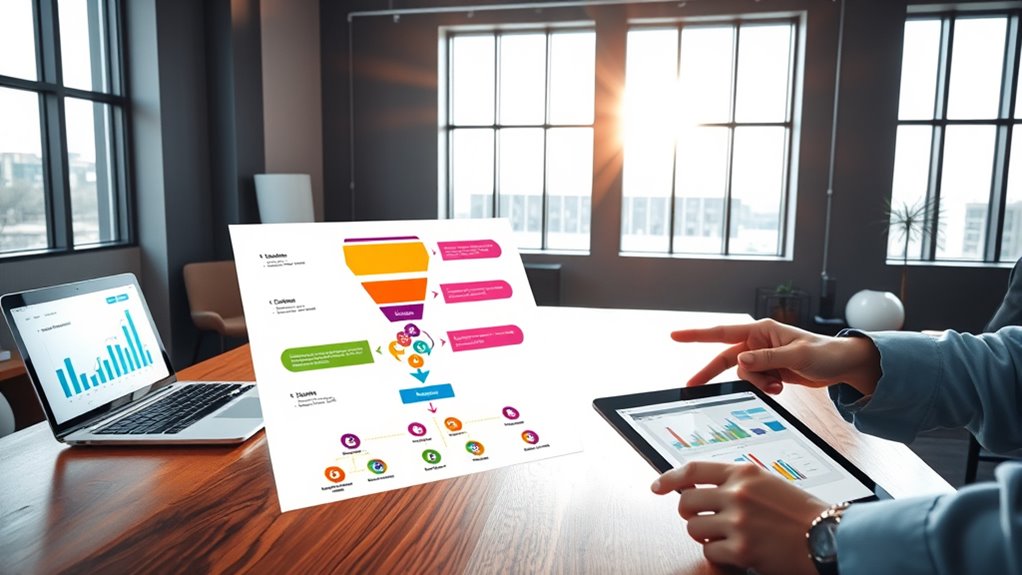

Creating a sales funnel involves seamless collaboration between marketing and sales to attract, nurture, and convert prospects. Marketing generates awareness, captures leads through targeted email campaigns, and builds trust over time with personalized content. As prospects move closer to buying, sales teams step in with personalized outreach, demos, or calls to close deals. Tracking data helps optimize the process for better results. If you’re curious how to make this process work smoothly, there’s more to explore.
Key Takeaways
- Marketing attracts and nurtures leads through targeted email campaigns, building awareness and trust before sales engagement.
- Sales teams personalize outreach, addressing specific prospect needs and questions to move leads toward purchase.
- Collaboration ensures seamless transition from marketing-generated leads to sales conversions, maximizing revenue potential.
- Data tracking and analysis optimize both marketing and sales efforts, refining strategies for better conversion rates.
- Integrated efforts create a smooth customer journey, from initial interest to loyal, long-term clients.
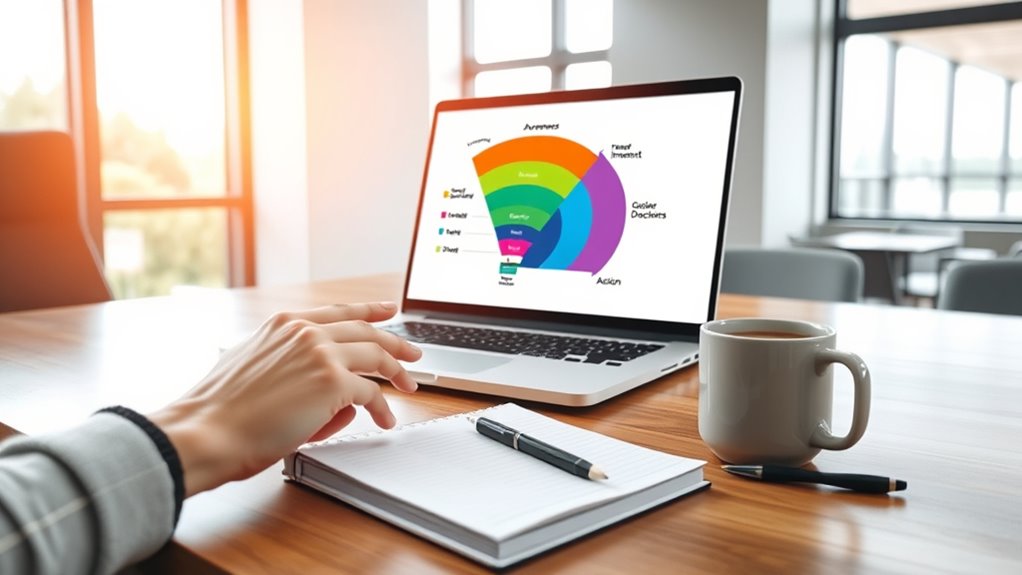
Have you ever wondered how successful businesses turn prospects into loyal customers? The secret often lies in a well-designed sales funnel, where marketing and sales work seamlessly together. At the top of this funnel, your goal is to attract attention and gather leads. Email campaigns play a critical role here; they help you reach a broad audience with targeted messages that spark interest. By crafting compelling emails, you can guide prospects through the initial stages of awareness and curiosity. But capturing leads is just the beginning. The real magic happens in lead nurturing, where you build relationships and trust over time. Through consistent, personalized communication, you keep your prospects engaged and move them closer to making a purchase.
Successful businesses turn prospects into loyal customers through strategic sales funnels, effective email campaigns, and personalized lead nurturing.
As prospects move down the funnel, your marketing efforts must become more tailored. Email campaigns become more specific, offering valuable content that addresses their needs or pain points. This personalized approach demonstrates that you understand their challenges, making it easier to establish credibility. Lead nurturing is about nurturing trust, so you should deliver relevant information that helps prospects see the value of your product or service. Automated email sequences can be highly effective here, ensuring that your messaging remains consistent without overwhelming your prospects. These sequences can include educational content, case studies, or special offers, all designed to keep your brand top-of-mind. Additionally, understanding how to use Pimple Patches effectively can be a valuable part of your personal care routine, helping to maintain clear skin and boost confidence as part of your overall brand image.
Meanwhile, your sales team should be actively involved in this process. When leads are sufficiently warmed up through nurturing, sales can step in with personalized outreach—calls, demos, or meetings—to address specific questions and close deals. The collaboration between marketing and sales is essential; marketing’s nurturing efforts prepare leads for sales, who then take the baton to convert them into paying customers. This teamwork ensures that no prospect falls through the cracks, and that each interaction adds value.
Throughout the entire process, tracking and analyzing data helps refine your approach. Monitoring email campaign open rates, click-through rates, and conversion metrics reveals what’s working and what isn’t. You can then tweak your lead nurturing strategies to improve engagement. The ultimate goal is creating a smooth, seamless journey from initial interest to loyal customer, with marketing and sales working hand-in-hand at every stage. When you align these efforts, you turn cold prospects into warm leads and, eventually, loyal customers who advocate for your brand. The key is consistency, personalization, and collaboration—building trust and guiding prospects naturally through your sales funnel.
Frequently Asked Questions
How Do I Measure the Success of My Sales Funnel?
You measure your sales funnel’s success by tracking key metrics through funnel analytics, such as conversion rates at each stage. Focus on lead qualification to identify high-quality prospects and see how effectively your funnel moves them toward purchase. Additionally, monitor overall sales growth, cost per lead, and engagement levels. These insights help you optimize your funnel, improve lead qualification, and guarantee your marketing and sales efforts work together efficiently.
What Are Common Mistakes to Avoid When Building a Funnel?
Think of your sales funnel as a garden—neglecting lead nurturing or misaligning content is like planting weeds instead of flowers. Avoid rushing through stages; instead, nurture leads with valuable content that matches their needs. Don’t forget to align your messaging across marketing and sales, ensuring consistency. Mistakes like ignoring these details can choke growth, so focus on building a well-tended, cohesive funnel that guides prospects smoothly to conversion.
How Often Should I Optimize My Sales Funnel?
You should optimize your sales funnel regularly, ideally every few weeks, to keep up with your customer journey and improve funnel metrics. Monitoring these metrics helps you identify bottlenecks and areas for enhancement. Consistent optimization guarantees your funnel remains effective, adapts to changing customer behaviors, and maximizes conversions. Don’t wait too long—staying proactive keeps your marketing and sales efforts aligned and boosts overall performance.
What Tools Can Streamline Funnel Creation and Management?
You can streamline funnel creation and management with tools that automate workflows and incorporate lead scoring, making your process smoother and more efficient. Platforms like HubSpot, ClickFunnels, or ActiveCampaign offer intuitive interfaces, allowing you to build automated sequences and prioritize leads effectively. These tools help you identify hot prospects quickly, saving time and increasing conversions, so you focus on what truly matters—closing sales and nurturing relationships.
How Do I Personalize My Funnel for Different Customer Segments?
You personalize your funnel by leveraging customer segmentation to identify distinct groups within your audience. Then, craft personalized messaging tailored to each segment’s needs, preferences, and pain points. Use targeted content, emails, and offers to engage them more effectively. Continuously analyze responses and adjust your messaging accordingly. This approach boosts engagement, conversions, and builds stronger relationships by making each customer feel understood and valued.
Conclusion
Now that you know how marketing and sales work together to create a sales funnel, you’re practically unstoppable. With this powerful system, you’ll attract leads faster than a rocket, nurture them like a caring parent, and turn them into loyal customers in record time. Forget guessing games—your sales will skyrocket so high, even the stars will be jealous. Get ready to dominate your market like never before. The sales funnel is your secret weapon—use it and conquer!