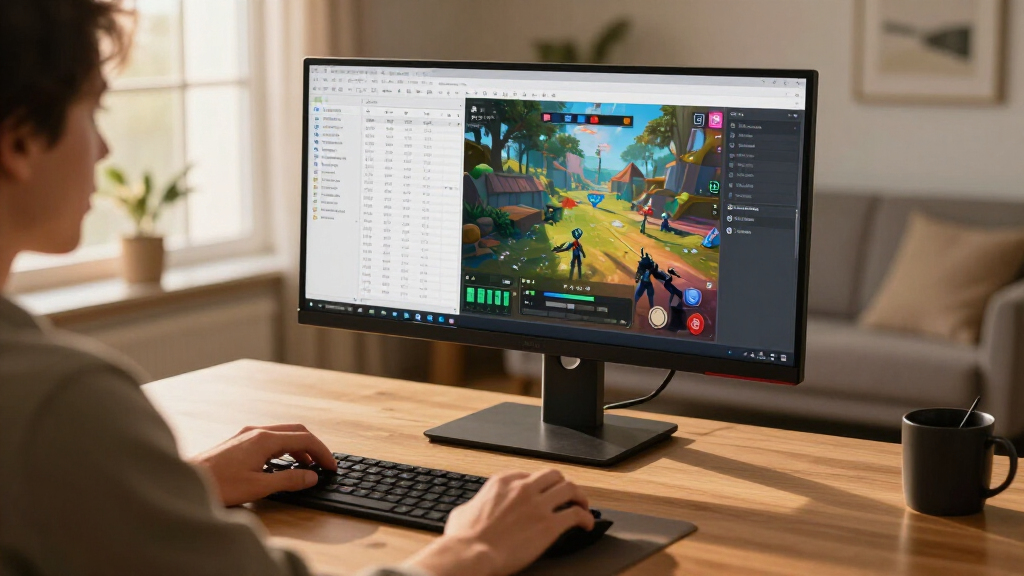

🔍 Read the full analysis: One Display, Two Uses: 10 Best Ultrawide Monitors For Work And Gaming on ThorstenMeyerAI.com

Get business pricing on office and shipping supplies
- Business-only prices and quantity discounts
- Tax-exempt purchasing
- Multiple users, one account, clear invoices
TL;DR
A ThorstenMeyerAI.com buying guide compares 10 ultrawide monitors for mixed work and gaming, ranking the Dell S3425DW as its most versatile pick. Its recommendations are based on listed specifications and intended use, not hands-on testing; screen size, resolution, connectivity and refresh rate are the main tradeoffs.
ThorstenMeyerAI.com has published a comparison of 10 ultrawide monitors for work and gaming, naming the Dell 34 Plus USB-C Curved Monitor S3425DW its best overall option for buyers seeking a balance of a 34-inch workspace and USB-C connectivity. The guide compares listed specifications and intended use rather than reporting hands-on test results, and highlights the choices buyers face between work-oriented connections, gaming refresh rates, display resolution and the desk space required.
The guide points to the Dell S3425DW as its most balanced recommendation, citing its 34-inch curved screen and USB-C connection for mixed work and entertainment. USB-C may simplify a laptop setup, but the guide cautions buyers to check the monitor’s specific charging and data capabilities against their computer rather than assume every USB-C port does the same things.
For a much wider work surface, the comparison highlights the Samsung 49-Inch Business Curved Ultrawide, which uses a Dual QHD format. Its broad canvas could suit people seeking to arrange multiple applications side by side, but it requires more desk room and asks more of the computer’s graphics hardware than a smaller display. The guide does not present the larger screen as a universal upgrade.
Gaming-oriented picks include the SANSUI 34-Inch 200Hz monitor and two Sceptre models listed at 165Hz and 180Hz. The guide treats their refresh rates as relevant for players who can supply enough frames at the monitor’s resolution. It also notes that the Acer Nitro ED300C X1’s UWFHD resolution differs from the QHD-class 34-inch options: the same general screen size does not mean the same vertical pixel count.
The 10 picks
- 1
 Samsung 49-Inch Business Curved Ultrawide Dual QHD Monitor with USB-CView on Amazon →
 - 2
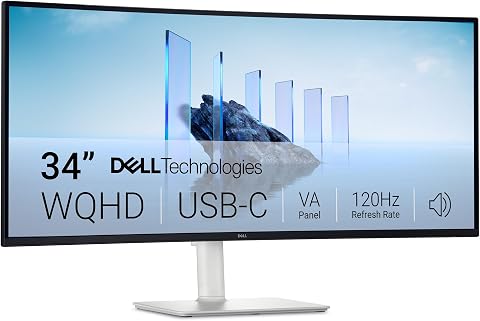 Dell 34 Plus USB-C Curved Monitor S3425DWView on Amazon →
 - 3
 Samsung ViewFinity S65UA 34-Inch Ultrawide QHD Curved MonitorView on Amazon →
 - 4
 Samsung 34-Inch Odyssey G5 Ultra-Wide Curved Gaming MonitorView on Amazon →
 - 5
 Samsung 34" ViewFinity S50GC Series Ultra-WQHD Monitor, 100Hz, 5ms, HDR10, AM…View on Amazon →
 - 6
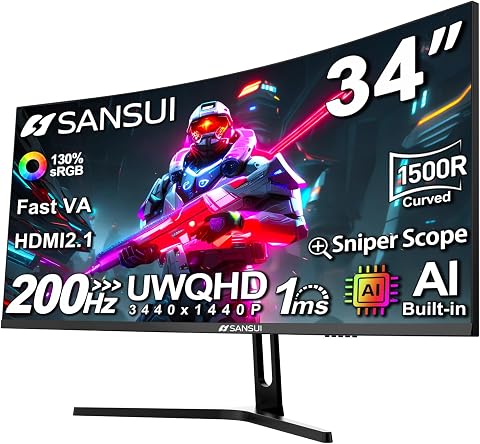 SANSUI 34-Inch Curved Gaming Monitor UWQHD 3440 x 1440P Up to 200Hz 165Hz Cur…View on Amazon →
 - 7
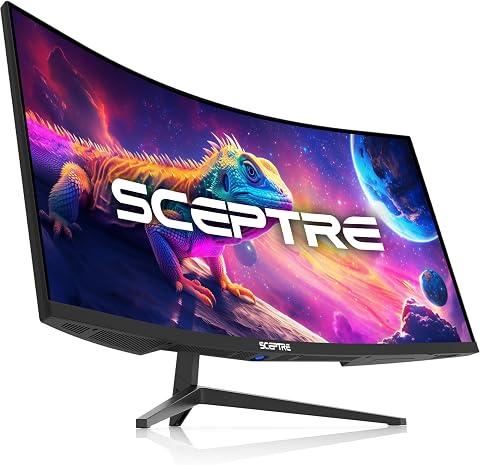 Sceptre 34-Inch Curved Ultrawide WQHD Monitor, 3440 x 1440, Up to 180Hz, Free…View on Amazon →
 - 8
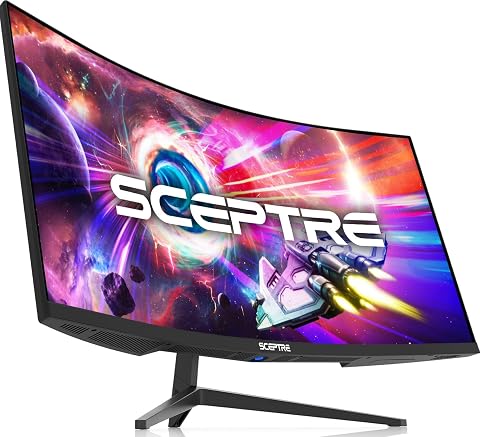 Sceptre 34-Inch Curved WQHD Ultrawide Gaming Monitor, 3440 × 1440, 165Hz, C34…View on Amazon →
 - 9
 CRUA 34 Inch 165Hz UWQHD IPS Ultrawide Gaming Monitor with Speakers and PIP/PBPView on Amazon →
 - 10
 Acer Nitro ED300C X1 29.5-Inch Curved UWFHD Gaming MonitorView on Amazon →
Choosing Between Desk Space and Speed
The comparison addresses a practical buying problem: ultrawides combine different priorities that are not captured by screen width alone. A laptop user may value USB-C more than a very high refresh rate, while a gamer may prioritize motion smoothness and graphics performance. A wider panel can make side-by-side work easier, but can also require a larger desk and more powerful computer.
Resolution is another meaningful distinction. The guide identifies 34-inch 3440 × 1440 as a flexible middle ground, while warning that a 49-inch Dual QHD screen brings a larger pixel workload. Buyers comparing screens should check resolution alongside diagonal size, and gamers should confirm their system can drive the chosen resolution at the desired refresh rate. The rankings are a starting point, not evidence that one model will suit every setup.
How the Guide Ranks Its Ten Picks
The source says it compared monitors using resolution, screen area, refresh rate, curvature and connectivity, with attention to whether features fit a product’s intended role. It ranked versatility first, then gave weight to particular needs such as a laptop-friendly connection, a very wide workspace or gaming-focused speed.
The guide names the Samsung ViewFinity S65UA as a curved QHD option and the ViewFinity S50GC as an Ultra-WQHD alternative. It also stresses that desk depth, stand placement and viewing distance matter, particularly for a 49-inch screen. The supplied source material does not give a full model-by-model specification sheet or the complete names of every selection, so the remaining picks cannot be reliably identified here.
“The Dell S3425DW is the most balanced pick.”
— ThorstenMeyerAI.com guide
Testing and Full Model Details
The source describes the rankings as comparisons of listed specifications and intended fit, not hands-on test results. It provides no test methodology, measured performance results, pricing, availability or full list of all 10 model names in the supplied material. It is also unclear when the guide was published or whether its product specifications and market availability have since changed.
Some recommendations depend on setup details the guide does not establish for individual buyers: a computer’s output capabilities, the power delivered through a USB-C port, the games being played and the usable desk dimensions. The stated refresh rates and resolutions are product specifications as presented by the source, not guarantees of performance across every computer or connection.
Check Fit Before Buying
Readers considering a model should verify its current specifications and price with the manufacturer or retailer, then match the display’s resolution and refresh rate to their computer’s supported outputs. Laptop owners should confirm USB-C charging and data capabilities, while gamers should check whether their graphics hardware and chosen connection can support the target resolution and refresh rate.
Measuring desk width and depth, including the stand and preferred viewing distance, is particularly relevant for the 49-inch Samsung. No additional testing or follow-up publication is specified in the supplied source; the next useful step for a buyer is to compare the full product specifications against their own workload and setup.
Key Questions
Which monitor does the guide rank best overall?
The guide names the Dell 34 Plus USB-C Curved Monitor S3425DW as its best overall pick, citing its 34-inch format and USB-C connectivity for mixed work and entertainment.
Which option is designed for the widest workspace?
The guide highlights the Samsung 49-Inch Business Curved Ultrawide and its Dual QHD workspace. It also warns that the screen takes more desk space and requires a capable computer.
Which gaming monitor has the highest refresh rate in the source?
The guide says the SANSUI 34-Inch gaming monitor is rated at 200Hz, compared with the Sceptre models it lists at 165Hz and 180Hz. Actual performance depends on the computer and connection.
Are the rankings based on hands-on tests?
No. The source says it compared listed specifications and intended use, not hands-on test results.
What should buyers check before choosing an ultrawide?
Compare resolution, refresh rate, computer support, connectivity and desk dimensions. For USB-C, check the specific monitor’s power and data functions; for gaming, confirm the system can drive the chosen resolution at the intended refresh rate.
Source: ThorstenMeyerAI.com
Halloween Picks
halloween
As an affiliate, we earn on qualifying purchases.